Free visual inspection and a written scope of work before any mitigation begins - photos, moisture readings, and drying logs go in your claim file
The scope we write is the scope we bill. Anything new gets shown to you, in writing, before we touch it.

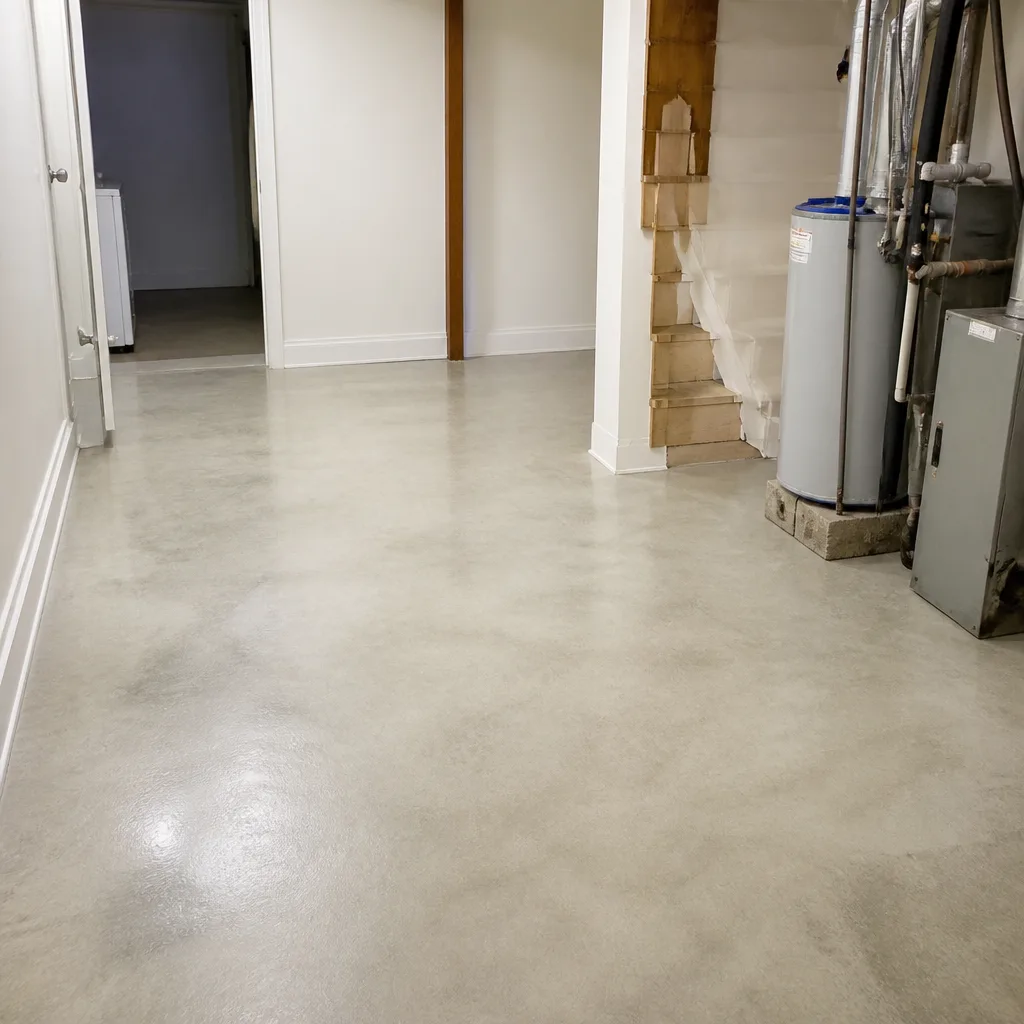
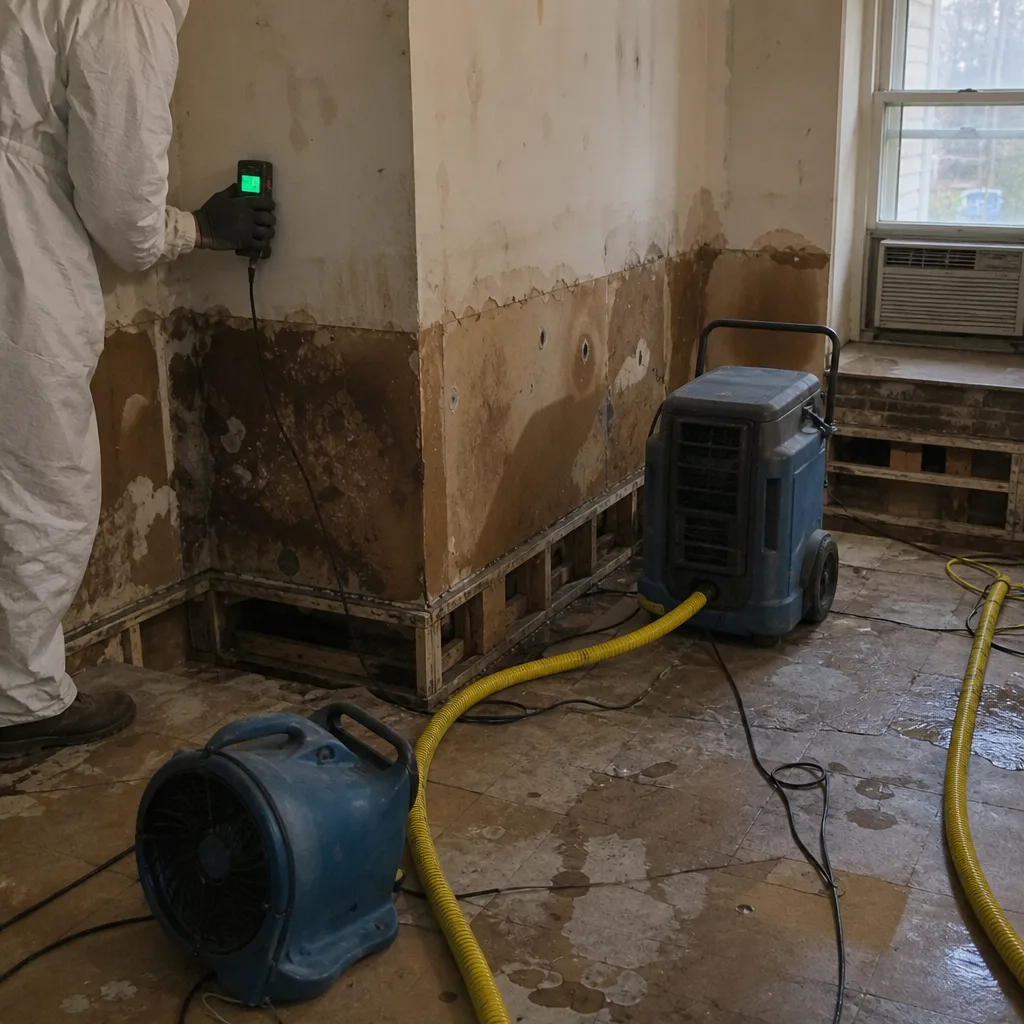 Before
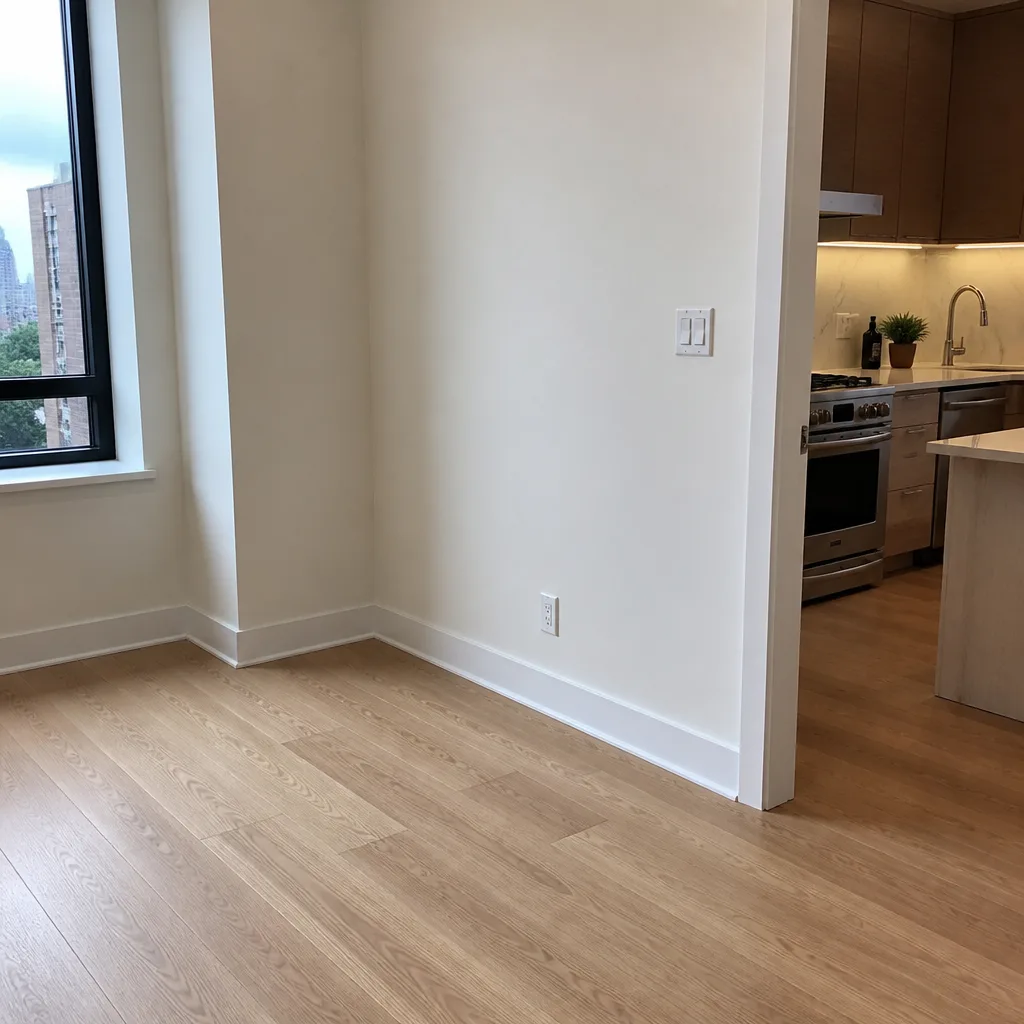 After
After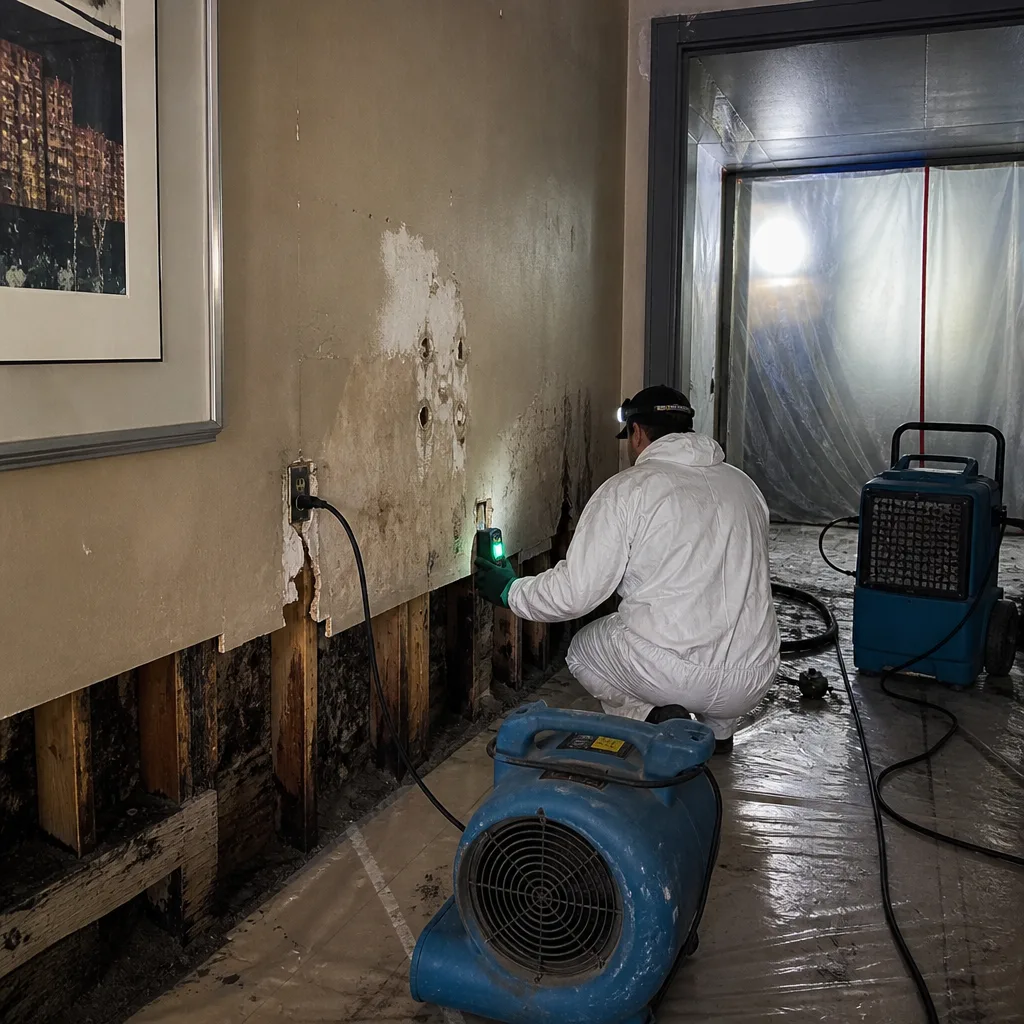 Before
 After
After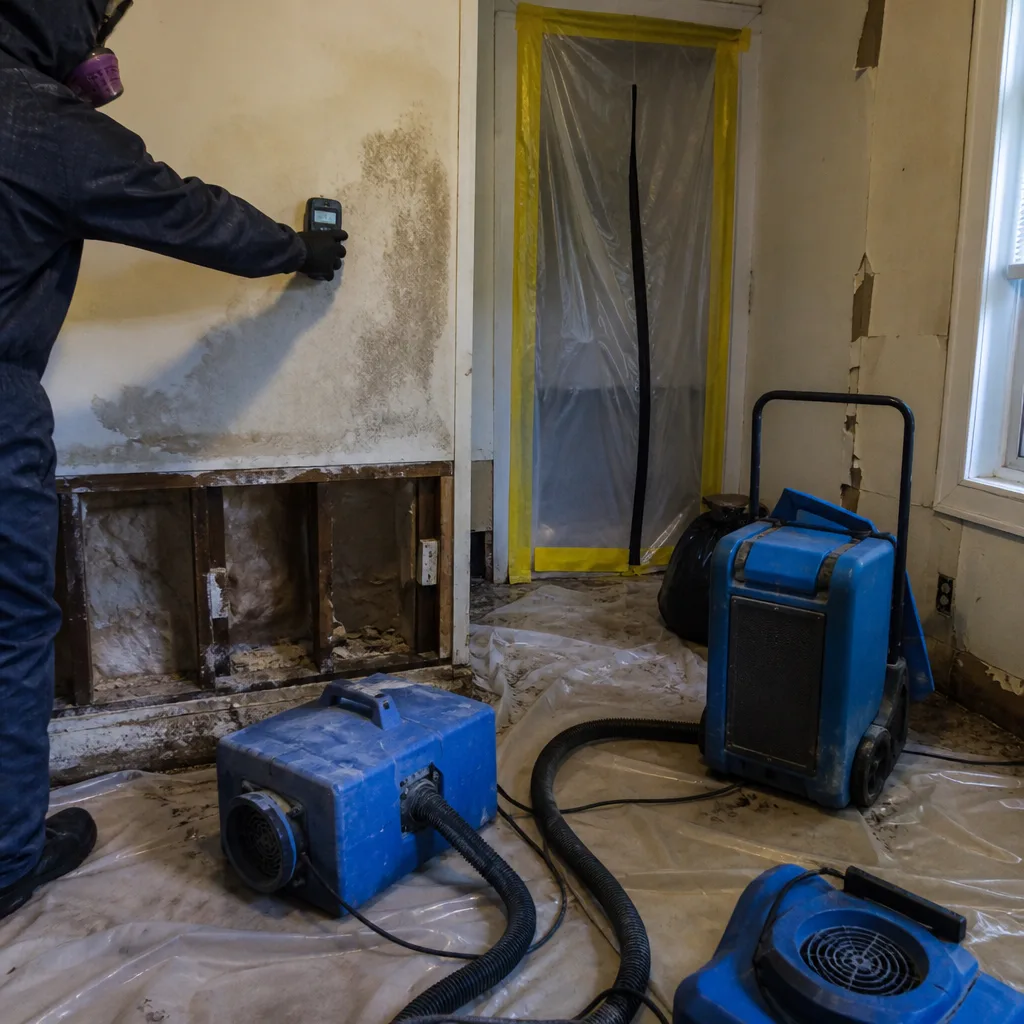 Before
 After
After24/7 Emergency Mold Remediation in Fort Lee
Mold remediation in Fort Lee typically costs between $1,800 and $6,500 depending on affected square footage and whether the job spans multiple units in a high-rise. Most of our Fort Lee mold calls begin with a water loss that went undetected behind cabinets or inside wall cavities for days, sometimes weeks. We answer live at (551) 213-5277 twenty-four hours a day, seven days a week, and our crews are dispatched from our New York City office to Fort Lee properties inside forty-five minutes. The first hour matters because mold colonies double in mass roughly every twenty-four to forty-eight hours under favorable conditions, and in Fort Lee’s dense tower stock, that growth rarely stays confined to one unit. We offer a free visual inspection and written scope before any work begins, per Haven Standard, Clause 1.
Understanding Mold Remediation Severity in Fort Lee Properties
Mold severity is classified by affected square footage, material porosity, and whether the microbial growth is confined to a single surface or has colonized hidden cavities behind drywall, under flooring, or inside HVAC chases. In Fort Lee, we see a disproportionate share of Category 2 and Category 3 contamination, not from dramatic floods but from slow, hidden moisture migration through stacked units in 1960s-1990s high-rises. Category 1 water left for more than forty-eight hours degrades to Category 2; in Fort Lee’s towers, a locked mechanical room can stretch that window to a week.
Containment strategy depends on whether we’re working in an occupied unit with shared HVAC. Negative air pressure containment with HEPA filtration is standard for any job over ten square feet. Air scrubbers run at six air changes per hour minimum. Clearance testing, performed by a third-party industrial hygienist, confirms airborne spore counts return to baseline before we release containment. In Fort Lee’s multi-party buildings, we often run separate containment per unit with independent air-scrubber stacks, because one owner’s clearance is another’s ongoing liability.
Why Fort Lee Property Owners Choose DryMark Restoration Upper East Side
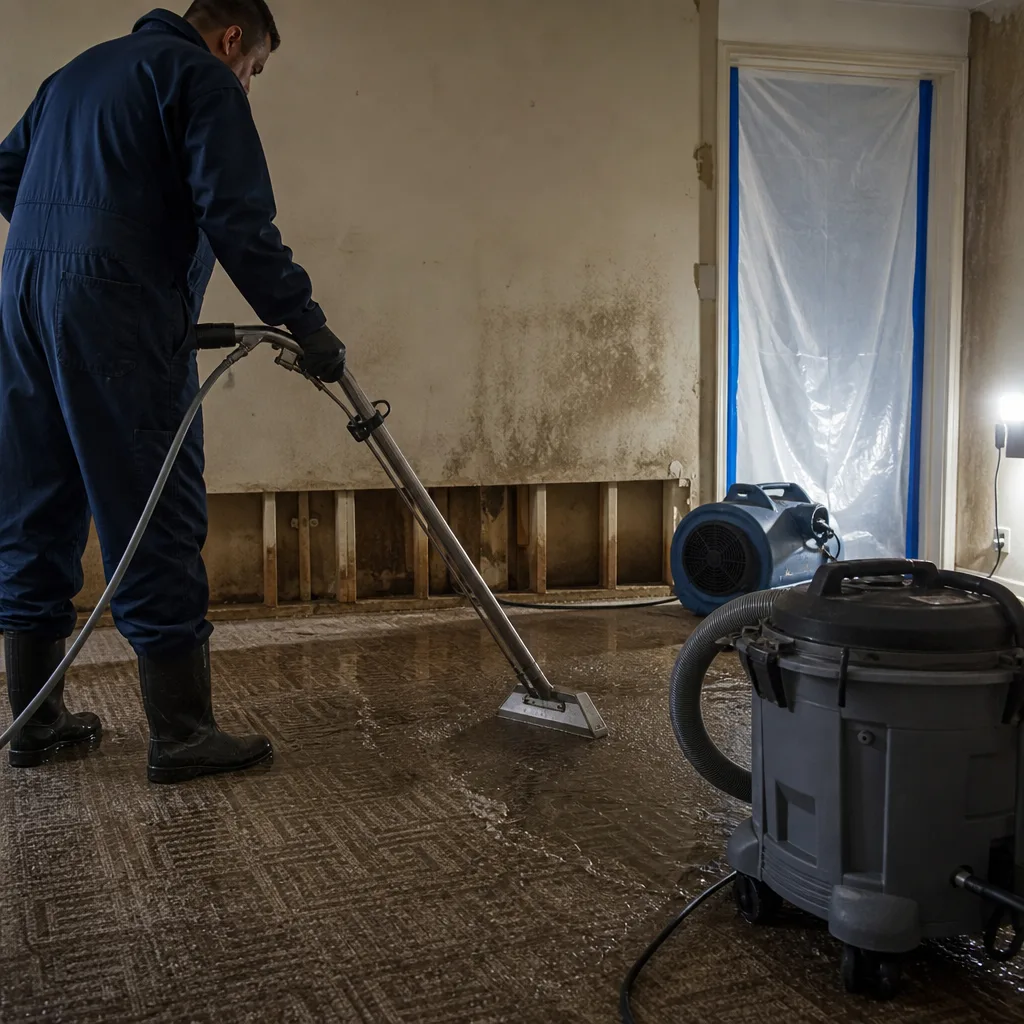
- Fort Lee crews commit to a forty-five-minute response window, because in a high-rise with a locked riser, every minute of delay means another floor of spread.
- A live person answers every call, twenty-four hours a day, seven days a week - no voicemail trees, no next-business-day callbacks while moisture is still active.
- Our technicians hold IICRC certifications in Water Damage Restoration (WRT), Fire and Smoke Restoration (FSRT), and Applied Microbial Remediation (AMRT), with license numbers documented on every job file.
- We provide a free visual inspection and written scope before any equipment is deployed or any wall is opened, per Haven Standard, Clause 1.
- Direct insurance billing with photo-documented drying logs and room-by-room moisture readings that turn restoration invoices into payable claims.
- One team handles the full arc: containment, remediation, drying, and reconstruction. No handoffs between subcontractors with conflicting documentation.
BeforeAfterOur Mold Remediation Process
1. Inspection & Assessment
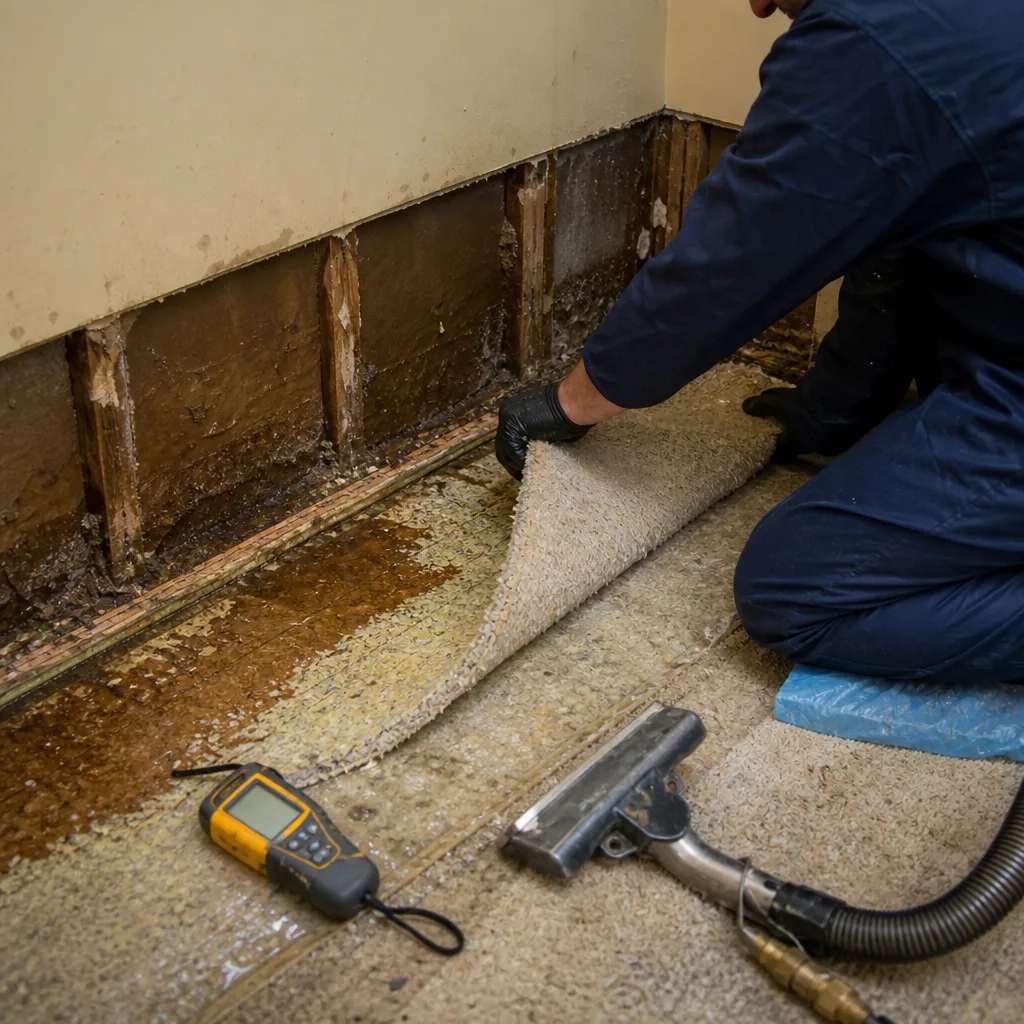
We start with moisture mapping using thermal imaging and pin-type hygrometers to locate hidden water behind walls and under flooring. In Fort Lee towers, we inspect vertically - the unit above, the unit below, and common riser chases - because water follows gravity and stack pressure, not property lines. Every finding is photo-documented before any material is disturbed.
2. Moisture Source Control
Before remediation begins, we stop the moisture feed. In Fort Lee’s older high-rises, this often means coordinating with building super staff to access locked mechanical rooms and shut down the active riser. We document the delay, the super’s contact, and the time to source control for the insurance file.
3. Containment & Air Filtration
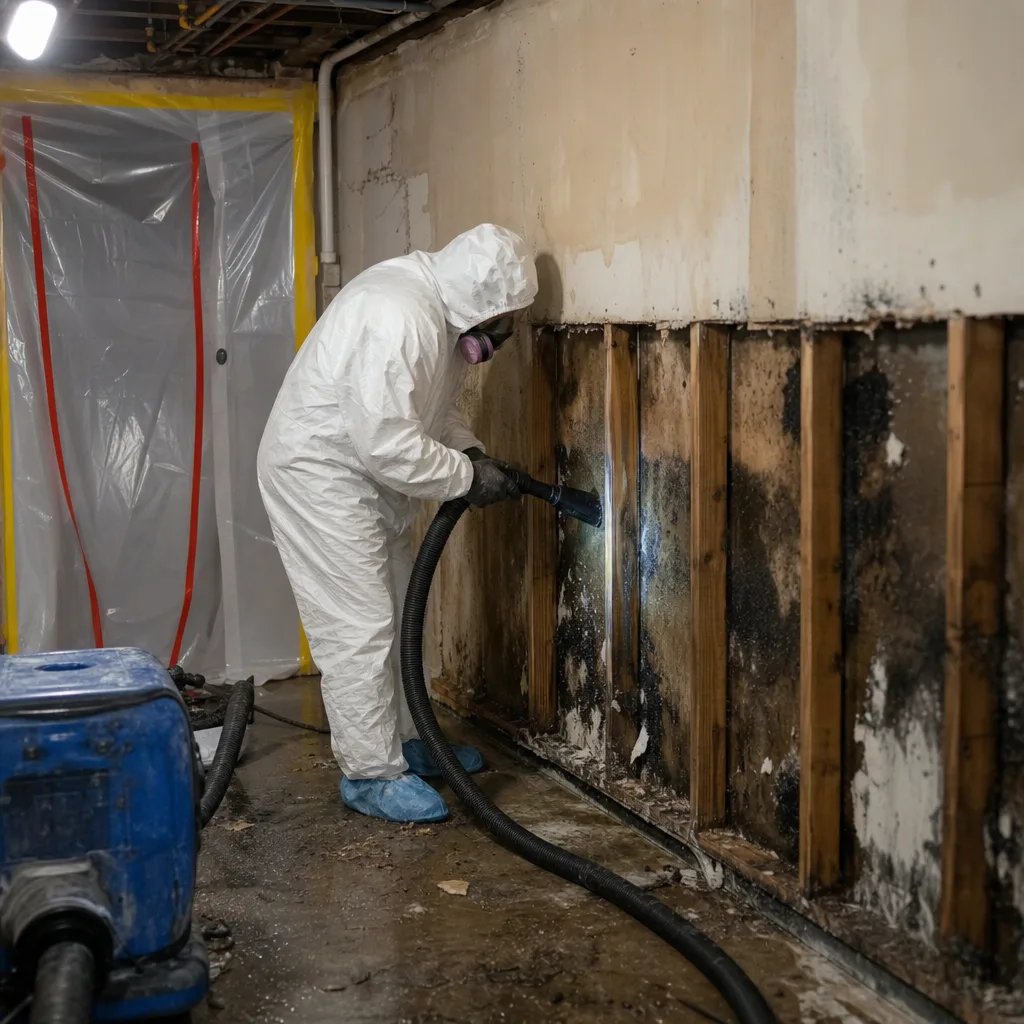
We establish polyethylene containment barriers with negative air pressure, exhausting through HEPA-filtered air scrubbers. In occupied Fort Lee apartments, we seal HVAC returns and run independent air-filtration stacks to prevent cross-contamination to adjacent units. Equipment from Phoenix and XPOWER provides documented CFM and pressure differential readings.
4. Removal of Contaminated Materials
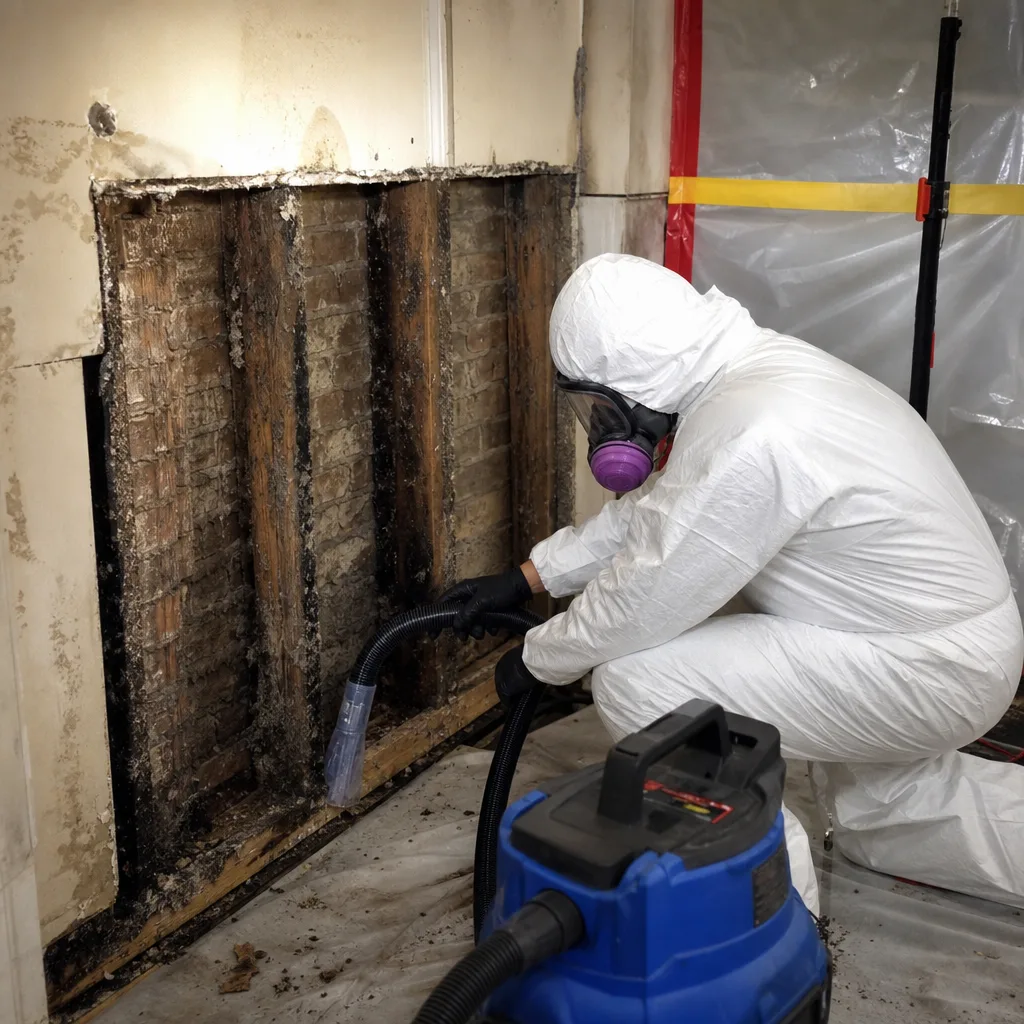
Non-salvageable drywall, insulation, and carpet pad are removed with controlled demolition inside containment. We classify every removed material by type and square footage for the waste manifest and insurance scope. Salvageable framing is HEPA-vacuumed and treated with antimicrobial application.
5. Drying & Dehumidification
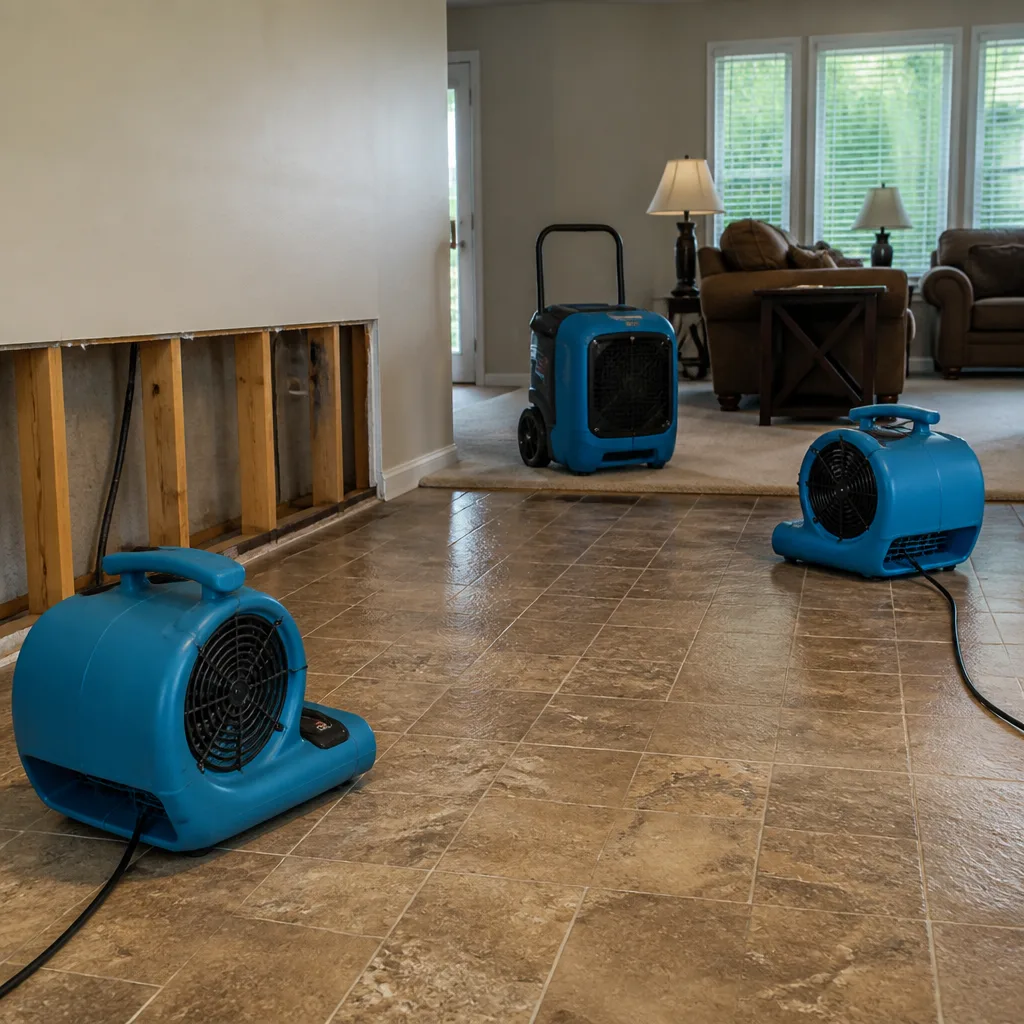
We deploy commercial dehumidifiers and air movers sized to the cubic footage of the affected cavity, not just the visible room. Psychrometric data - temperature, relative humidity, and vapor pressure differential - is logged daily until materials reach established drying goals. B-Air and Injectidry systems handle specialty cavity drying where standard airflow won’t reach.
6. Clearance Testing & Restoration
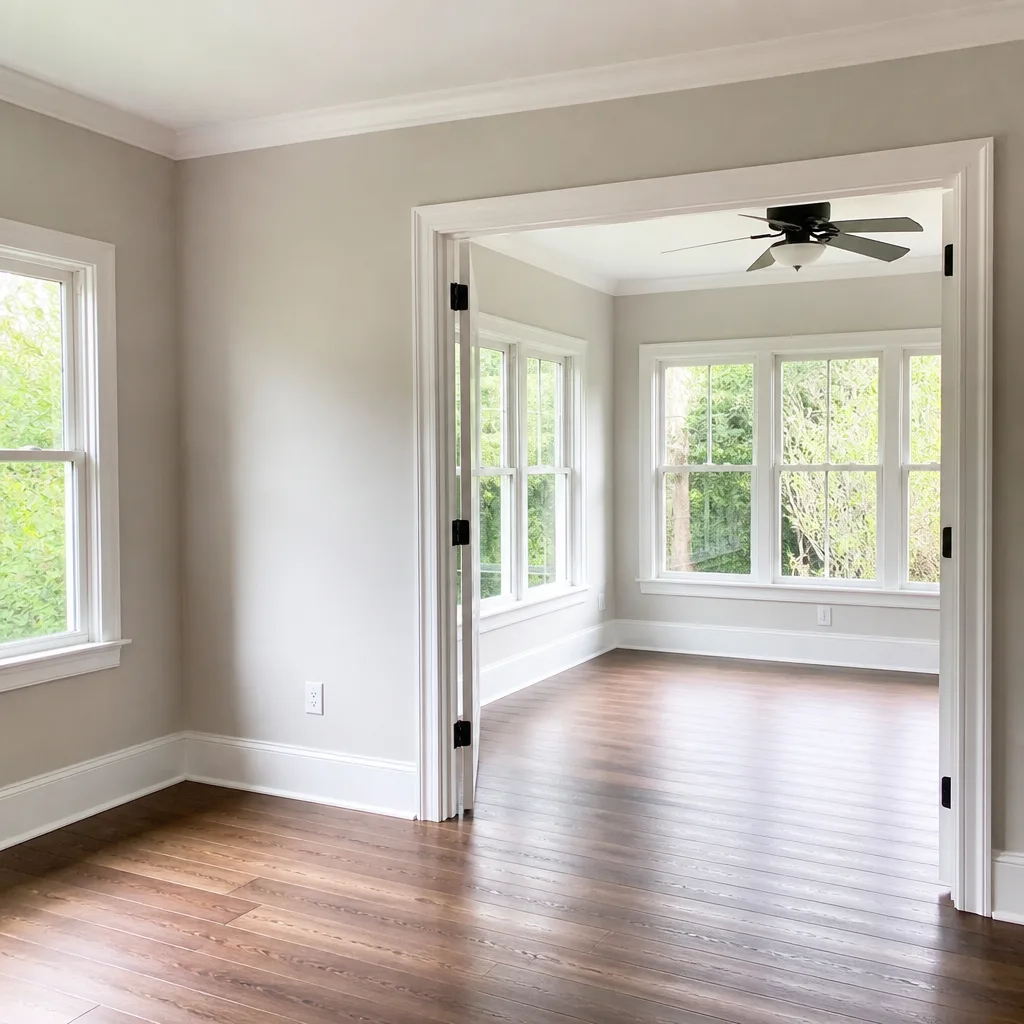
A third-party industrial hygienist collects air and surface samples post-remediation. Once clearance passes, we restore affected areas to pre-loss condition: drywall, paint, flooring, trim. The 365-Day Done Right Promise applies to all reconstruction work under The Haven Standard.
Need Emergency Mold Remediation in Fort Lee Now?
Crews minutes away, answering live 24 hours a day. The sooner we start, the less it costs.
Working With Your Insurance Company
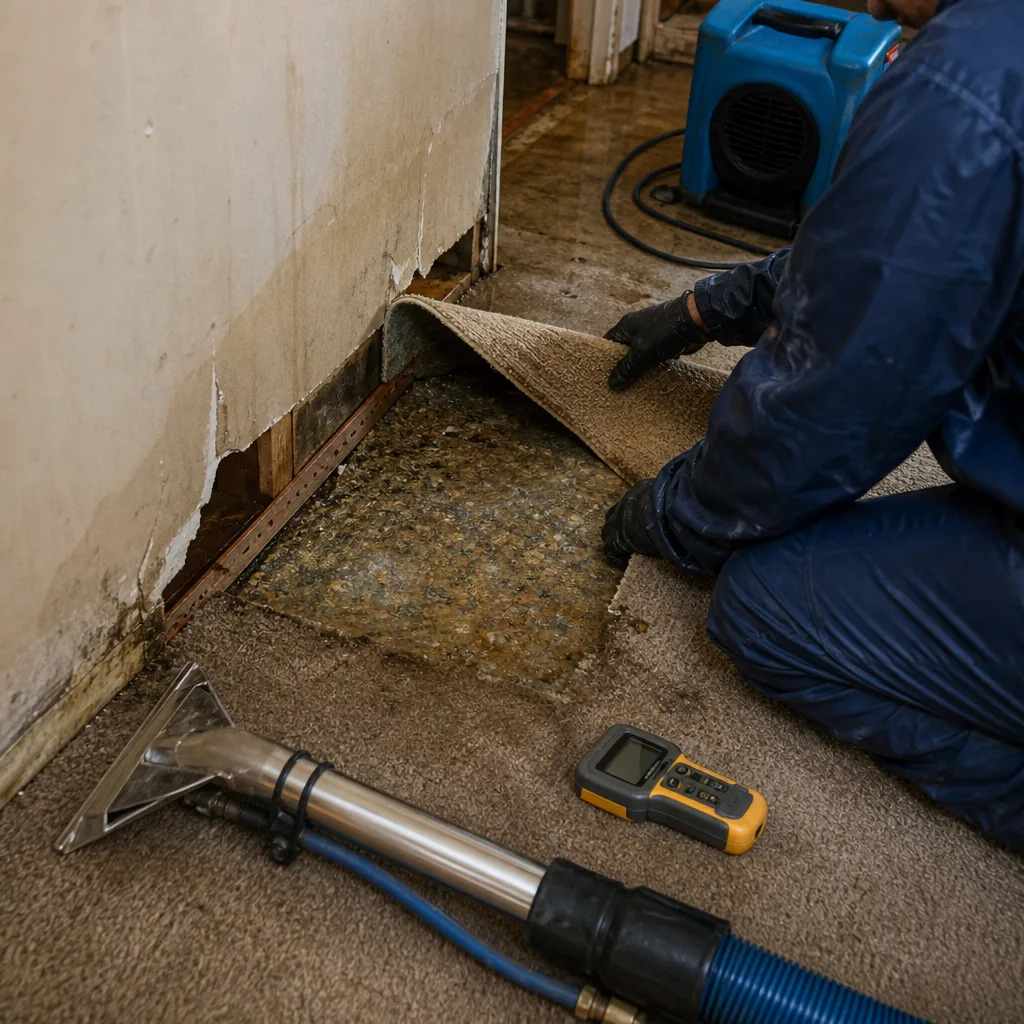
Fort Lee mold claims are rarely simple. The unit owner, the HOA, and building management may all carry separate policies with overlapping coverage and dispute clauses. We begin documentation the moment we arrive: photos of pre-loss condition, moisture readings with timestamps, and a narrative of source-control delays if the mechanical room was locked. Our estimates follow industry-standard Xactimate pricing, and we coordinate directly with each adjuster rather than pushing that burden to the property owner.
What We Provide Your Insurer
- Thorough documentation of the loss origin, migration path, and affected parties
- Photos of all damage, room by room, with unit numbers and common-area references
- Moisture readings and daily drying logs with psychrometric data
- A detailed, line-item scope of work per unit and per policyholder
- Direct coordination with your carrier, your HOA’s carrier, and building management’s carrier as needed
Built for Fort Lee’s Loss Calendar
January deep freezes split aging copper risers in Fort Lee’s 1970s towers, and because many residents travel for the holidays, water feeds mold for days before anyone reports it. Spring thaw brings wind-driven rain through curtain-wall failures on Hudson-facing elevations, a pattern unique to Fort Lee’s escarpment exposure. Summer humidity peaks in July and August, turning any lingering moisture into active colonization inside wall cavities where air conditioning creates condensation at thermal boundaries. September and October nor’easters test the same window perimeters that failed in spring. By November, heating systems switch on and dry air masks damp conditions inside closed cavities until the next freeze-thaw cycle begins.
Our Mold Remediation crews carry equipment configured for Fort Lee’s year-round pattern: high-capacity dehumidifiers for summer humidity loads, cavity-drying systems for winter freeze events, and containment setups designed for occupied units with limited staging space in high-rise hallways.
Mold Remediation Across Fort Lee’s Neighborhoods
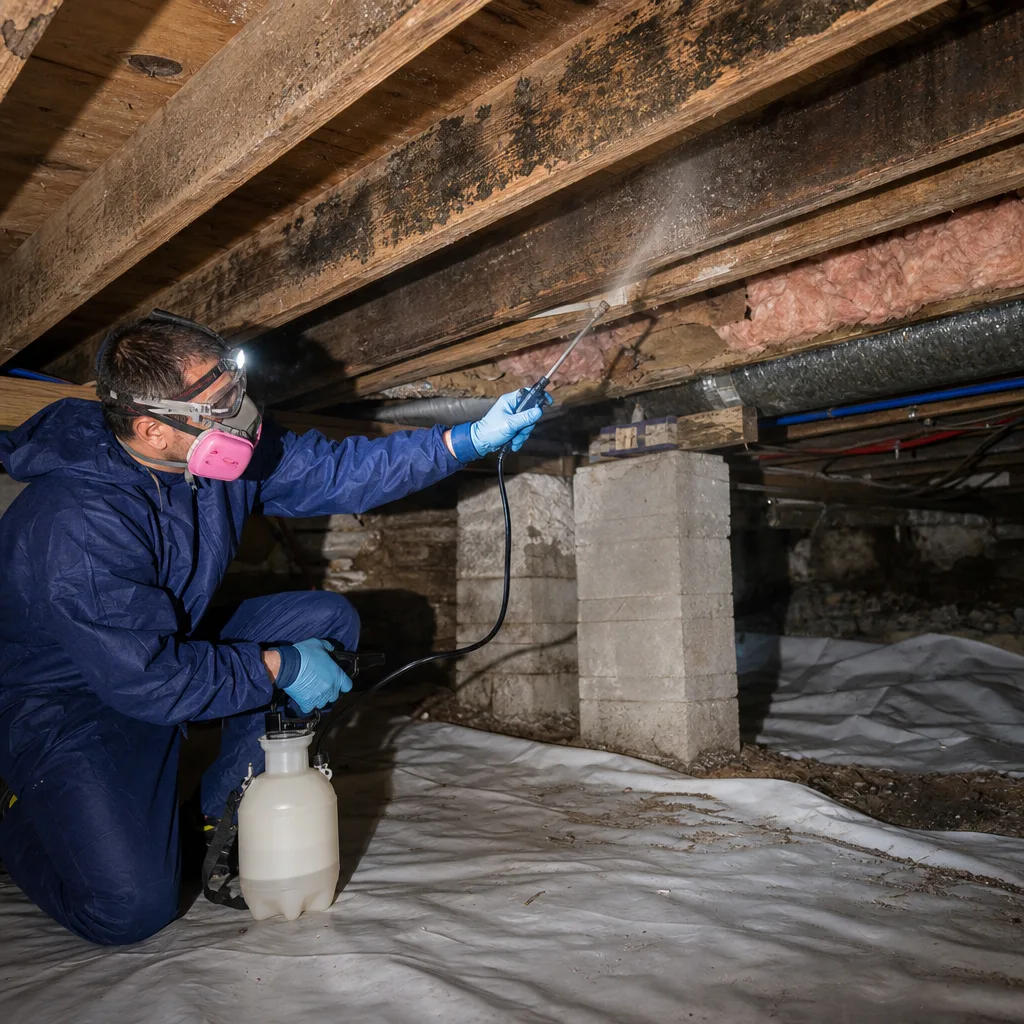
The Linwood Park and Fort Lee Historic District corridors along the borough’s eastern edge hold a thinner inventory of garden apartments and single-family homes from the 1920s through 1950s. Mold jobs here tend toward basement seepage, crawl space humidity, and aging foundation drainage - the kind of work where Mold Remediation in Fort Lee means exterior grading review and vapor-barrier installation alongside standard remediation.
Central Fort Lee, centered on Lemoine Avenue and stretching toward the George Washington Bridge approach, is dominated by the 1960s-1980s towers that define the borough’s housing stock. This is where our multi-party, multi-floor work happens. A single call to a unit on the eighth floor of a Lemoine Avenue tower routinely expands to inspection of the ninth and seventh floors, plus the common riser chase. We know the super staff at most major buildings by name, and we know which management companies require twenty-four-hour notice for mechanical room access versus which take our call directly.
The Hudson Terrace and Palisades Avenue corridor along the western cliff faces the river full-on. Wind exposure here is measurably higher than inland Bergen County, and the curtain-wall systems on 1960s and 1970s buildings were not engineered for sustained sixty-mile-per-hour gusts. We see recurring water intrusion at the same window perimeters and rooftop mechanical penetrations, often treated as one-time leaks by previous contractors while the actual moisture source remains unaddressed. Mold returns until the envelope is fixed.
Near the bridge plaza and the commercial core around Main Street, mixed-use buildings combine retail base floors with residential above. Mold in these properties often traces to roof drains clogged by debris from heavy traffic, or to compromised flashing where mechanical units were added decades after original construction. Access is tight, parking for staging is limited, and coordination with commercial tenants adds scheduling complexity that out-of-area crews rarely anticipate.
Specialized Mold Remediation Services We Offer in Fort Lee
Mold Inspection & Testing
We begin with a visual inspection and moisture mapping, not a sales pitch for unnecessary demolition. Air and surface sampling is available through third-party industrial hygienists when clearance documentation is required for real estate transactions or HOA disputes. In Fort Lee’s tower market, we often sample multiple units in a stack to prove migration paths for insurance.
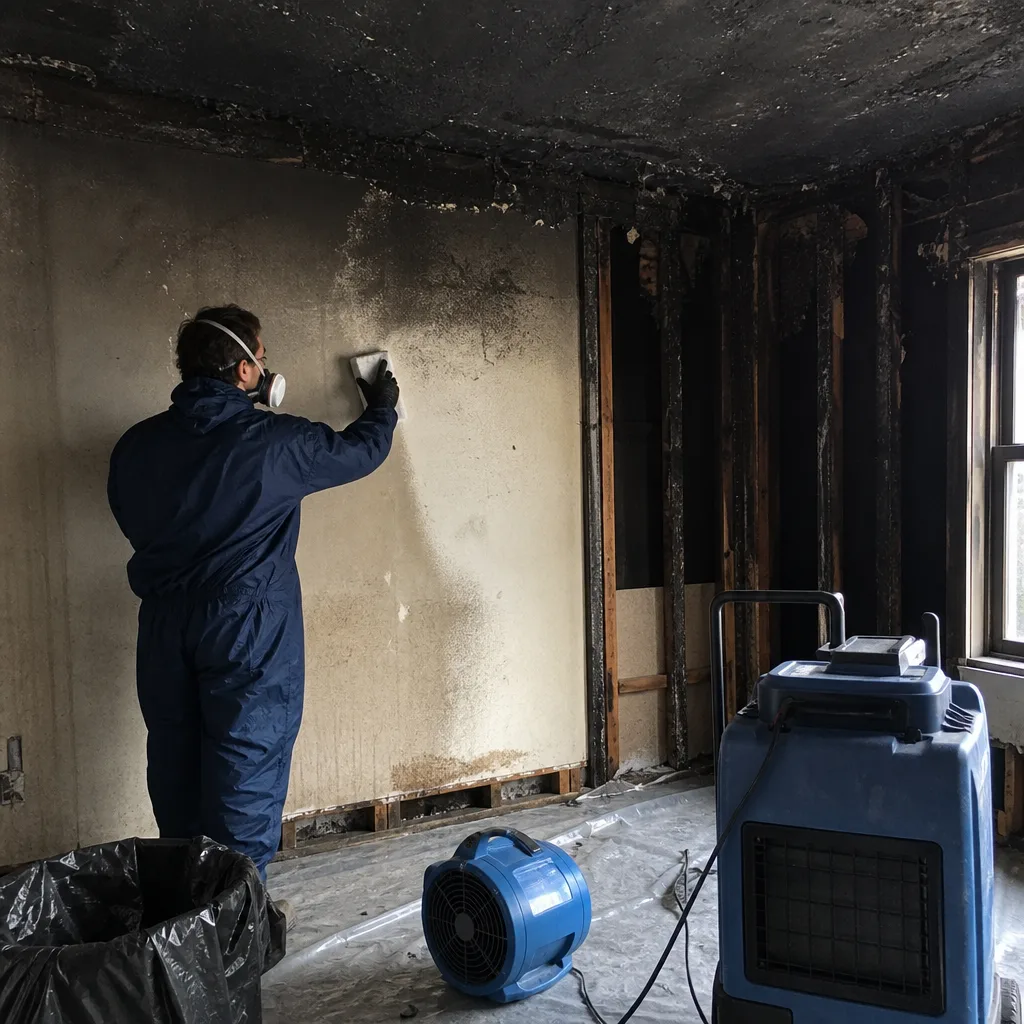
Mold Removal
Controlled demolition inside HEPA containment, with material classification and manifesting for proper disposal. In Fort Lee’s occupied high-rises, we schedule removal phases to minimize disruption and maintain egress paths per fire code.
Black Mold Remediation
Stachybotrys chartarum and other toxigenic species require enhanced containment, full-face respirator protocols, and negative air pressure at higher exchange rates. We don’t use scare tactics about “black mold,” but we do follow stricter protocols when lab identification confirms toxigenic species. Documentation is exact, because these claims face heavier adjuster scrutiny.
Air Quality Restoration
Post-remediation, we verify airborne spore counts return to baseline through independent testing. In Fort Lee’s shared-HVAC buildings, we often recommend duct inspection and cleaning as a separate scope, documented and billed distinctly from the remediation itself.
Crawl Space Treatment
For the minority of Fort Lee properties with crawl space access, typically in the eastern garden-apartment zones, we install vapor barriers, dehumidification, and conditioned-air solutions to prevent recurrence. Most Fort Lee mold work is vertical, not sub-grade, but we carry the equipment and protocols when the job calls for it.
Moisture & Humidity Control
The critical step most competitors skip. We identify and document the moisture source - riser leak, curtain-wall failure, condensation at thermal bridge - with photos and written recommendations. Without this, mold returns. In Fort Lee’s high-rises, we often find that the “mold problem” is actually a building-envelope problem that unit owners, HOAs, and building management need to allocate between them.
What happens when you call
- 1
A real person answersNo phone trees - you reach a local pro.
- 2
You get an upfront price rangeHonest numbers before anyone is dispatched.
- 3
A background-checked tech heads outLicensed & insured, dispatched right away.
- 4
You approve before work beginsNothing starts until you say go.
Mold Remediation Costs in Fort Lee, NJ
A contained single-room mold remediation in a Fort Lee condo typically runs $1,800-$3,200. Jobs spanning multiple units in a high-rise stack range from $4,500-$8,500 depending on how many floors, how many containment setups, and how long the moisture fed the growth before source control. Whole-unit gut remediation with reconstruction in a two-bedroom Fort Lee tower unit generally falls between $6,500-$12,000.
What moves the price: affected square footage, whether drywall can be dried in place or must be removed, the number of separate containment zones required, and whether third-party clearance testing is specified in the insurance policy. Most Fort Lee mold claims are covered under all-risk homeowner or HO-6 condo policies when the moisture source is sudden and accidental, though gradual leaks and maintenance issues are often excluded. We review your policy language and document the loss origin to support coverage where it applies.
Every job starts with a free visual inspection and written scope. No work begins before you have that written price in hand. Haven Standard, Clause 1.
We Also Serve Cities Near Fort Lee
Our crews respond from the New York City office to mold calls throughout the immediate Hudson County and Bergen County corridor. We regularly work in Palisades Park, where the same high-rise density and Palisades exposure create similar mold patterns; Union City, with its older multi-family stock and basement seepage issues; and Hoboken, where flood-zone properties add storm-driven contamination to the standard moisture-intrusion mix. Each city gets the same documentation-first protocol and written-price guarantee.
Serving Fort Lee, NJ - Our Local Coverage Area
We’re based in the Fort Lee area and know this community well. Use the map below to see our service coverage - if you’re nearby, we can almost certainly help.
Fort Lee Mold Remediation Questions, Answered
Our Fort Lee tower had a riser leak that hit three floors - how do you handle a mold job when the HOA and multiple unit owners are all involved?
We create separate job files and separate scopes of work for each unit, each with its own photo documentation, moisture readings, and drying logs. One adjuster gets the eighth-floor unit file, another gets the ninth, and building management gets the common-area riser chase. We coordinate scheduling so containment and equipment placement don’t conflict, and we name each party’s responsibility in writing before work starts. Call (551) 213-5277 and we’ll walk through the multi-party protocol for your specific building.
A window in our Fort Lee high-rise keeps leaking during wind-driven rain - can that cause mold even if we dry it each time?
Yes. Repeated wetting and partial drying creates a moisture reservoir inside the wall cavity that surface drying never reaches. Over a season or two, that cyclic humidity supports mold growth behind drywall where you can’t see it until discoloration appears or odor develops. We use thermal imaging to find the wet pattern, then scope either localized remediation or full cavity opening depending on how many cycles the assembly has endured. The window perimeter or curtain-wall seal needs repair too, or the mold will return. Call (551) 213-5277 for inspection and written scope.
Can you start mold remediation in Fort Lee before the building super unlocks the mechanical room?
We can establish containment and begin controlled demolition of non-salvageable materials, but we cannot effectively dry or guarantee remediation success while an active leak continues feeding moisture. We document the source-control delay with timestamps and super contact attempts for the insurance file, and we push hard for mechanical room access because every hour of delay adds cost and spread. Some management companies grant us emergency access protocols after the first documented loss; we maintain those relationships. Call (551) 213-5277 and we’ll coordinate with your building staff directly.
How do you decide what comes out versus what gets dried when a Fort Lee condo has mold?
We follow IICRC S520 standards: porous materials like drywall, insulation, and carpet pad that show visible mold growth are removed. Semi-porous materials like wood framing and concrete can often be HEPA-vacuumed and treated with antimicrobial application if the growth is superficial and the material is structurally sound. Non-porous materials like tile and metal are cleaned in place. The decision is documented with pre-remediation photos and moisture readings, and we explain the classification before any demolition begins. Call (551) 213-5277 for a free inspection and written scope with line-item classification.
Do you set up containment and air quality work in occupied Fort Lee apartments?
Yes, and we design containment specifically for occupied units: sealed HVAC returns, negative air pressure exhausting through HEPA scrubbers, and work-phase scheduling that keeps living spaces accessible when possible. We use low-noise equipment where feasible and coordinate with residents who work from home. Air quality is monitored at containment boundaries, and we don’t release containment until third-party or internal clearance confirms safe conditions. Call (551) 213-5277 to discuss occupancy protocols for your unit.
How fast can you actually get to Fort Lee, and what happens in the first hour?
Our response commitment to Fort Lee is forty-five minutes from dispatch. In the first hour, we locate and document the moisture source, begin coordination with building super staff if mechanical room access is needed, establish initial containment if the contamination is active and spreading, and take pre-loss photos and moisture readings. We do not begin demolition or equipment placement until the written scope is delivered and signed. Call (551) 213-5277 to initiate dispatch.
Will my insurance cover mold remediation in my Fort Lee condo?
Coverage depends on your policy language and the moisture origin. Sudden and accidental water losses - burst risers, wind-driven rain through failed seals - are typically covered under all-risk policies. Gradual leaks, maintenance failures, and condensation from inadequate ventilation are often excluded. We review your declarations page, document the loss origin to support covered causes, and coordinate directly with your adjuster. Our photo documentation and drying logs are built specifically to withstand claim scrutiny. Call (551) 213-5277 and bring your policy; we’ll review coverage at no charge.
How long does mold remediation take in a typical Fort Lee high-rise unit?
A contained single-room job typically runs three to five days: one day for setup and controlled demolition, two to three days of drying with daily moisture logs, and one day for clearance sampling and containment removal. Multi-unit stack jobs add one to two days per additional unit for separate containment and documentation. Reconstruction is scheduled separately after clearance passes, typically one to two weeks depending on material lead times. We provide a written timeline with the scope before work begins. Call (551) 213-5277 for a firm schedule on your specific job.
Back to Dry Restoration, led by Alicia Brennan, has operated under The Haven Standard since 2011. Every mold remediation job in Fort Lee begins with a free visual inspection and written scope, includes photo documentation on every visit, and is covered by our 365-Day Done Right Promise. We provide a Free Second Opinion on any competitor’s written estimate, and we coordinate directly with your insurance carrier to produce the documentation that turns restoration invoices into payable claims.
Written by Alicia Brennan, Owner at Back to Dry Restoration, serving Fort Lee since 2011.
Mold Remediation in Nearby Areas