
Free visual inspection and a written scope of work before any mitigation begins - photos, moisture readings, and drying logs go in your claim file
The scope we write is the scope we bill. Anything new gets shown to you, in writing, before we touch it.
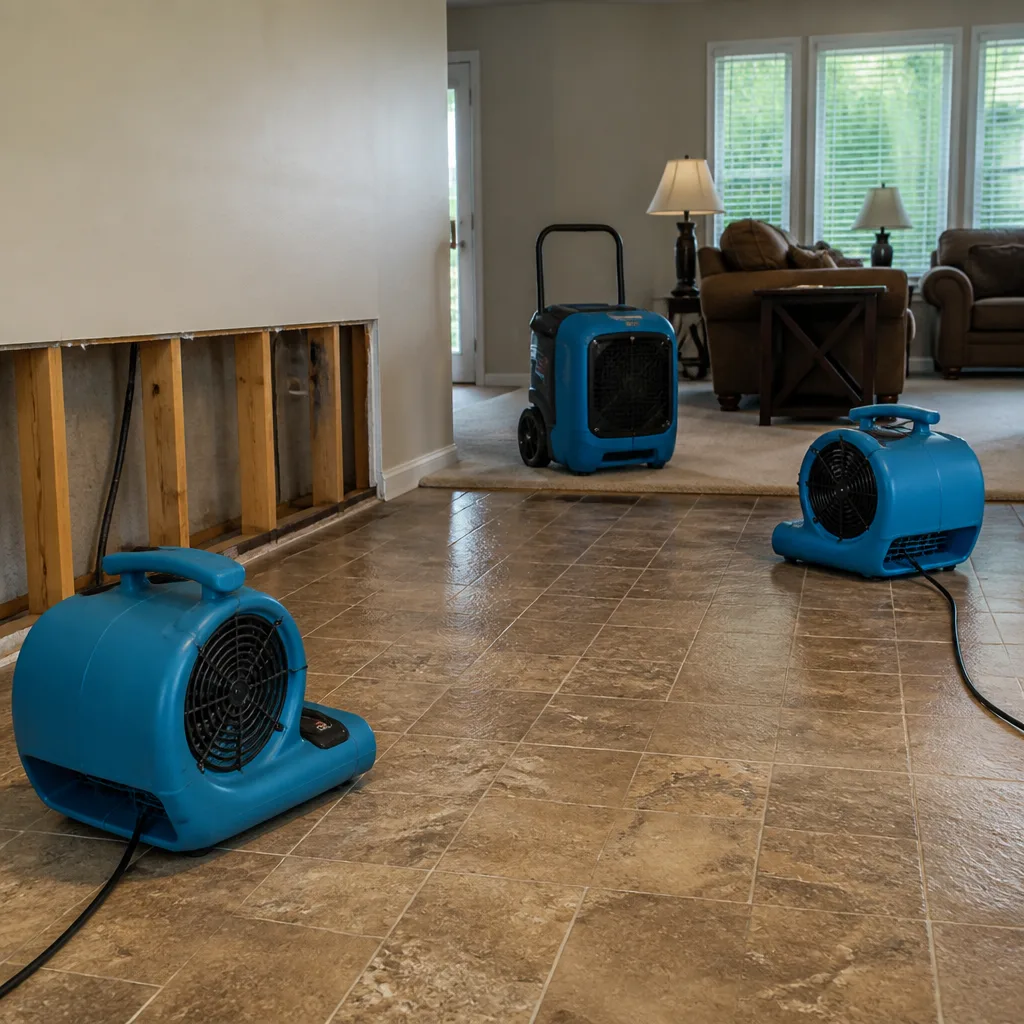
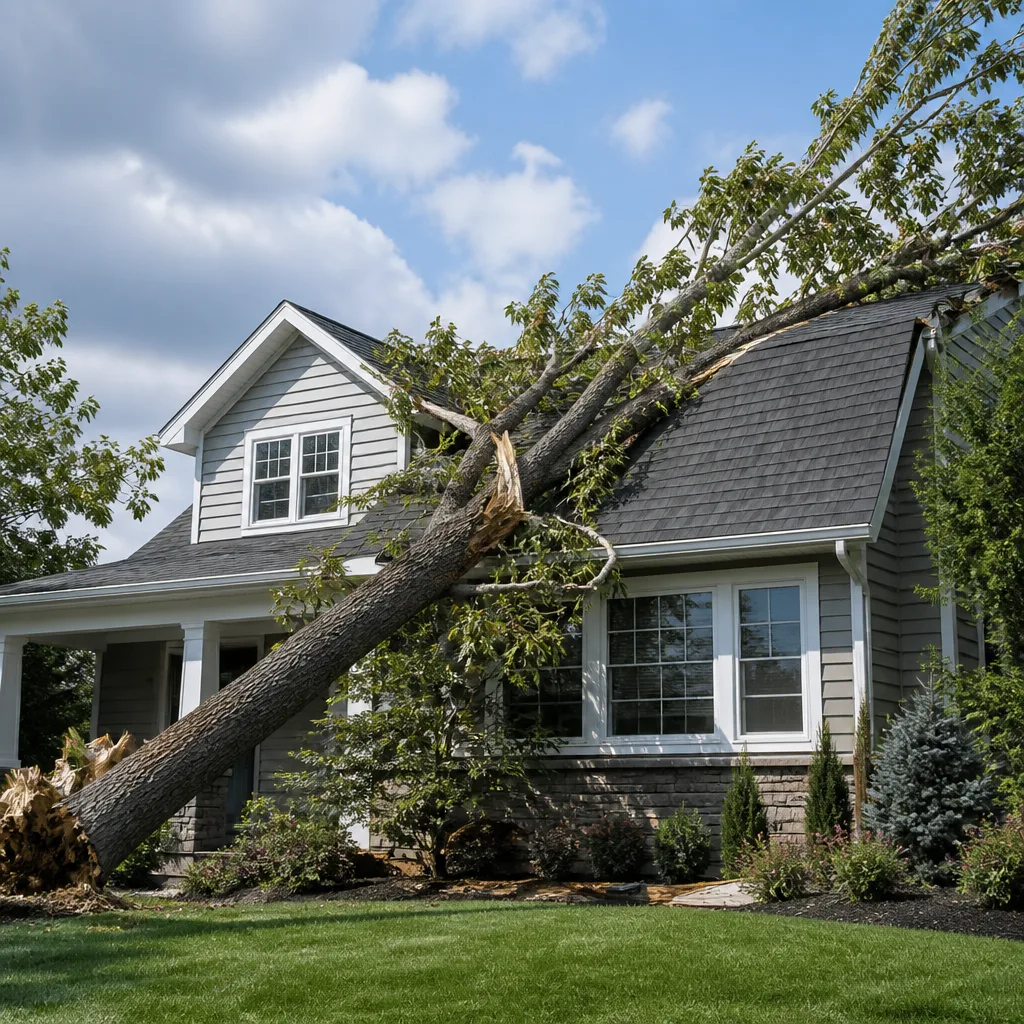
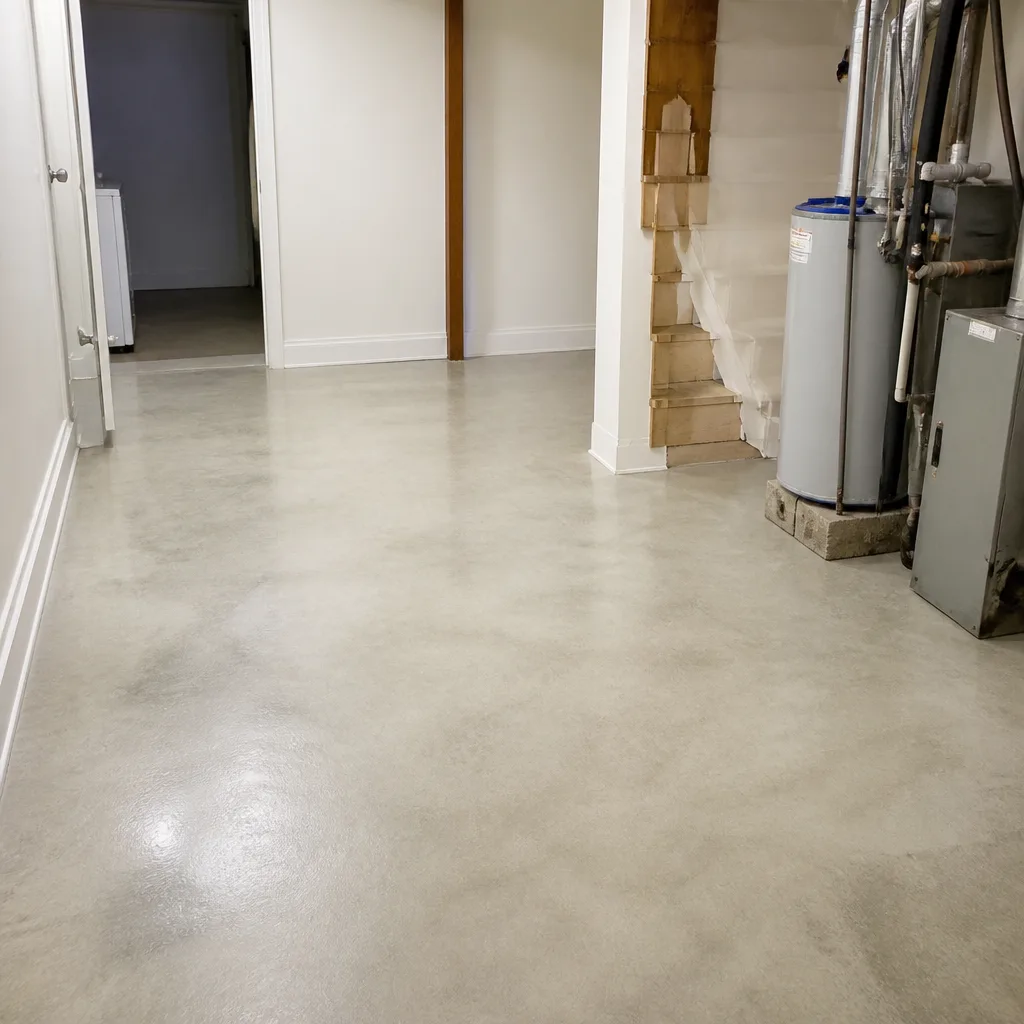
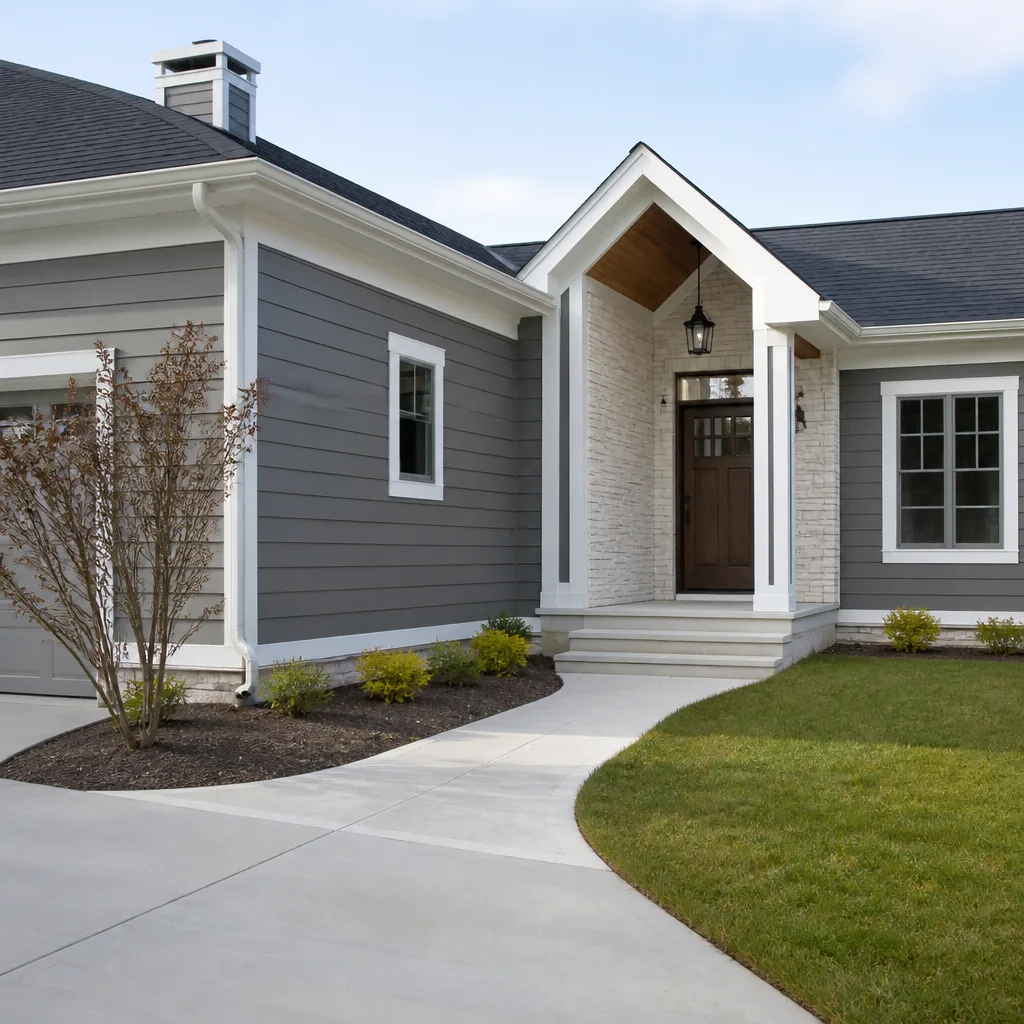
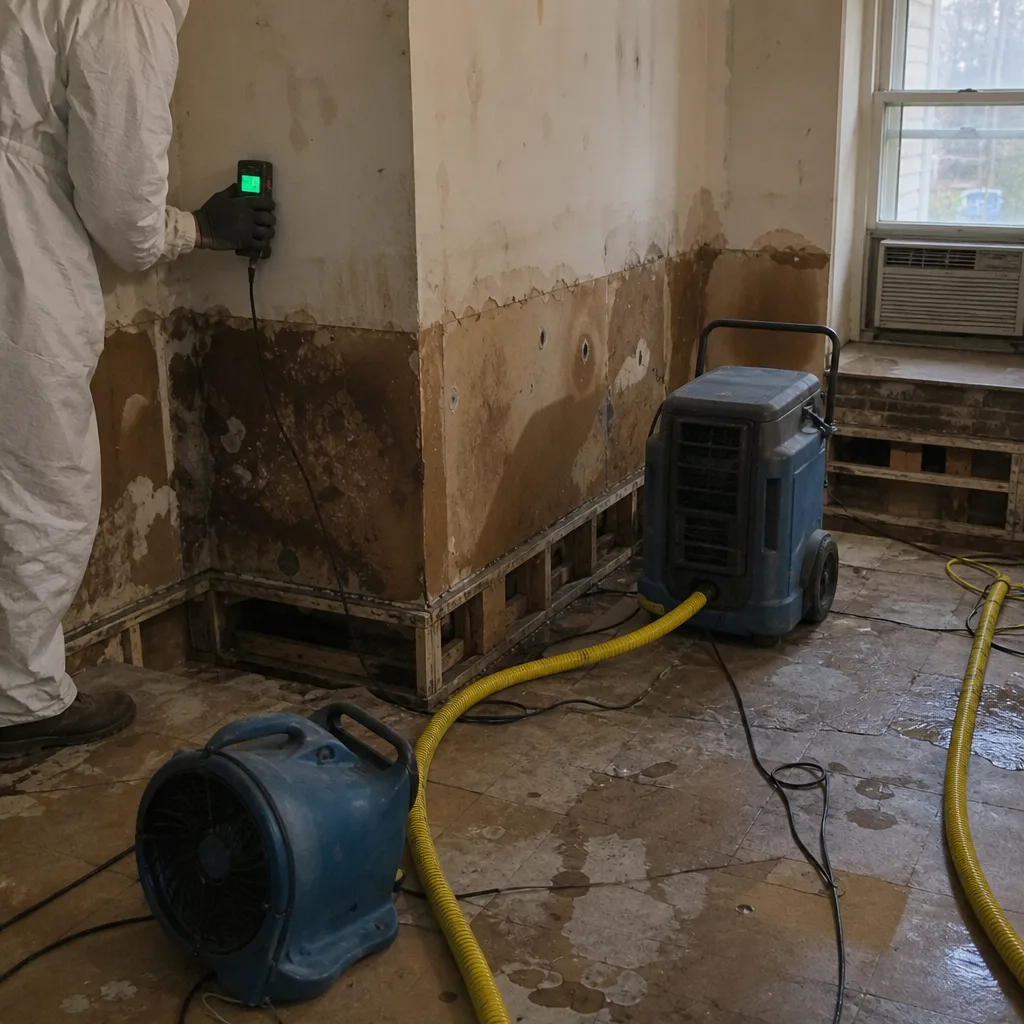 Before
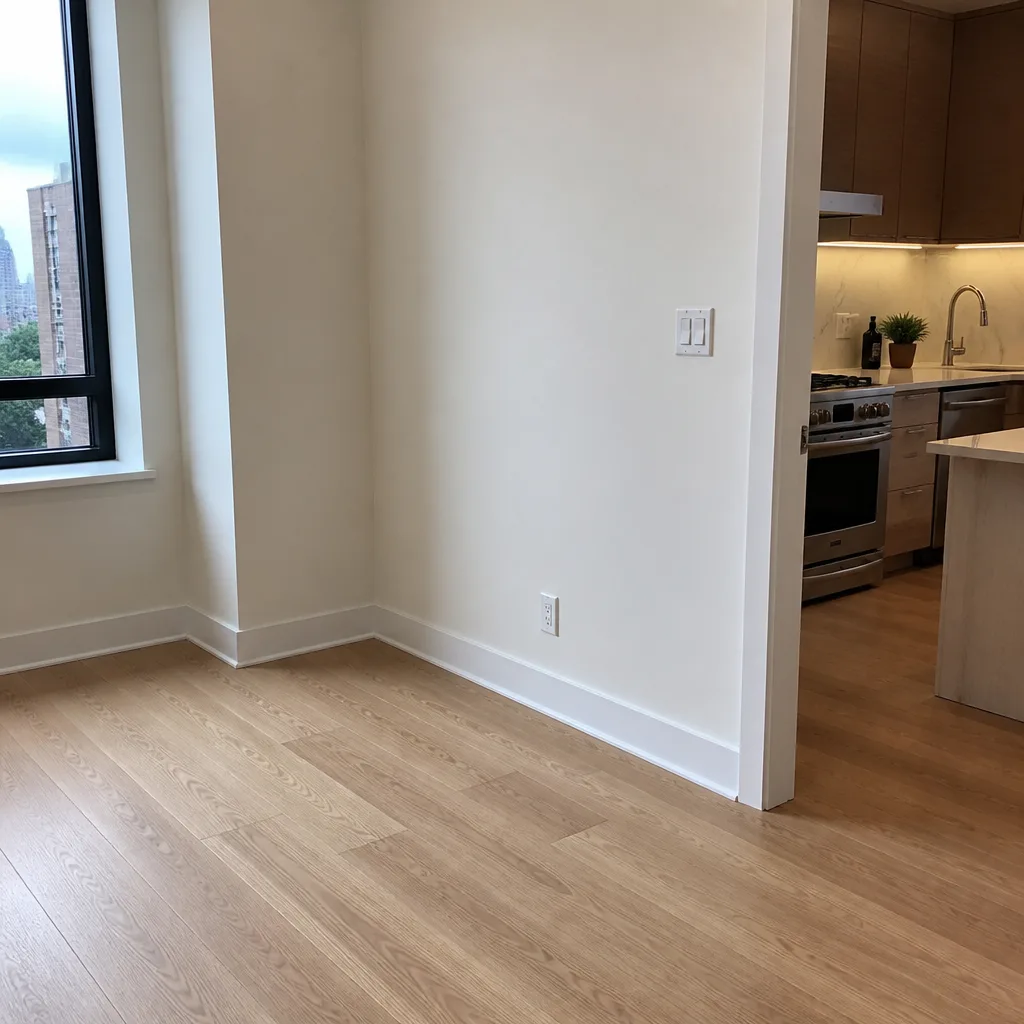 After
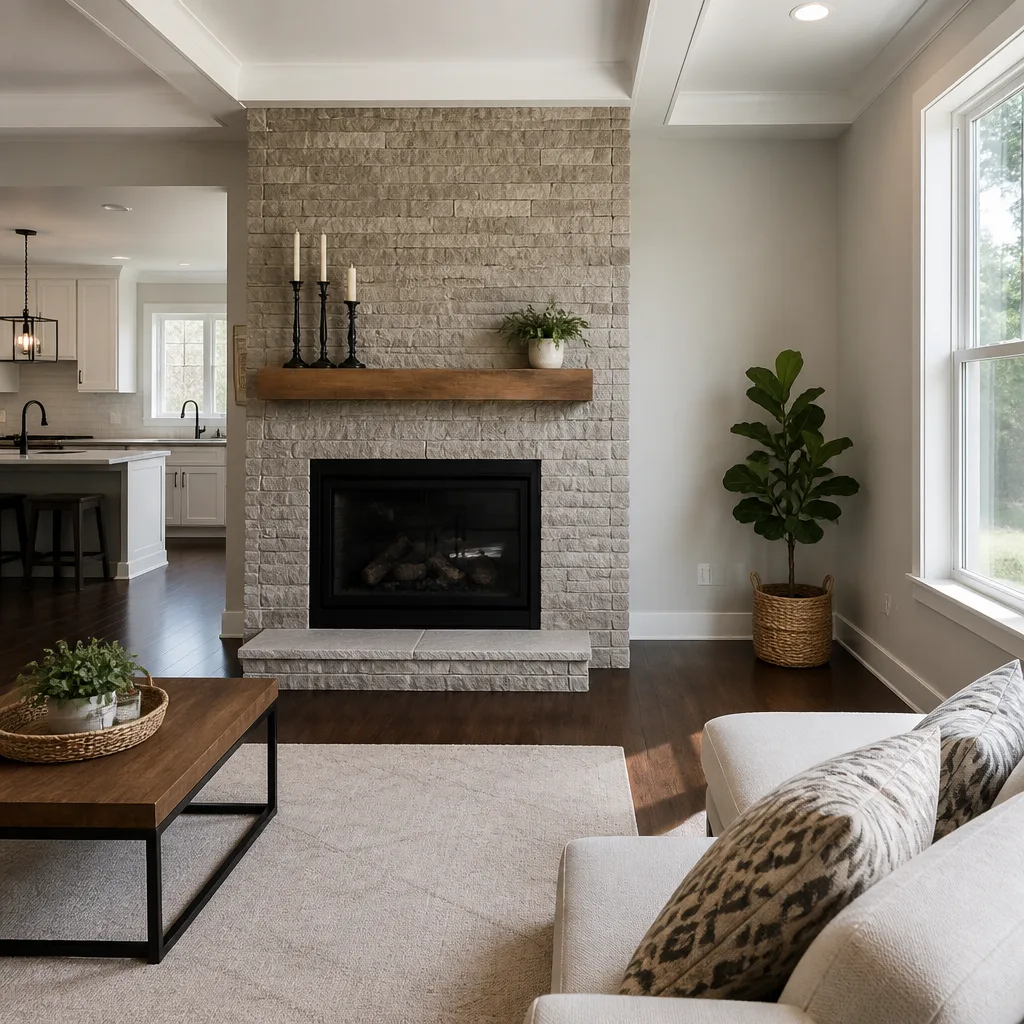
After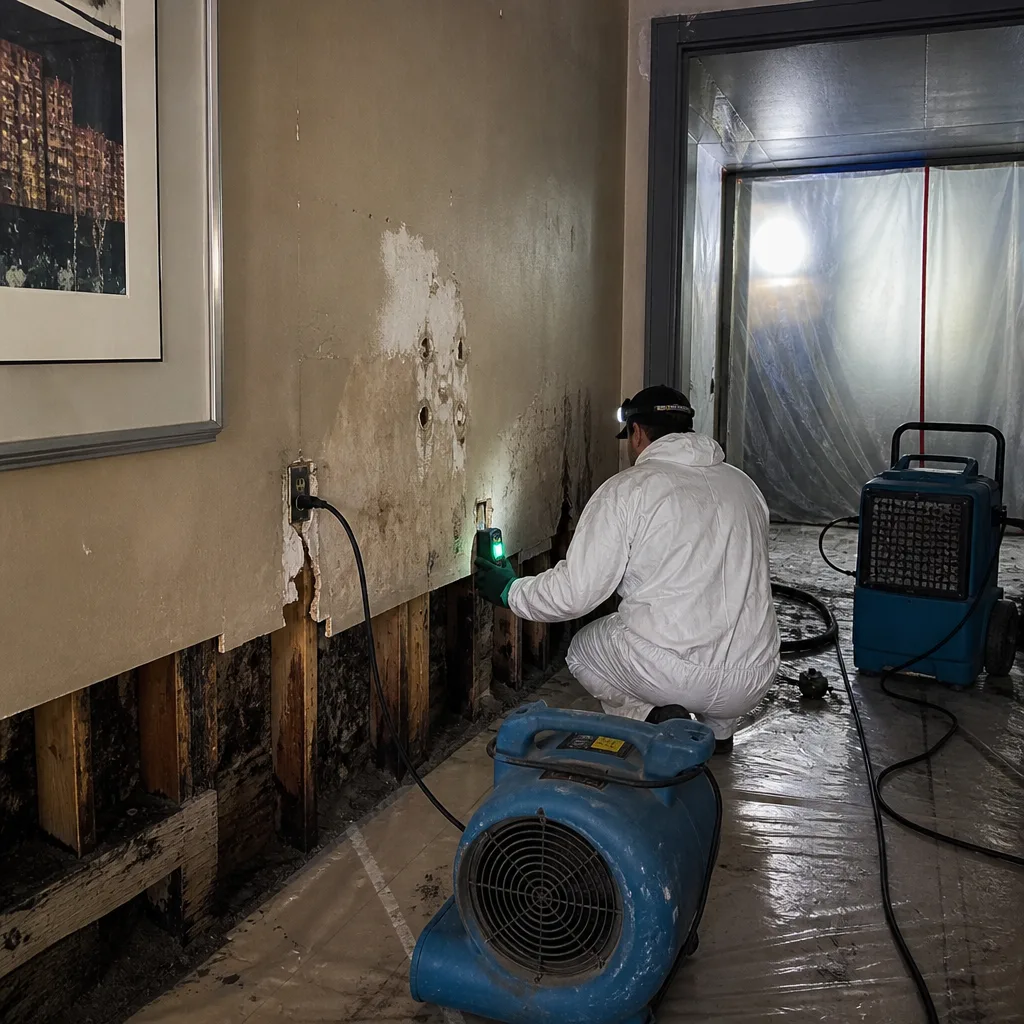 Before
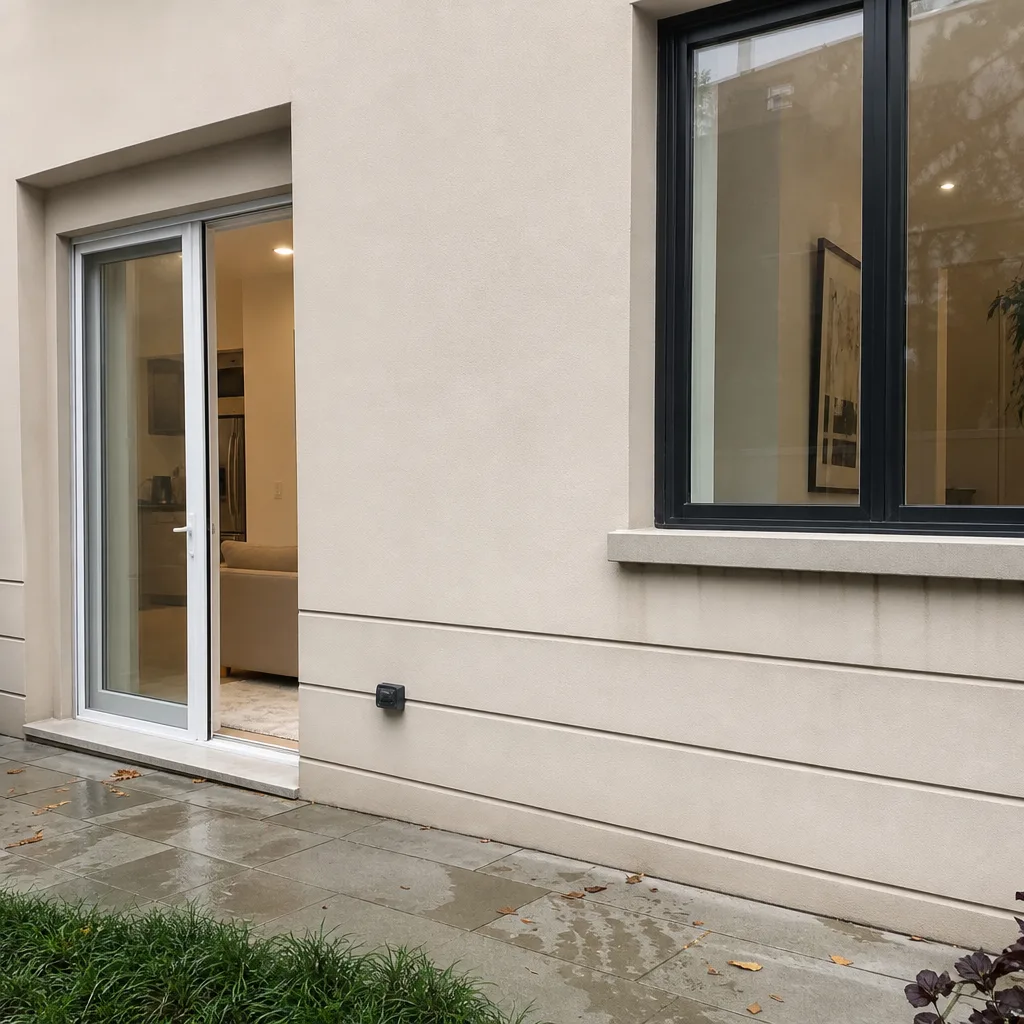 After
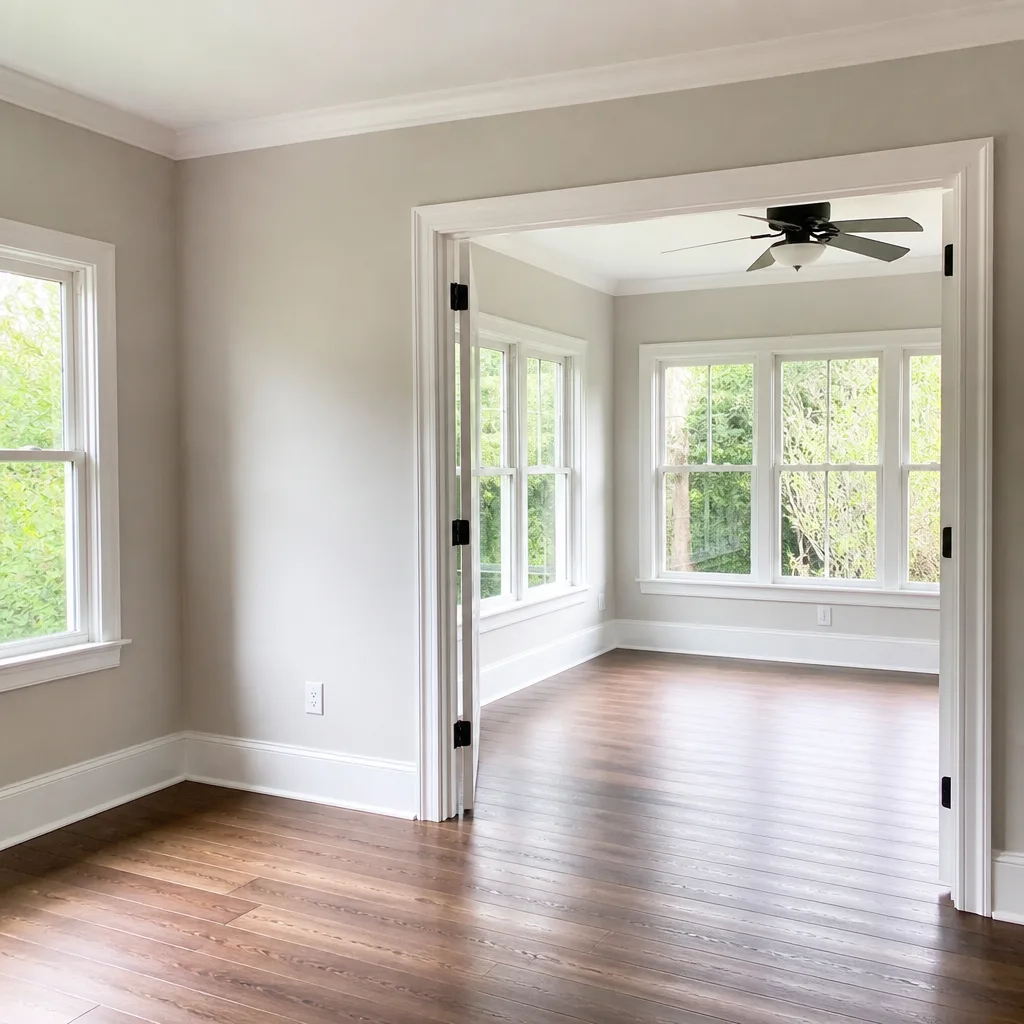
After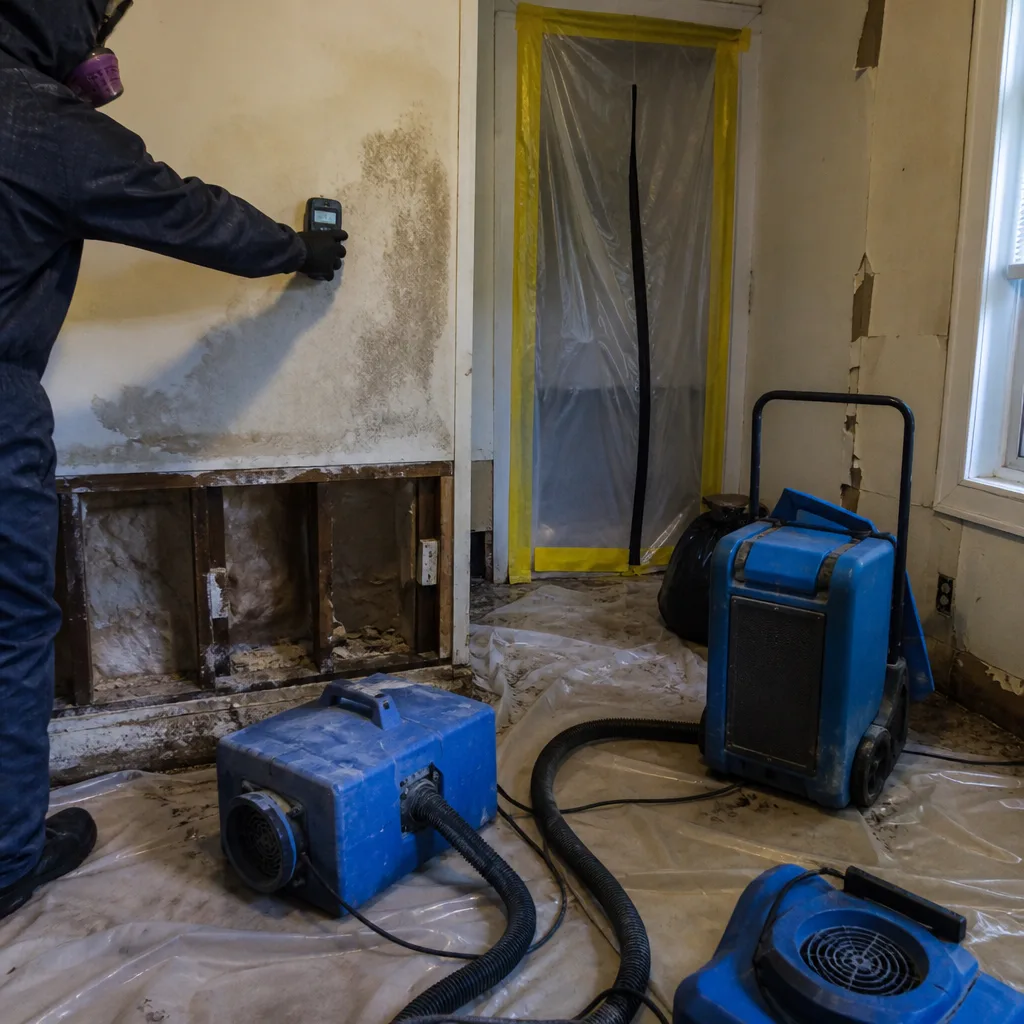 Before
 After
After24/7 Emergency Water Damage Restoration in Williamsburg
Water damage restoration in Williamsburg typically costs $2,800-$7,500 for a standard residential job, with emergency extraction starting at $450 and full structural drying running $1,800-$4,200 depending on square footage and contamination level. Most water losses in Williamsburg require same-day response because the neighborhood’s converted warehouse lofts and aging tenement stock absorb moisture into concrete slabs and plaster-and-lath walls that standard equipment can’t reach. Call (551) 213-5277 now - we answer live, 24 hours a day, 7 days a week, with crews dispatched from our New York City office to Williamsburg in under 45 minutes. Every minute water sits unaddressed, it wicks deeper into materials that weren’t designed for residential drying, turning a contained pipe break into a six-figure reconstruction.
Our Water Damage Restoration team provides free visual inspections with moisture mapping, written scopes delivered before any equipment runs, and photo-documented drying logs that keep your insurance claim moving. The first hour determines whether we’re extracting standing water or demolishing finished surfaces.
Understanding Water Damage Restoration Severity in Williamsburg Properties
IICRC water classification divides every loss into three categories. Category 1 is clean water from a supply line - time and temperature degrade it to Category 2 within 24-72 hours. Category 2 is gray water with chemical or biological contamination, like dishwasher discharge. Category 3 is black water: sewage, ground flooding, or any water that has passed through building materials or soil. In Williamsburg, Category 3 is the default for most jobs, not the exception.
Here’s why. Williamsburg’s position on the East River puts its low-lying blocks - particularly the Kent Avenue waterfront corridor - inside FEMA-designated AE flood zones. Storm surge from nor’easters and tropical systems funnels harbor water into basement and ground-floor units, carrying sewage backflow from overwhelmed combined sewer systems. Hurricane Sandy’s 2012 inundation proved this pattern. Any ground-level water intrusion in these blocks tests positive for coliform bacteria and elevated conductivity, which under IICRC S500 standards makes it Category 3 regardless of original source.
The neighborhood’s housing stock compounds the technical challenge. Late-1800s to early-1900s brick tenements feature plaster-and-lath walls that hold moisture invisibly behind intact surfaces, and cast-iron plumbing that fails catastrophically when corrosion finally breaches the pipe wall. Post-2000 warehouse conversions present the opposite problem: concrete slab floors with no subfloor cavity, exposed brick with no stud framing to remove and replace, and roof membrane systems that fail silently until water has migrated across hundreds of square feet. Psychrometric data - temperature, relative humidity, and vapor pressure differential - guides our drying strategy, but the equipment and protocols differ radically between these building types.
Why Williamsburg Property Owners Choose DryMark Restoration Upper East Side
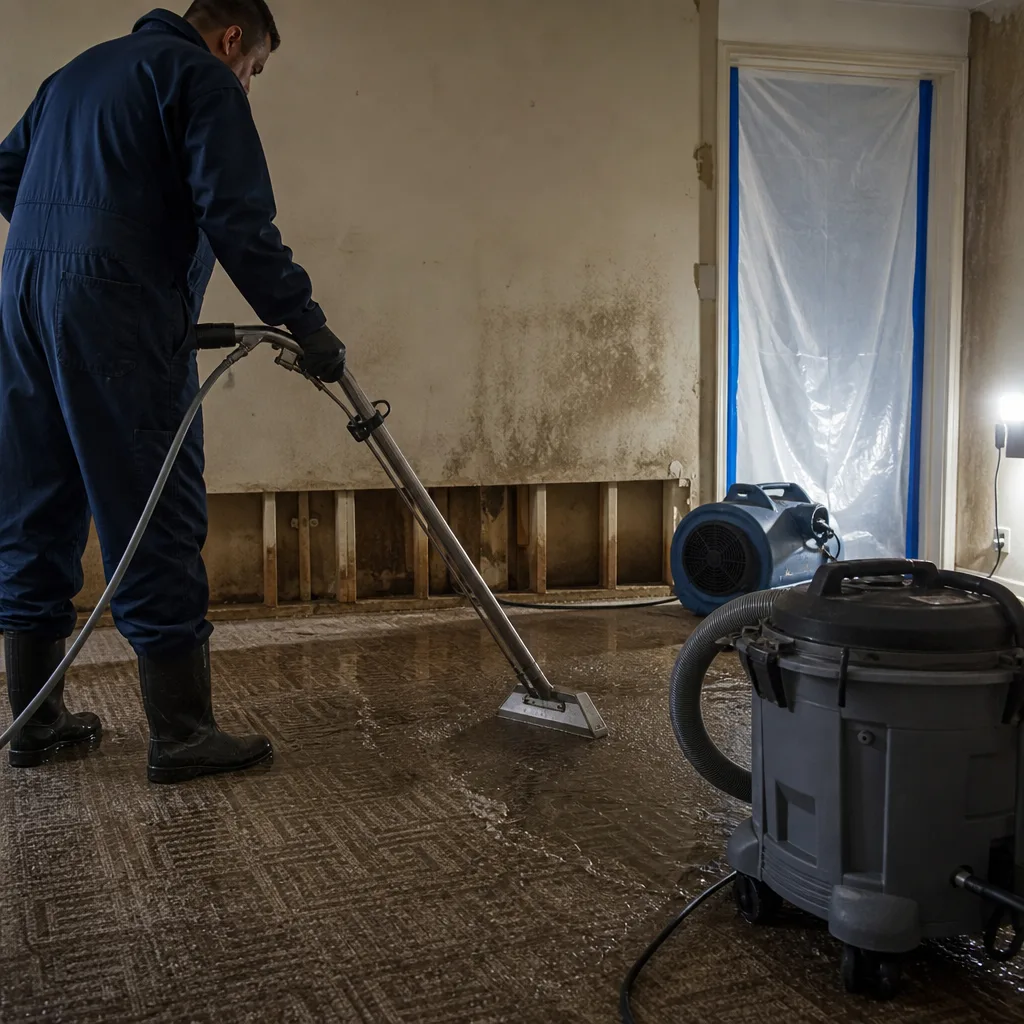
- 45-minute response commitment to Williamsburg from our New York City dispatch office, with GPS-tracked crews and real-time arrival updates.
- 24/7 live answer: a real person picks up every emergency line, never an automated system or voicemail tree, because water doesn’t wait for business hours.
- IICRC-certified crews holding WRT (Water Damage Restoration Technician), ASD (Applied Structural Drying), and AMRT (Applied Microbial Remediation Technician) credentials, with license numbers documented on every job file.
- Free visual inspection with thermal imaging and moisture mapping - no charge, no obligation, and a written scope delivered before any work begins.
- Direct insurance billing with photo-documented estimates, daily drying logs, and adjuster coordination included as standard, never upsold.
- One team from extraction through reconstruction: no handoffs between mitigation and rebuild contractors, no gaps in documentation, no disputed invoices.
BeforeAfterOur Water Damage Restoration Process
1. Inspection & Assessment
We arrive with thermal imaging cameras, non-invasive moisture meters, and pin-type probes for verification. In Williamsburg’s converted lofts, we map concrete slab saturation with specific gravity testing and calcium chloride vapor emission testing where indicated. You receive a written scope with line-item pricing before any equipment starts - Haven Standard, Clause 1.
2. Extraction & Stabilization
Standing water is removed with truck-mounted extraction systems and weighted extraction tools for carpeted areas. For Category 3 losses, we establish containment with 6-mil polyethylene barriers and negative air pressure using HEPA-filtered air scrubbers to prevent cross-contamination to unaffected spaces.
3. Drying & Dehumidification
We deploy low-grain refrigerant dehumidifiers from Dri-Eaz and Phoenix, axial and centrifugal air movers from XPOWER and B-Air, and for concrete slabs and dense masonry, Injectidry panel systems that deliver heated, dehumidified air into cavities and beneath floor coverings. Drying is monitored daily with calibrated hygrometers and documented on IICRC-compliant drying logs.
4. Cleaning & Sanitization
All affected surfaces receive antimicrobial treatment appropriate to contamination level. Category 3 losses require EPA-registered disinfectants applied to IICRC S500 standards, with clearance documentation for your insurance file and local health department if required.
5. Moisture Verification & Documentation
We verify drying completion with moisture content readings compared to dry standard measurements from unaffected areas of the same structure. For plaster-and-lath walls, we use deep-wall probes to confirm cavity dryness, not just surface readings. The photo record and drying log become your insurance documentation package.
6. Repairs & Restoration
Our reconstruction team repairs or replaces damaged materials to pre-loss condition, with a written price before work begins and the 365-Day Done Right Promise under The Haven Standard. No separate contractor, no scope gaps, no finger-pointing if something needs correction.
Need Emergency Water Damage Restoration in Williamsburg Now?
Crews minutes away, answering live 24 hours a day. The sooner we start, the less it costs.
Working With Your Insurance Company
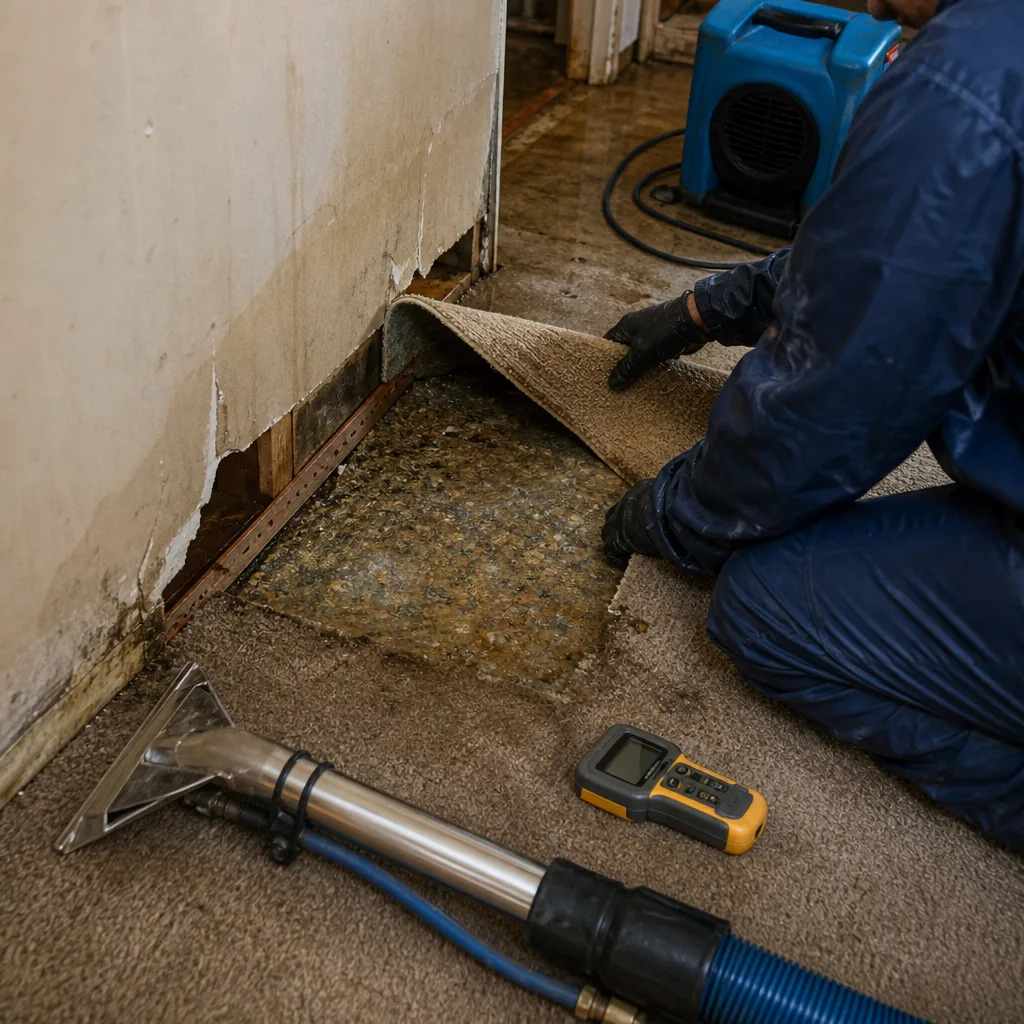
Insurance claims fail on documentation gaps. We close those gaps from hour one. Every DryMark Restoration Upper East Side job in Williamsburg begins with a photo record before any equipment touches the property, continues with daily moisture readings and drying logs, and ends with a line-item scope that matches industry-standard estimating platforms. Your adjuster receives direct communication, not voicemail tag, and we coordinate site visits to walk them through the loss in person when required.
We also provide direct billing to most major carriers, which means you’re not floating thousands in mitigation costs while waiting for claim approval. For disputed or complex claims, our documentation package - photos, moisture logs, material classifications, and written scope - gives your public adjuster or attorney the evidence base they need.
What We Provide Your Insurer
- Thorough documentation of the loss
- Photos of all damage, room by room
- Moisture readings and drying logs
- A detailed, line-item scope of work
- Direct coordination with your carrier
Built for Williamsburg’s Loss Calendar
January deep freezes split aging cast-iron and galvanized supply lines in Williamsburg’s pre-war tenements, particularly where pipes run through unheated exterior walls or basements. The damage often isn’t discovered until morning, by which time hundreds of gallons have saturated plaster-and-lath walls that hold water like a sponge. Spring thaw brings basement seepage through century-old foundations, compounded by the neighborhood’s combined sewer system backing up during heavy rain events. Summer thunderstorms deliver flash flooding to low-lying blocks near the East River, and every nor’easter threatens the Kent Avenue waterfront with storm surge that can overwhelm ground-floor units in hours. If fire or smoke damage also occurs during these events, our Fire & Smoke Damage Restoration in Williamsburg handles the full scope. Fall is preparation season: we inspect roof membranes on converted warehouse buildings where a single seam failure can saturate concrete slabs across multiple units before anyone notices a ceiling stain.
Water Damage Restoration Across Williamsburg’s Neighborhoods
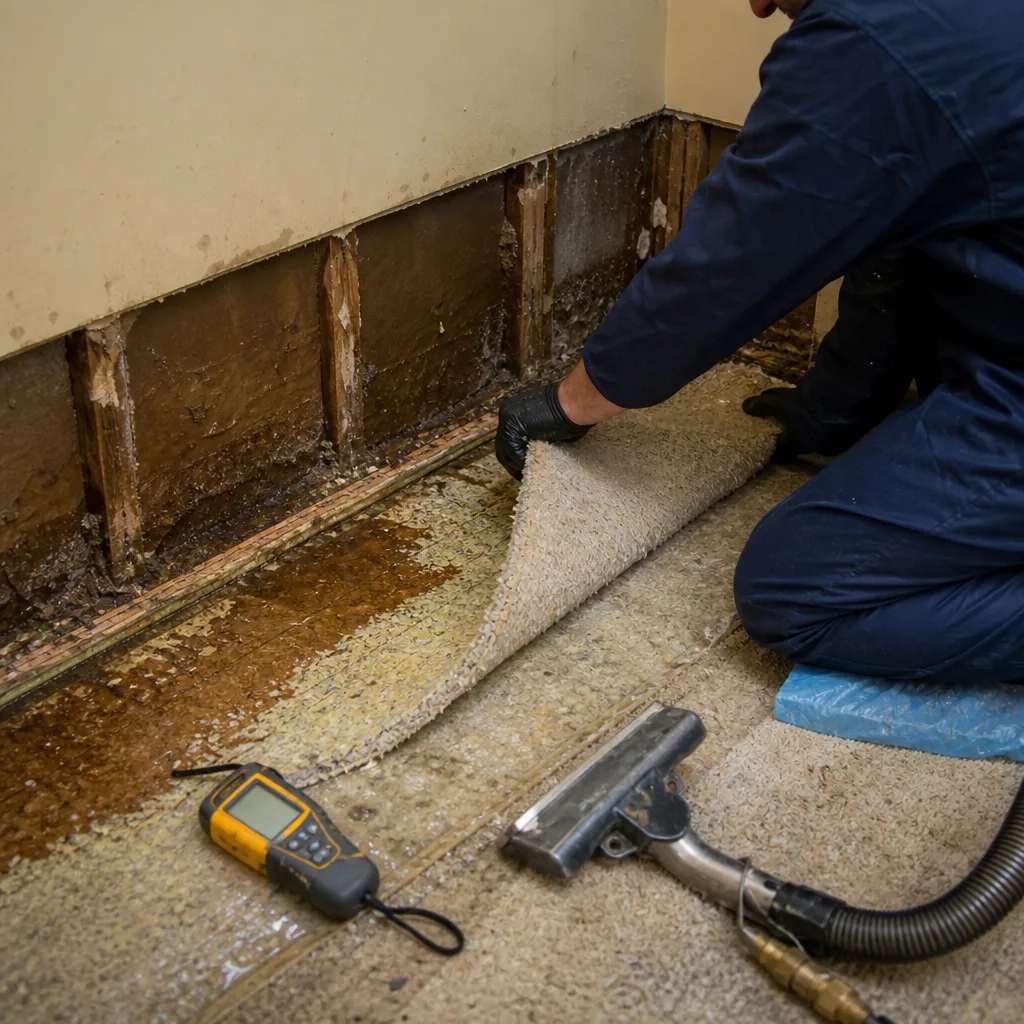
We respond across all of Williamsburg, with protocols adjusted to each corridor’s building stock and risk profile.
North Williamsburg - the Bedford Avenue corridor and blocks east to the waterfront - mixes late-19th-century brick row houses with some of the neighborhood’s earliest warehouse conversions. The tenements here have original plaster-and-lath walls, slate or tar-and-gravel roofs, and basements that flood seasonally through porous limestone foundations. We carry deep-wall drying systems and desiccant dehumidifiers for these structures because standard refrigerant dehumidifiers can’t pull moisture from dense masonry fast enough.
The Kent Avenue Waterfront - from North 14th Street south to Broadway - is where our most technically demanding jobs occur. These converted industrial buildings sit in FEMA AE flood zones, with concrete slab floors, exposed load-bearing masonry, and no cavity framing to access for drying. We got a call from a converted textile mill loft on Kent Avenue where a burst pipe had flooded a 1,200-square-foot concrete slab. Our techs used thermal imaging to map the saturation across the slab and set up Injectidry panels for structural drying the owner couldn’t access with standard air movers. We completed the job in six days with drying logs showing all moisture readings back to pre-loss condition.
South Williamsburg - below the Williamsburg Bridge to Flushing Avenue - retains a higher concentration of original tenement housing with aging infrastructure. Cast-iron plumbing here is often 80-120 years old, and when it fails, the water volume is substantial. We see more burst pipe restoration and ceiling collapse from overhead leaks in this zone than anywhere else in the neighborhood.
East Williamsburg - the industrial zone stretching toward Bushwick - has seen rapid residential conversion of former factories. These buildings present the same concrete-slab challenges as Kent Avenue, with the added complication that many lack original drainage infrastructure, so basement water removal requires pumped discharge systems that comply with NYC DEP regulations.
Specialized Water Damage Restoration Services We Offer in Williamsburg
Emergency Water Extraction
Standing water is removed within hours of your call using truck-mounted and portable extraction equipment. For Williamsburg’s Category 3 flood losses, extraction includes preliminary contamination control and documentation for your insurance carrier.
Structural Drying & Dehumidification
This is where Williamsburg’s building stock demands expertise standard residential contractors don’t carry. Concrete slab floors in converted warehouses require vapor pressure differential management using low-grain refrigerant dehumidifiers and supplemental heat, often for 5-7 days. Plaster-and-lath walls need targeted air circulation and deep-probe verification. We deploy Injectidry systems, Dri-Eaz and Phoenix dehumidifiers, and B-Air and XPOWER air movers in configurations specific to your building type, not a one-size-fits-all setup.
Flood Cleanup
Williamsburg’s flood cleanup is almost always Category 3 work due to combined sewer backflow in low-lying blocks. We establish containment, remove contaminated porous materials per IICRC S500, apply EPA-registered disinfectants, and provide clearance documentation. This is not a cleaning job for a general contractor or a rental shop dehumidifier.
Burst Pipe Restoration
From frozen supply lines in January to corroded cast-iron drainage in century-old tenements, we extract, dry, and document the full damage footprint. Our reconstruction team then repairs or replaces affected finishes with a written price before work begins.
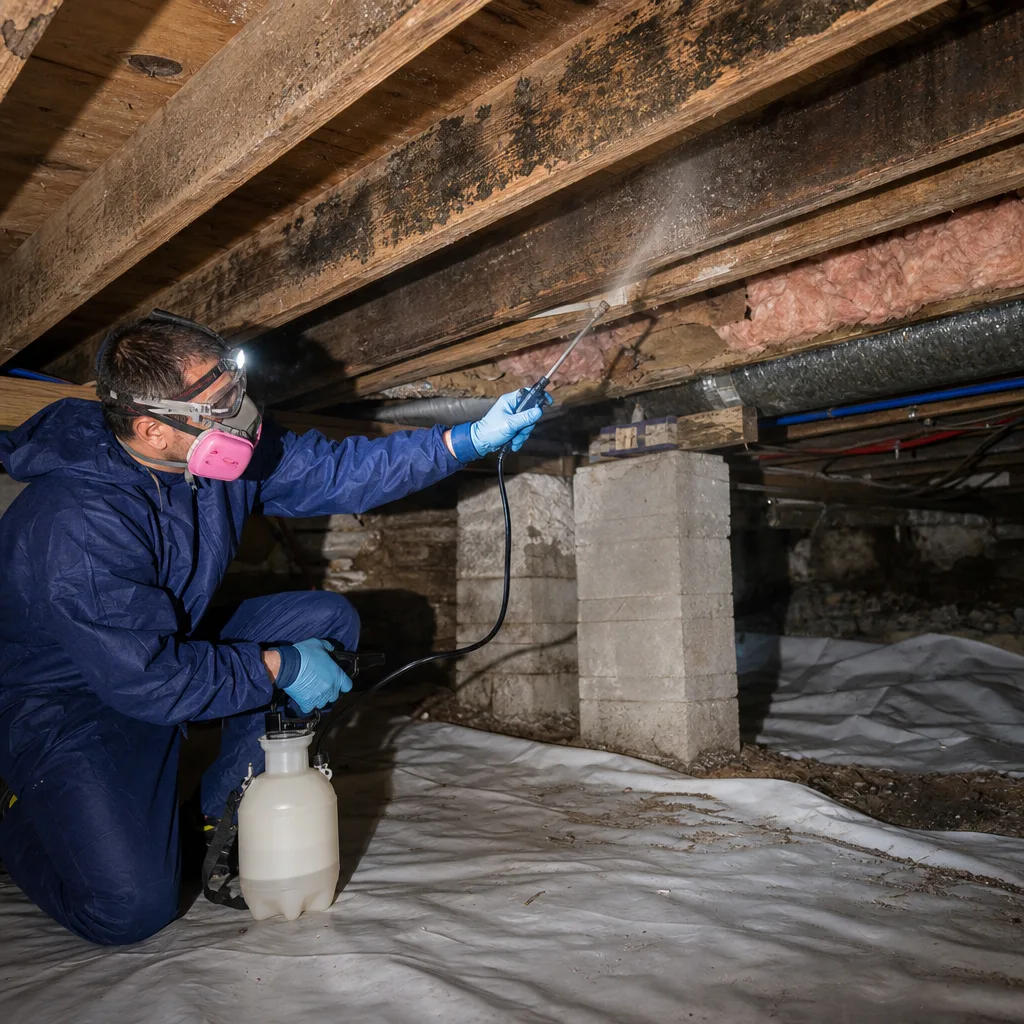
Basement Water Removal
Williamsburg basements - particularly in pre-war buildings and ground-floor units in flood zones - require submersible pumps, discharge compliance with NYC DEP requirements, and often vapor barrier installation post-drying to prevent recurrence. We handle the full sequence, including permit coordination if discharge modifications are needed.
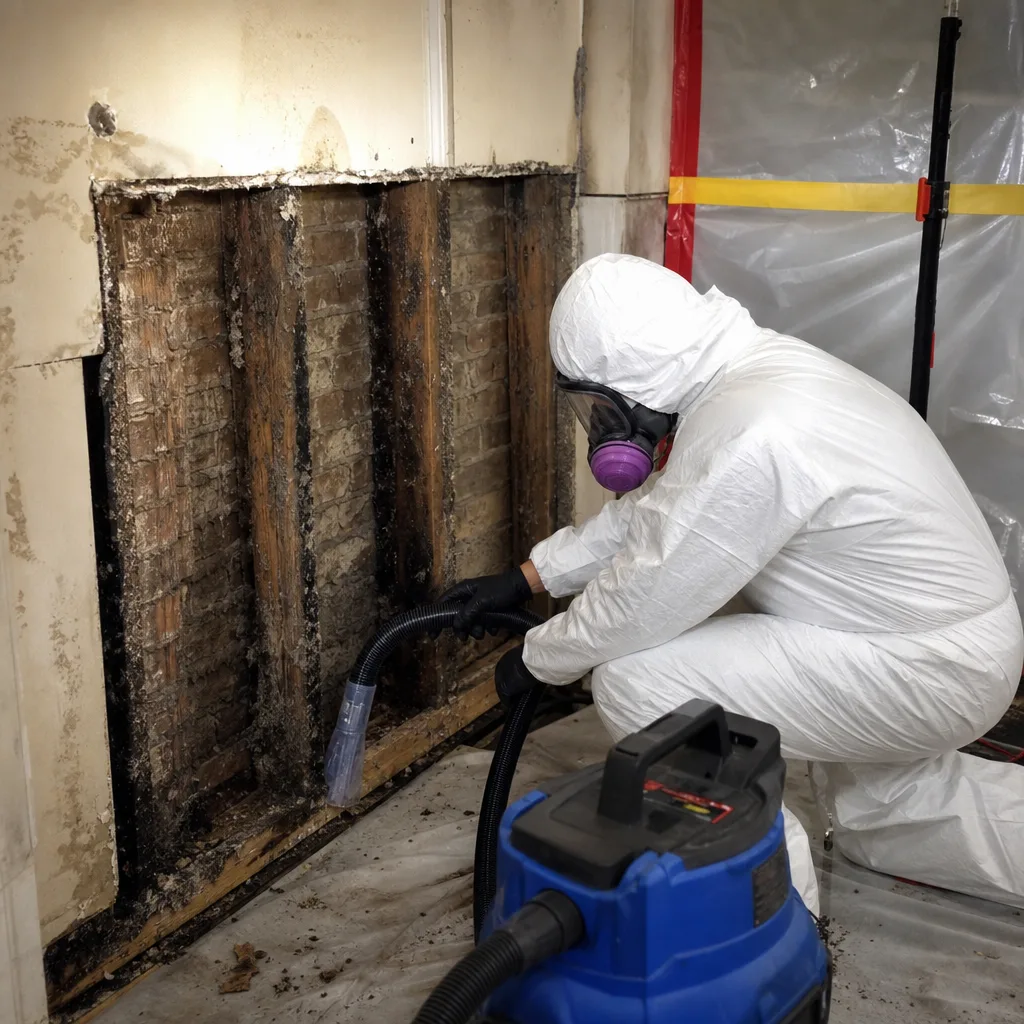
Ceiling & Roof Leak Water Damage
Flat roofs and membrane systems on converted warehouses fail at seams and penetrations. We trace water migration paths through thermal imaging, dry affected assemblies, and repair or replace ceiling and wall finishes. For roof leaks in multi-unit buildings, we coordinate with building management and your insurance to document shared-system damage.
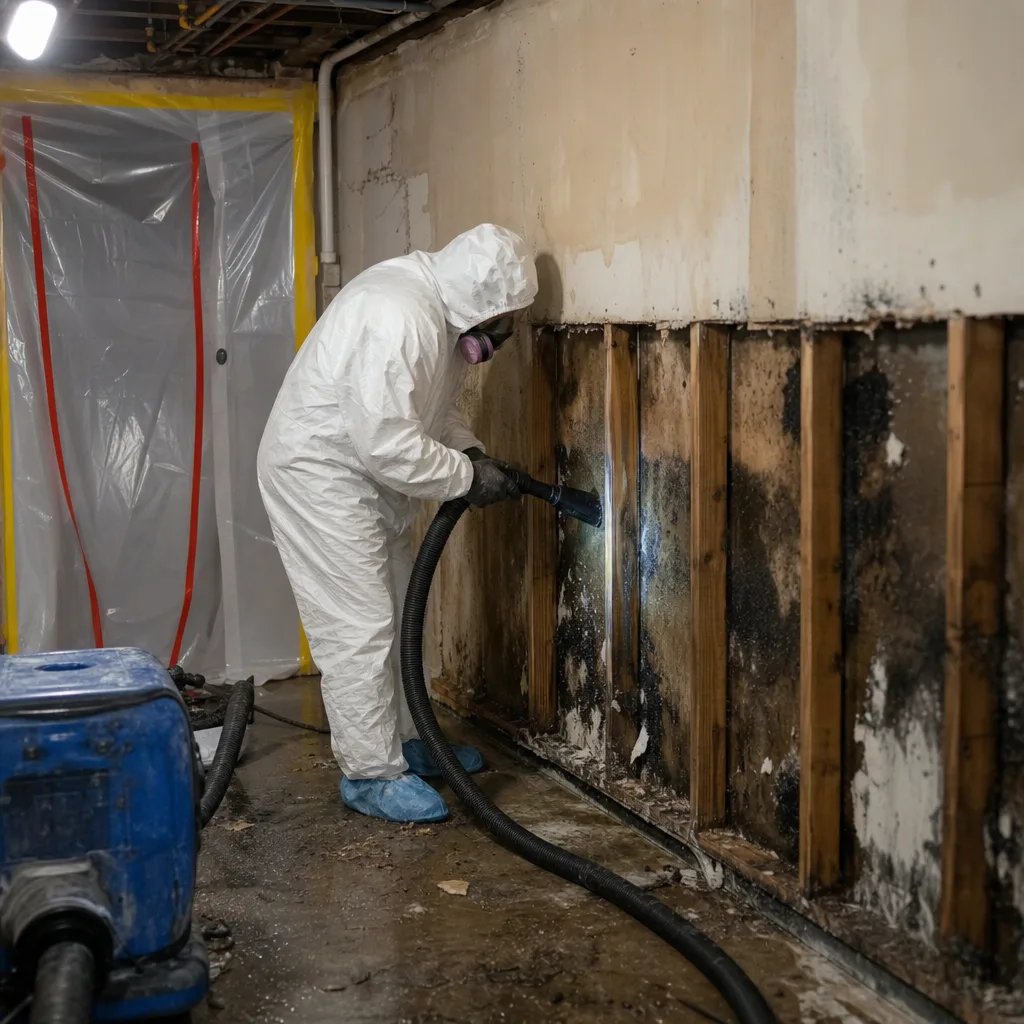
What happens when you call
- 1
A real person answersNo phone trees - you reach a local pro.
- 2
You get an upfront price rangeHonest numbers before anyone is dispatched.
- 3
A background-checked tech heads outLicensed & insured, dispatched right away.
- 4
You approve before work beginsNothing starts until you say go.
Water Damage Restoration Costs in Williamsburg, NY
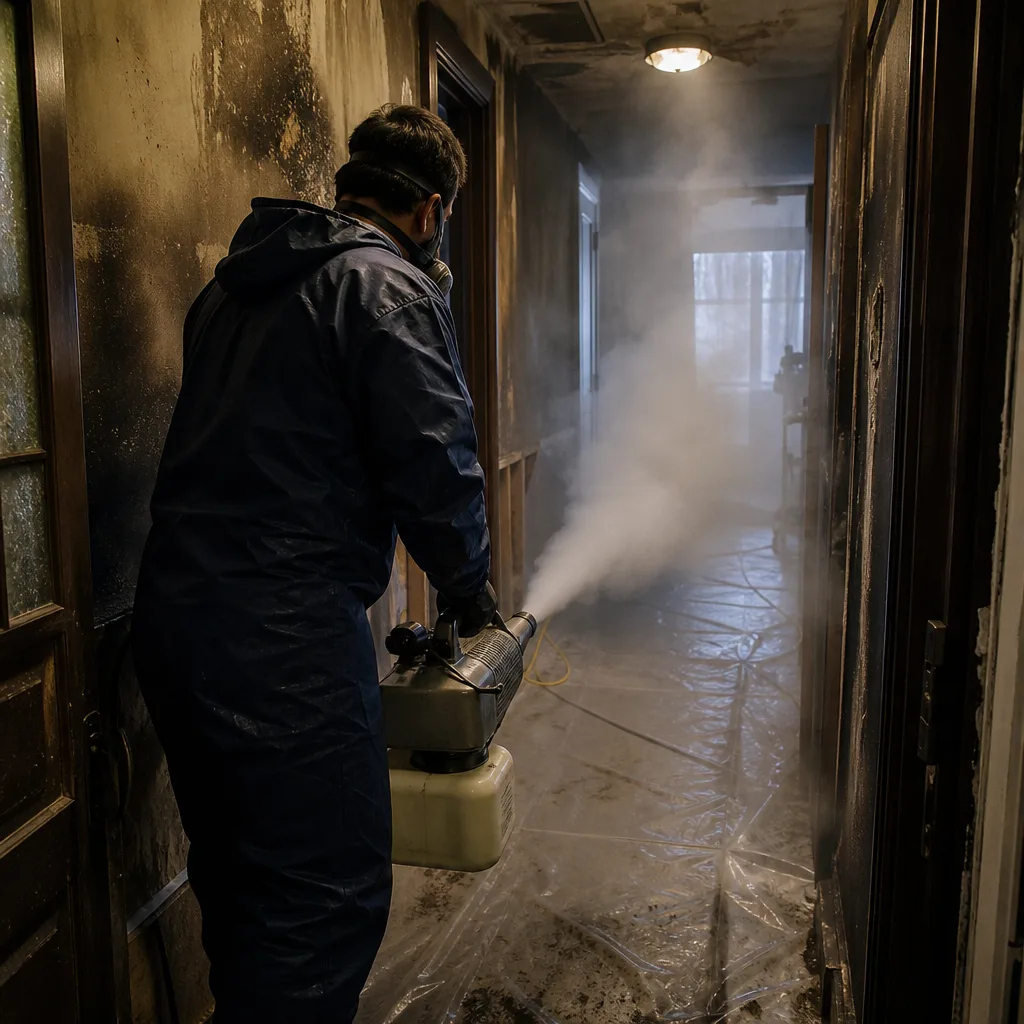
Honest pricing for Williamsburg’s market, based on 12,000+ jobs completed since 2011:
| Service | Typical Range |
|---|---|
| Emergency water extraction (up to 500 sq ft) | $450 - $950 |
| Structural drying & dehumidification (standard residential) | $1,800 - $4,200 |
| Category 3 flood cleanup with contamination control | $3,500 - $8,500 |
| Concrete slab drying (warehouse/loft conversion) | $2,200 - $5,800 |
| Plaster-and-lath wall drying with deep-probe verification | $1,400 - $3,600 |
| Full-service water damage restoration (extraction through reconstruction) | $5,500 - $18,000+ |
What moves the price: square footage affected, contamination category, building type (concrete slab vs. framed cavity), accessibility for equipment, and whether reconstruction is included. Insurance typically covers sudden and accidental water damage from supply line failures and weather events, excluding gradual leaks and maintenance issues. We provide a free visual inspection with written scope - Haven Standard, Clause 1 - so you know your exact cost before any work begins. Bring a competitor’s written estimate and we’ll review it at no charge.
We Also Serve Cities Near Williamsburg
Our crews respond throughout the immediate metro area, including Water Damage Restoration in Williamsburg and neighboring communities: Upper East Side, Manhattan, Upper West Side, and Astoria. Dispatch and scheduling are coordinated from our New York City office.
Serving Williamsburg, NY - Our Local Coverage Area
We’re based in the Williamsburg area and know this community well. Use the map below to see our service coverage - if you’re nearby, we can almost certainly help.
Williamsburg Water Damage Restoration Questions, Answered
Why is water damage different in Williamsburg’s converted warehouses than in typical homes?
Converted industrial lofts have concrete slab floors with no subfloor cavity, exposed brick and load-bearing masonry with no stud framing to remove and inspect, and roof membrane systems that fail silently. Standard residential drying protocols - pin-type moisture meters, cavity-based air circulation, and rapid material removal - don’t apply. We use thermal imaging for saturation mapping, Injectidry panel systems for slab drying, and vapor pressure differential management that can extend 5-7 days. Call (551) 213-5277 for a free inspection with moisture mapping.
What does Category 3 water mean for my Williamsburg basement unit?
Category 3 water is grossly contaminated and requires containment, removal of porous materials, EPA-registered disinfectants, and professional drying verification under IICRC S500 standards. In Williamsburg’s low-lying blocks - particularly the Kent Avenue waterfront and areas with combined sewer systems - basement flooding from storms or sewer backup is Category 3 by definition, regardless of how clean the water initially appears. Contractors who treat it as Category 1 skip antimicrobial treatment and fail health inspections. We document contamination classification with conductivity and coliform testing for your insurance file. Call (551) 213-5277 for immediate response.
How fast can mold start after a roof leak in my Williamsburg loft?
Mold colonization begins in 24-72 hours on organic materials with moisture content above 16%, which describes most cellulose-based building materials in humid conditions. In Williamsburg’s converted lofts, concrete slabs wick water slowly but hold it for weeks, and exposed brick provides mineral substrate for mold where dust and organic debris accumulate. The hidden danger is roof membrane leaks that saturate insulation or structural decking above the concrete - by the time you see a ceiling stain, mold may be established in the overhead assembly. We find it with thermal imaging and borescope inspection, then dry or remove affected materials before remediation is needed. Call (551) 213-5277 for same-day moisture mapping.
Can you dry water-damaged plaster-and-lath walls in a Williamsburg tenement without demolishing them?
Yes, in many cases. Plaster-and-lath is dense and slow-drying, but it’s also more moisture-tolerant than drywall and can often be saved with targeted air circulation, dehumidification, and deep-wall probe verification. The key is reaching equilibrium moisture content - typically 12% or below for interior plaster in New York’s climate - before repainting or refinishing. We use Injectidry systems to deliver dry air into wall cavities and monitor daily with calibrated meters. Demolition is reserved for plaster that has detached from lath or shows structural compromise. Call (551) 213-5277 for a free assessment and written scope.
Do you provide emergency water extraction for Williamsburg’s East River waterfront during nor’easters?
Yes. We maintain 24/7 live dispatch and pre-position equipment during severe weather forecasts. For Williamsburg’s waterfront blocks in FEMA AE flood zones, we coordinate with building management and emergency services to access properties safely, extract standing water, establish Category 3 containment, and begin documentation for FEMA and insurance claims. Response time depends on street accessibility during active flooding, but our crews are staged and ready. Call (551) 213-5277 before, during, or after the storm - we answer live.
How quickly can you actually get to my Williamsburg property?
Our commitment is 45 minutes from dispatch to arrival in Williamsburg, coordinated from our New York City office. Live answer 24/7 means no voicemail delay. Actual arrival varies with traffic, weather, and simultaneous events, but GPS tracking lets you monitor crew location in real time. For active flooding or Category 3 contamination, we prioritize based on health risk and structural threat, not call order alone. Call (551) 213-5277 now for current ETA.
Will my insurance cover water damage restoration in Williamsburg?
Most homeowner and commercial policies cover sudden and accidental water damage from supply line failures, appliance overflows, and weather events, minus your deductible. They typically exclude gradual leaks, maintenance issues, and flooding from outside rising water unless you carry separate flood insurance through NFIP. For Williamsburg properties in FEMA AE zones, we strongly recommend verifying flood coverage. We provide the documentation package - photos, moisture logs, written scope, contamination classification - that makes your claim payable, and we bill most carriers directly. Call (551) 213-5277 and we’ll review your policy implications during the free inspection.
What should I do in the first 30 minutes after discovering water damage?
Shut off the water source if it’s a supply line break and safe to access. Turn off electricity to affected areas if water has reached outlets or switches. Remove small valuables and documents from the wet area. Do not enter standing water if electrical hazard exists. Do not use a household vacuum on water. Then call (551) 213-5277. We answer live, dispatch immediately, and guide you through immediate safety steps while crews are en route. The first 30 minutes determines whether we’re extracting water or demolishing walls.
Water damage in Williamsburg doesn’t respond to standard playbooks. The neighborhood’s FEMA flood zones, combined sewer vulnerability, and non-standard building stock - concrete slabs, plaster-and-lath, warehouse conversions with no cavity framing - require IICRC-certified technicians with equipment and protocols most residential contractors don’t carry. We bring that capability, document every step, and guarantee the result in writing under The Haven Standard.
Call (551) 213-5277 for a free visual inspection with moisture mapping and a written price before any work begins. Estimates are free. Second opinions on any competitor’s written estimate are free. The call is live, right now.
Written by Alicia Brennan, Owner at Back to Dry Restoration, serving Williamsburg since 2011 under The Haven Standard.