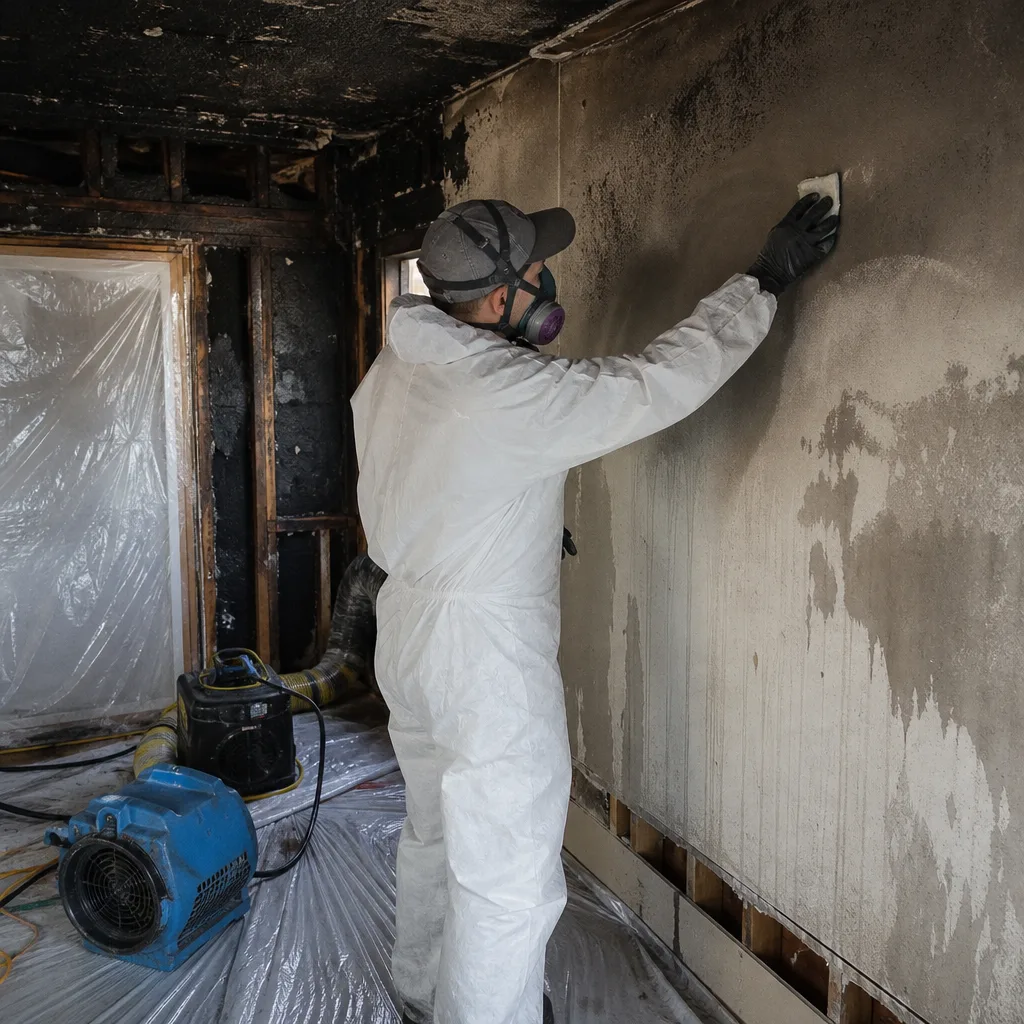
Free visual inspection and a written scope of work before any mitigation begins - photos, moisture readings, and drying logs go in your claim file
The scope we write is the scope we bill. Anything new gets shown to you, in writing, before we touch it.
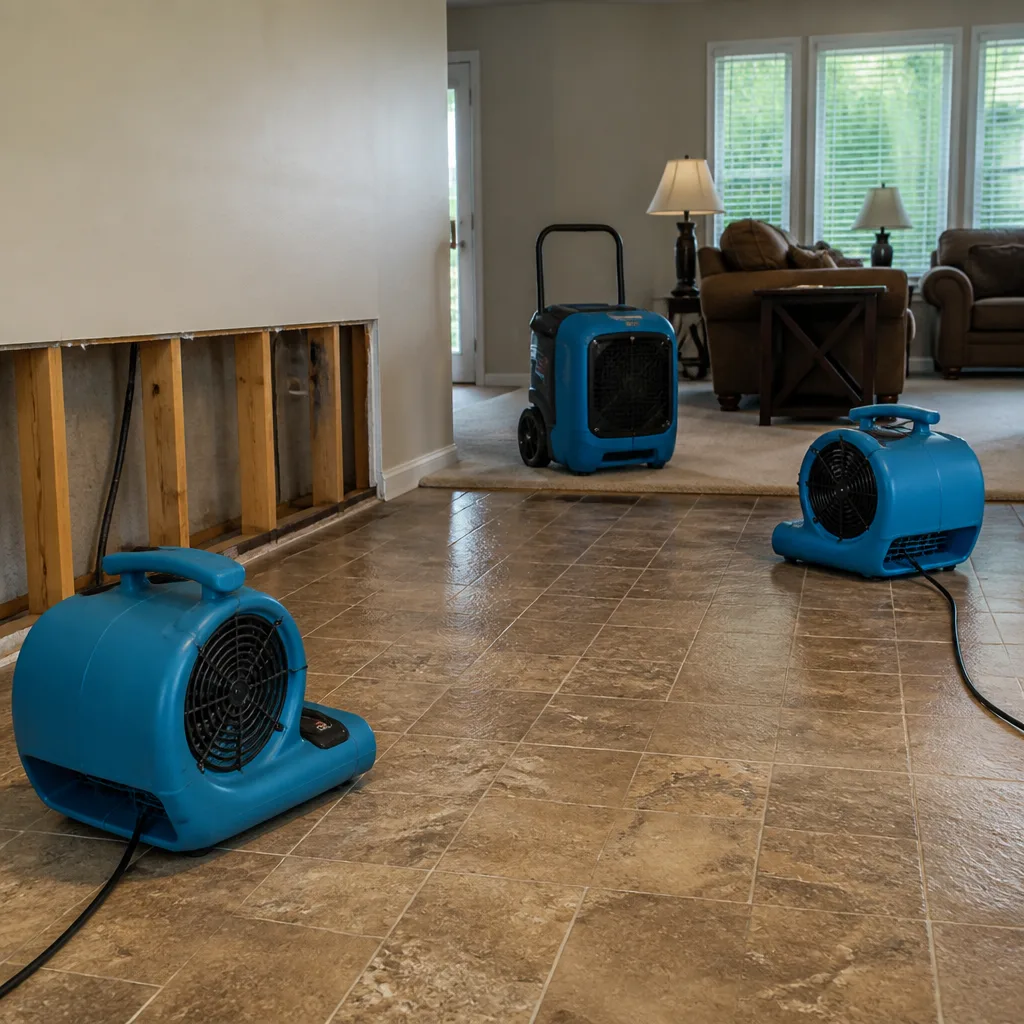

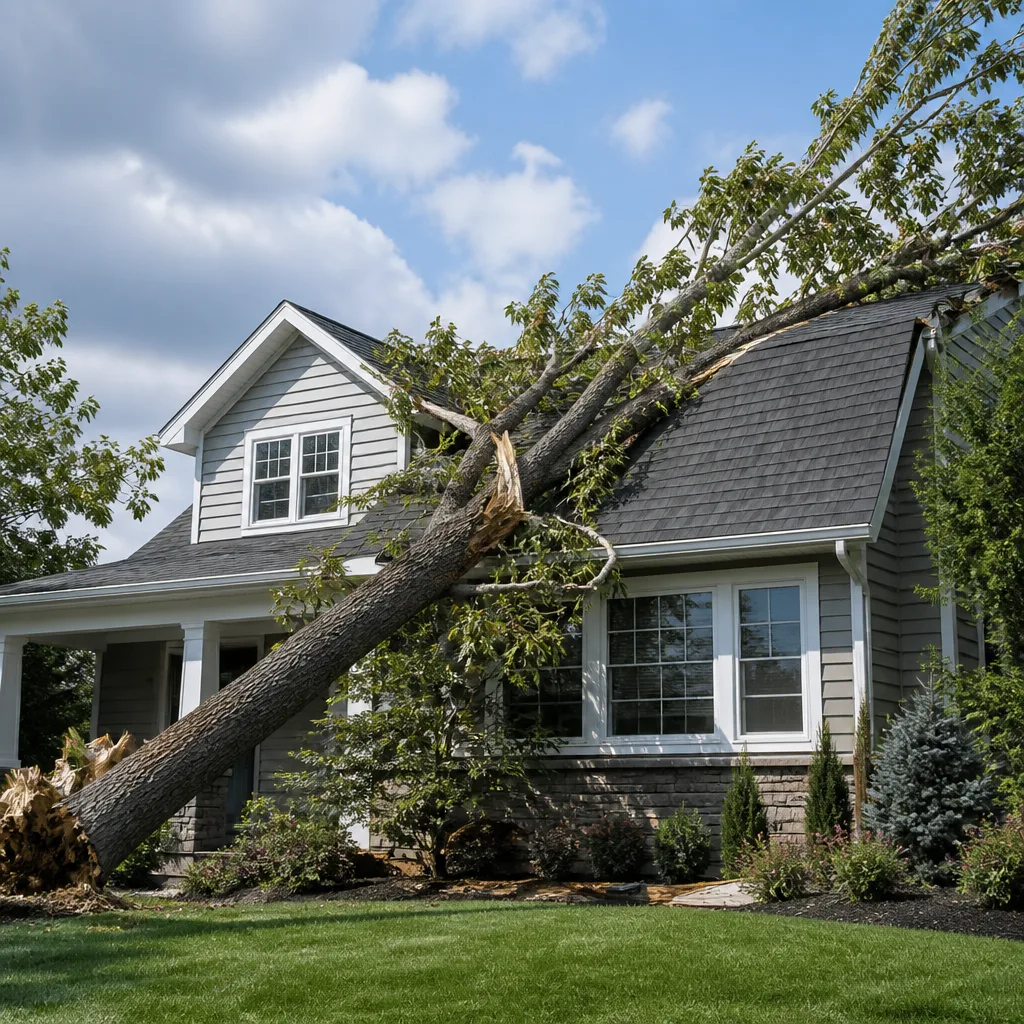
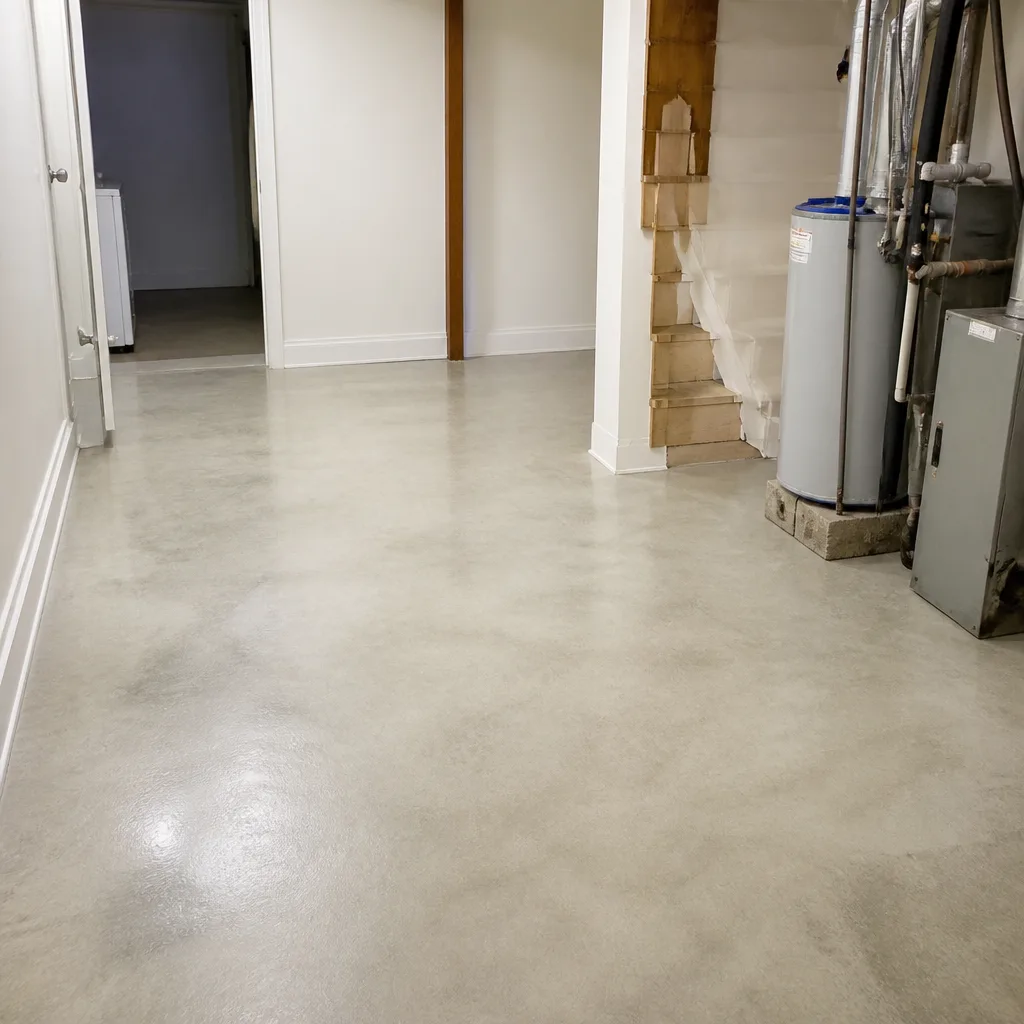

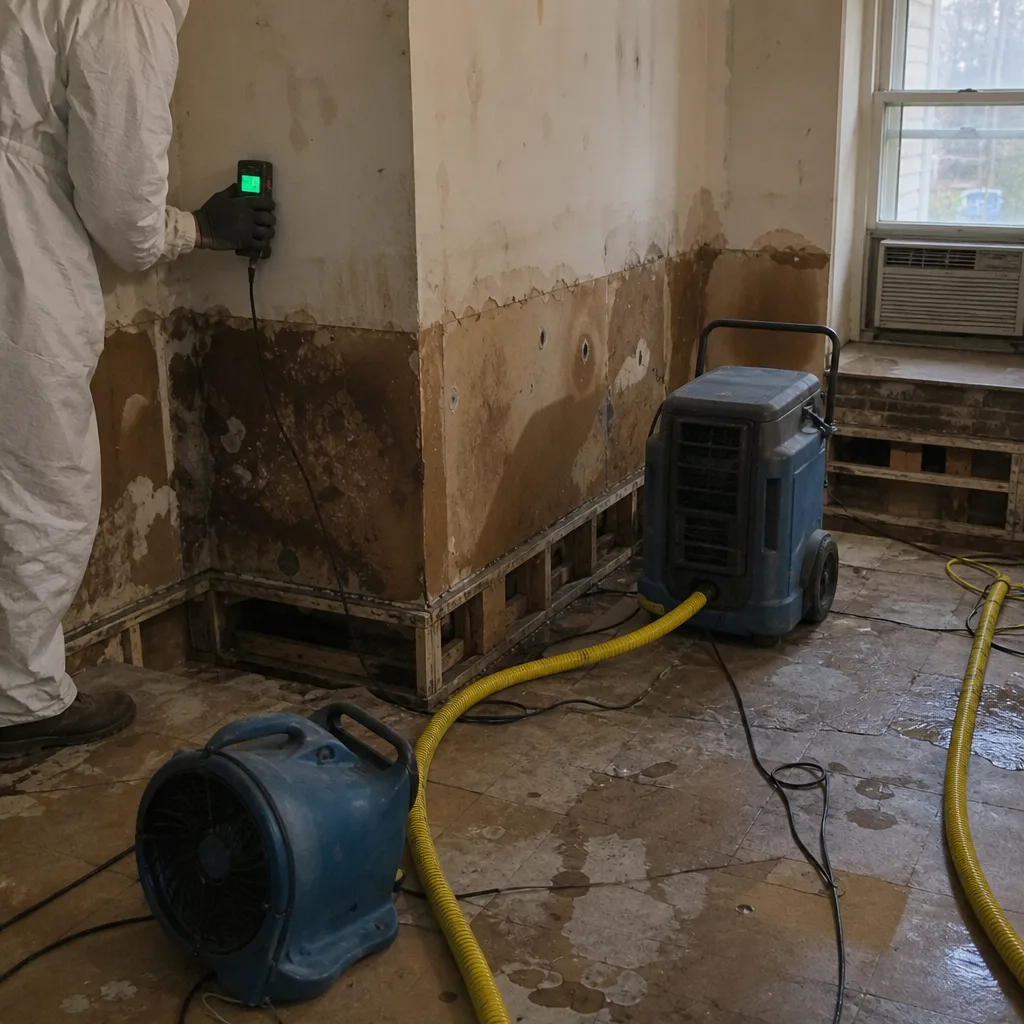 Before
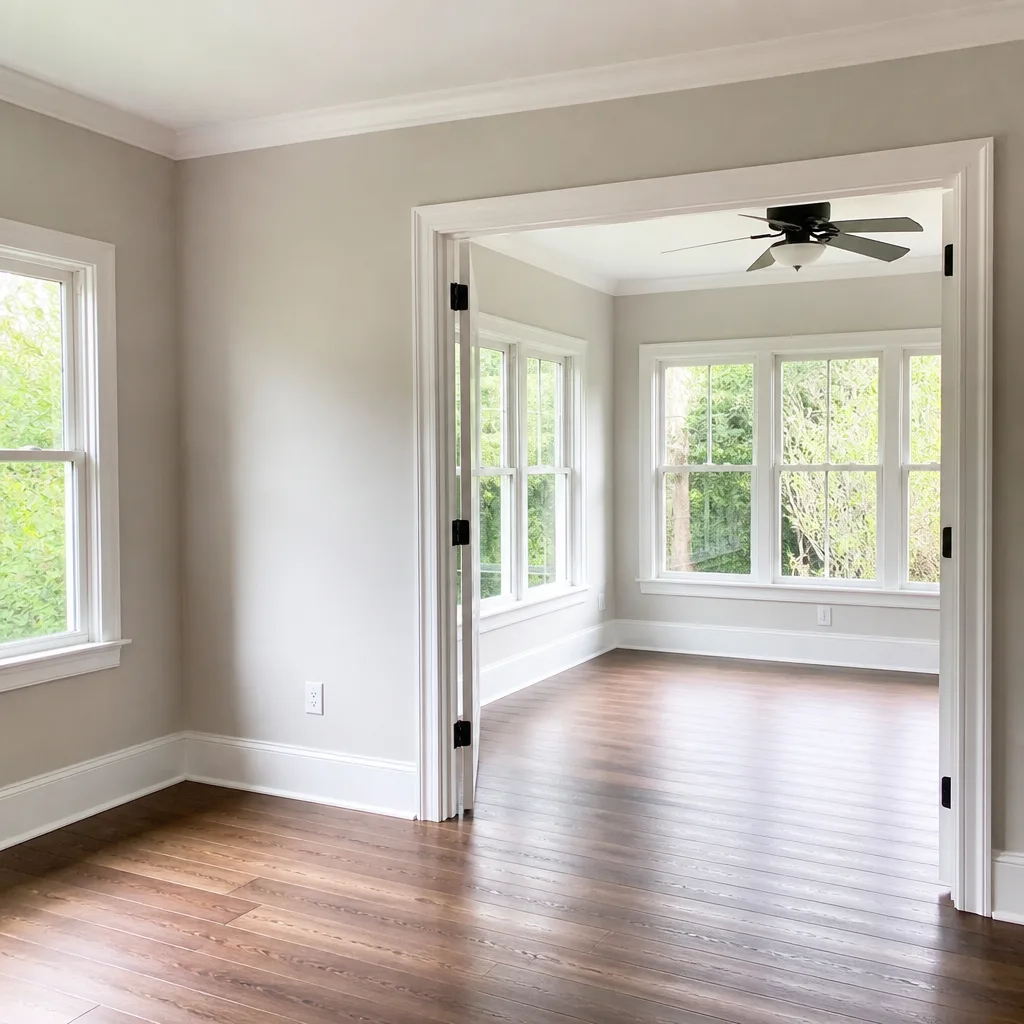
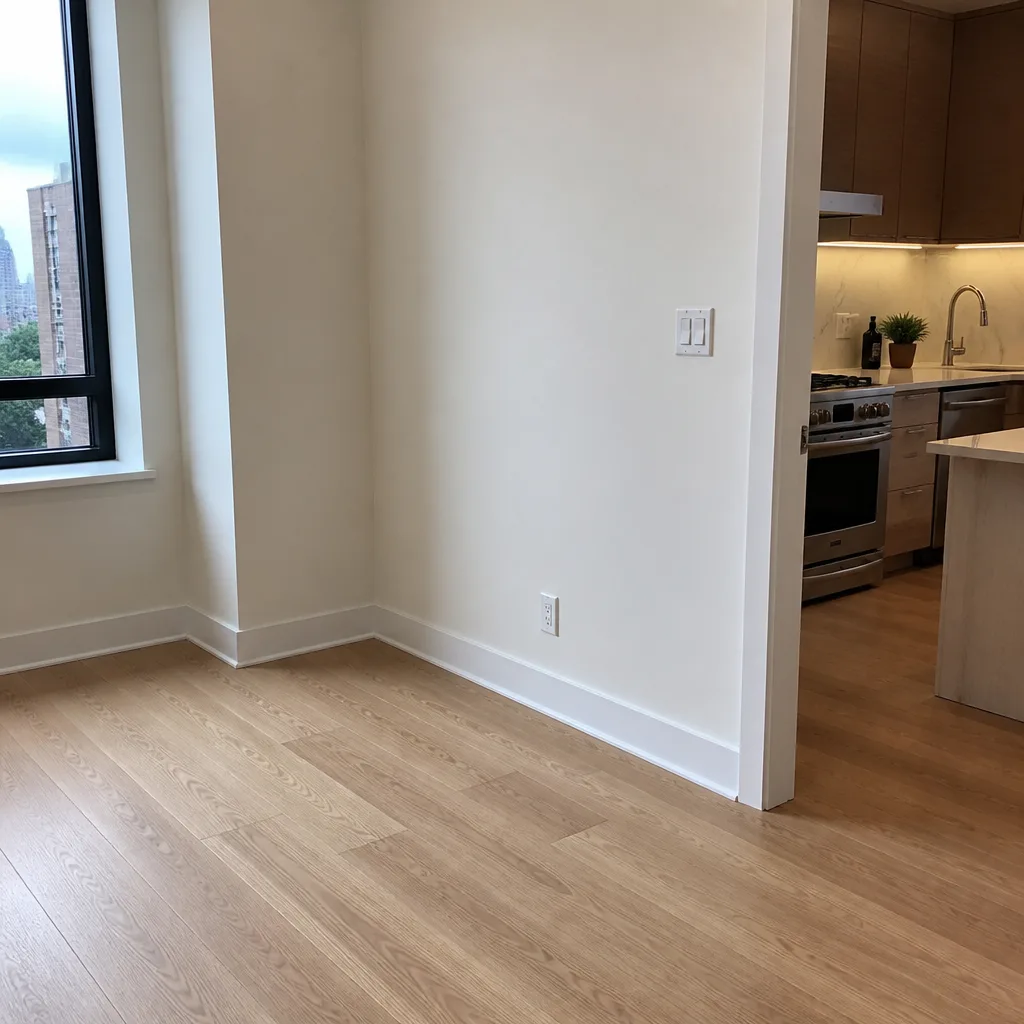 After
After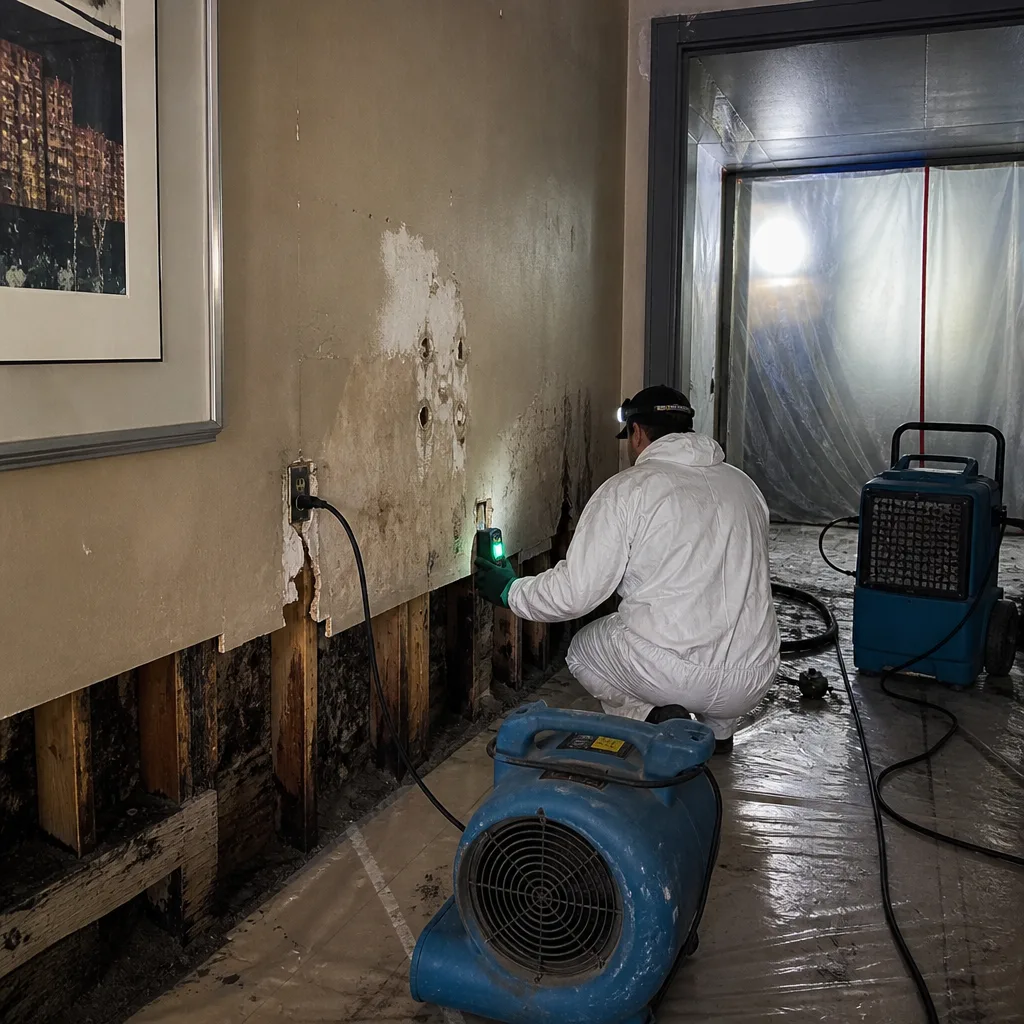 Before
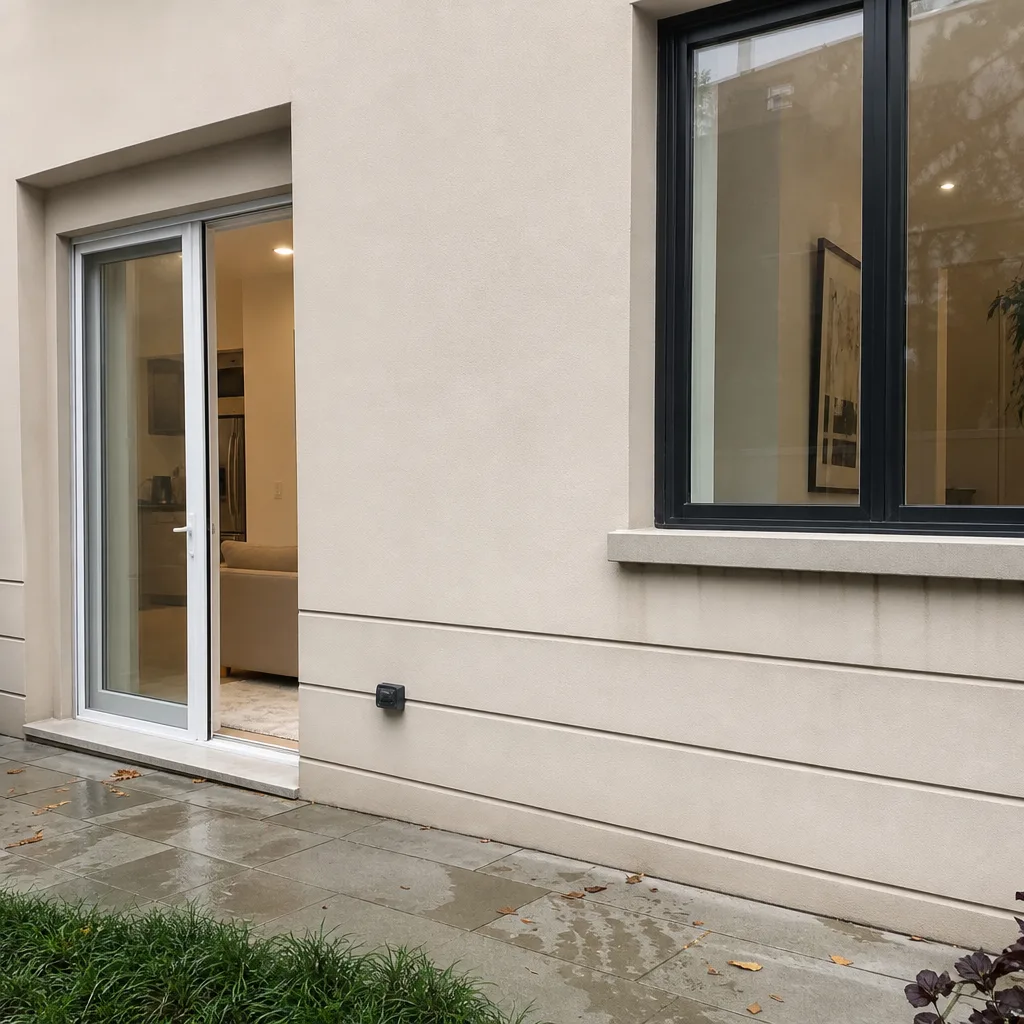 After
After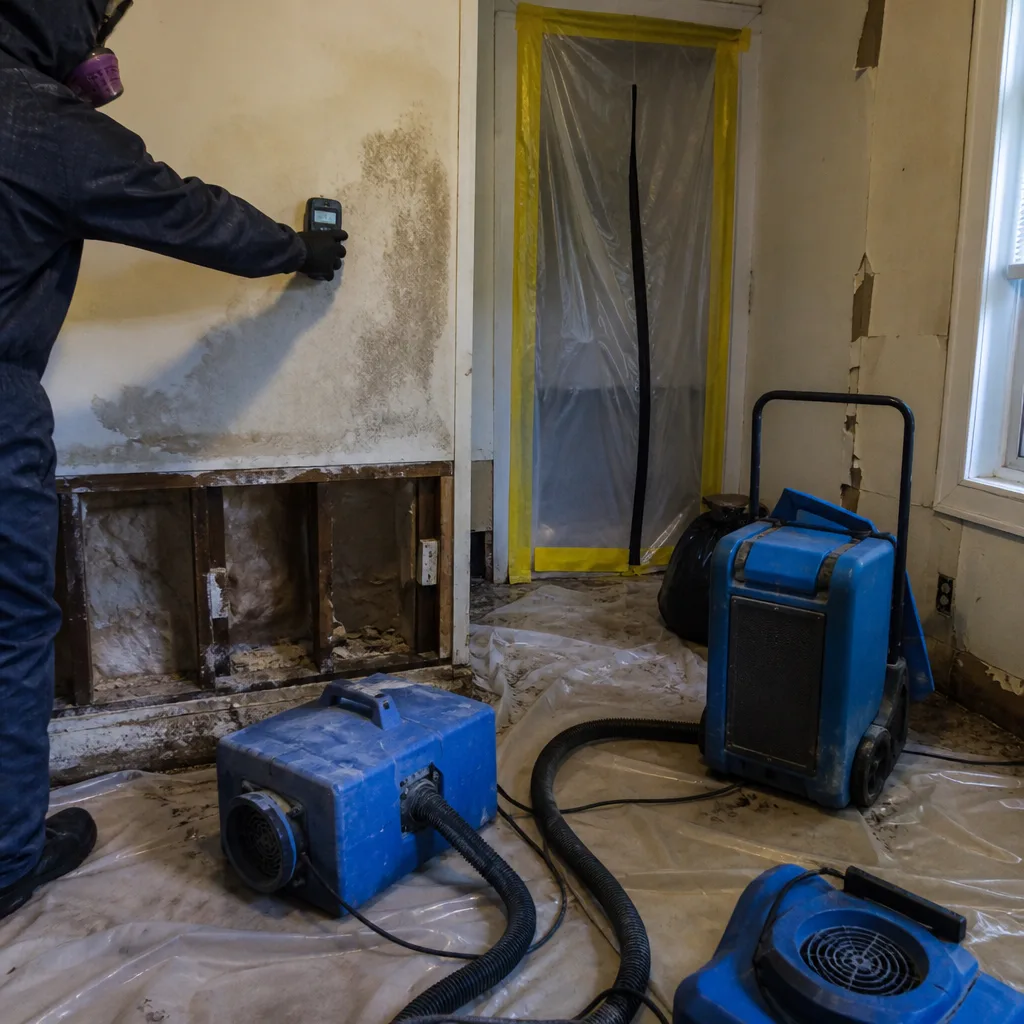 Before
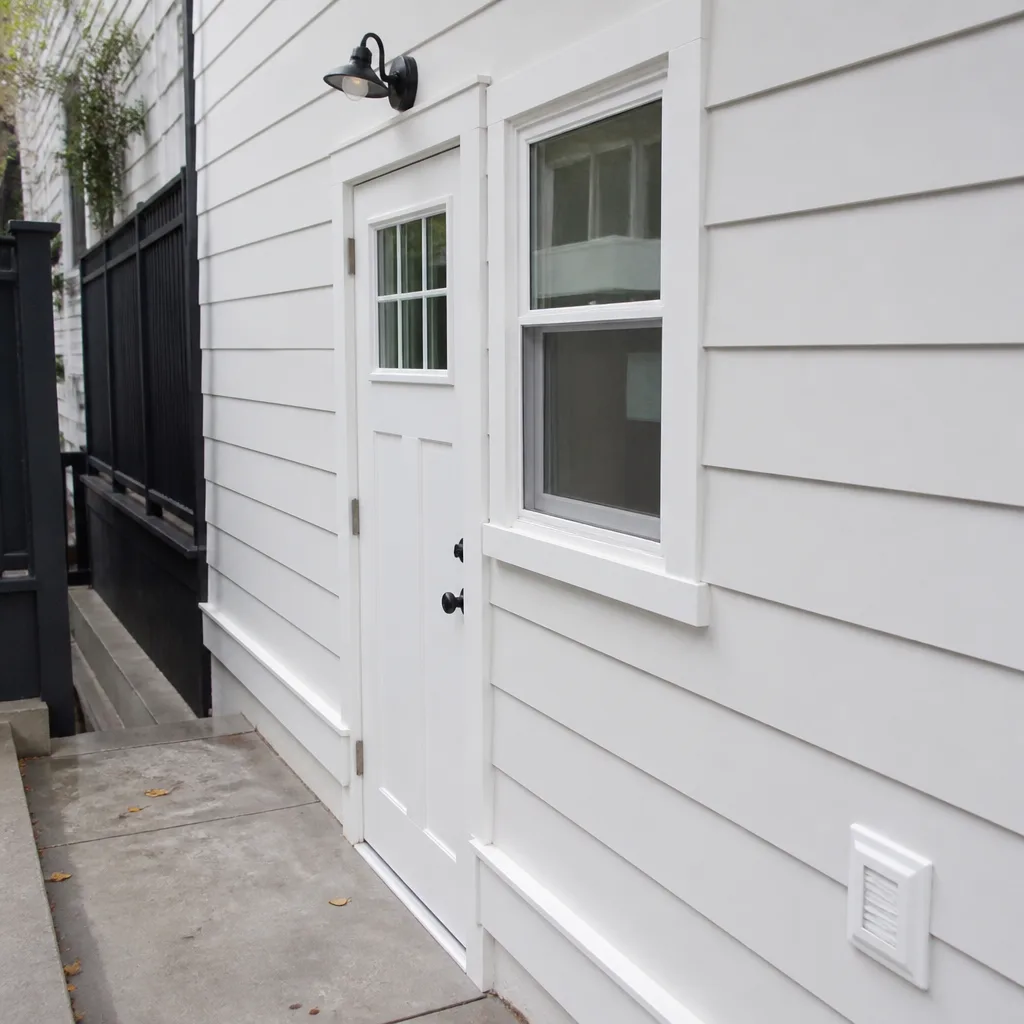 After
After24/7 Emergency Water Damage Restoration in Hoboken
Water damage in Hoboken spreads fast through shared masonry walls and original plaster, so we answer live at (551) 213-5277 every hour of every day. A real person picks up - no voicemail, no callback queue while water keeps moving. Crews dispatch within minutes to any Hoboken address, from the waterfront condos near Pier A to the garden-level units west of Washington Street. We perform a free visual inspection on arrival, document moisture readings with thermal imaging, and give you a written price before any equipment runs. The first hour determines whether a water loss stays a drying job or becomes a full gut-and-rebuild: plaster and horsehair insulation absorb water vertically through capillary action, and Category 3 contamination from combined sewer backups can render porous materials non-salvageable within hours.
Understanding Water Damage Restoration Severity in Hoboken Properties
Water damage restoration in Hoboken operates under a classification system that determines what can be saved and what must be removed. Category 1 water is clean supply-line water - a burst copper pipe on the third floor of a Willow Avenue brownstone. Category 2 carries significant contamination - dishwasher discharge or sump pump failure. Category 3 is black water: sewage, stormwater mixed with waste, or any water that has passed through ground or building materials before contacting clean surfaces.
Here’s where Hoboken’s geography changes the math. FEMA’s post-Sandy flood map revisions placed large swaths of the city in AE and AO flood zones, making coastal storm surge from the Hudson a codified, mapped risk. The city’s combined sewer system - common in pre-war Northeast cities - carries sanitary waste and storm runoff in the same pipes. When heavy rain or a nor’easter overwhelms capacity, sewage backs up through floor drains and lowest-level fixtures. That means a stormwater backup on the blocks west of Washington Street near the NJ Transit rail cut, even if it “looks like rain water,” tests as Category 3 and requires full antimicrobial treatment, removal of porous materials, and IICRC-documented drying logs.
Moisture mapping with thermal imaging and non-penetrating meters locates water migration paths through shared masonry party walls and common floor assemblies. Structural drying uses psychrometric data - temperature, relative humidity, and vapor pressure differential - to calculate exactly how much dehumidification capacity a 3-story brick row house requires. Tertiary drying addresses bound water trapped in dense materials like plaster lath and horsehair insulation, where surface readings can read dry while interior moisture content remains above 16 percent, the threshold for mold germination.
Why Hoboken Property Owners Choose DryMark Restoration Upper East Side
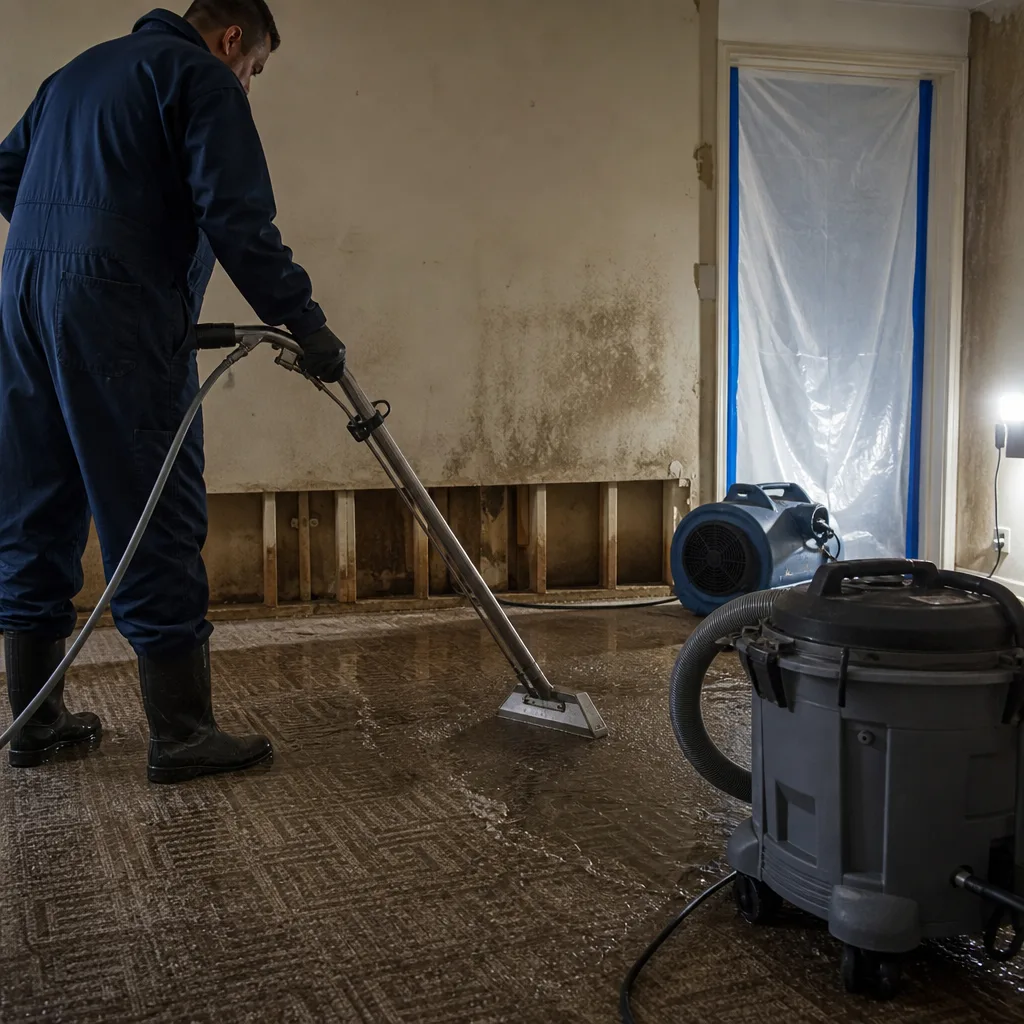
- 45-minute response commitment to any Hoboken address - our crews know the one-way street grid and can navigate around PATH train traffic and event closures at Pier 13.
- 24/7 live answer - a real person, never an automated system or voicemail tree, because water doesn’t wait for business hours and neither do we.
- IICRC-certified crews holding WRT (Water Damage Restoration Technician), FSRT (Fire & Smoke Restoration Technician), and AMRT (Applied Microbial Remediation Technician) certifications - the specific codes your adjuster recognizes.
- Free visual inspection with moisture readings, photo documentation, and a written scope before any work begins - Haven Standard, Clause 1.
- Direct insurance billing with photo-documented drying logs and room-by-room moisture readings that turn restoration invoices into payable claims.
- One team from extraction to reconstruction - no handoffs between mitigation and rebuild contractors, no gaps in documentation.
BeforeAfterOur Water Damage Restoration Process
1. Inspection & Assessment
We arrive with thermal imaging cameras, penetrating and non-penetrating moisture meters, and hygrometers to map the full extent of water migration. In Hoboken’s attached brick row houses, we check shared masonry party walls and common floor assemblies - water in one unit routinely travels to adjacent units through capillary action in century-old mortar joints.
2. Extraction & Stabilization
Standing water comes out first with truck-mounted extraction systems and portable units for tight garden-level access. We set up containment barriers to prevent cross-contamination and establish negative air pressure when Category 3 protocols apply. Every step is photographed before anything moves.
3. Drying & Dehumidification
We deploy Phoenix and Dri-Eaz LGR dehumidifiers alongside XPOWER and B-Air air movers positioned for optimal airflow across wet surfaces. In Hoboken’s dense plaster-and-lath construction, we calculate vapor pressure differential to determine when bound water has actually released, not just when surfaces feel dry.
4. Cleaning & Sanitization
Category 3 losses receive antimicrobial treatment with EPA-registered products, followed by HEPA air scrubbing to capture airborne particulates. We clean and treat all affected hard surfaces, remove non-salvageable porous materials, and document disposal with photo evidence.
5. Building-File Review & Hidden Damage Documentation
Before finalizing our scope, we pull permits and check building files for prior flood damage. Post-Sandy remediation was rushed on thousands of Hoboken units, and it is common to find undocumented prior losses layered underneath the active one. We document both for your adjuster.
6. Repairs & Restoration
Our reconstruction crew replaces removed plaster, lath, insulation, flooring, and finishes to match existing conditions. A final moisture reading confirms drying goals are met, and we deliver your photo record, drying log, written scope, and signed 365-Day Done Right Promise under The Haven Standard.
Need Emergency Water Damage Restoration in Hoboken Now?
Crews minutes away, answering live 24 hours a day. The sooner we start, the less it costs.
Working With Your Insurance Company
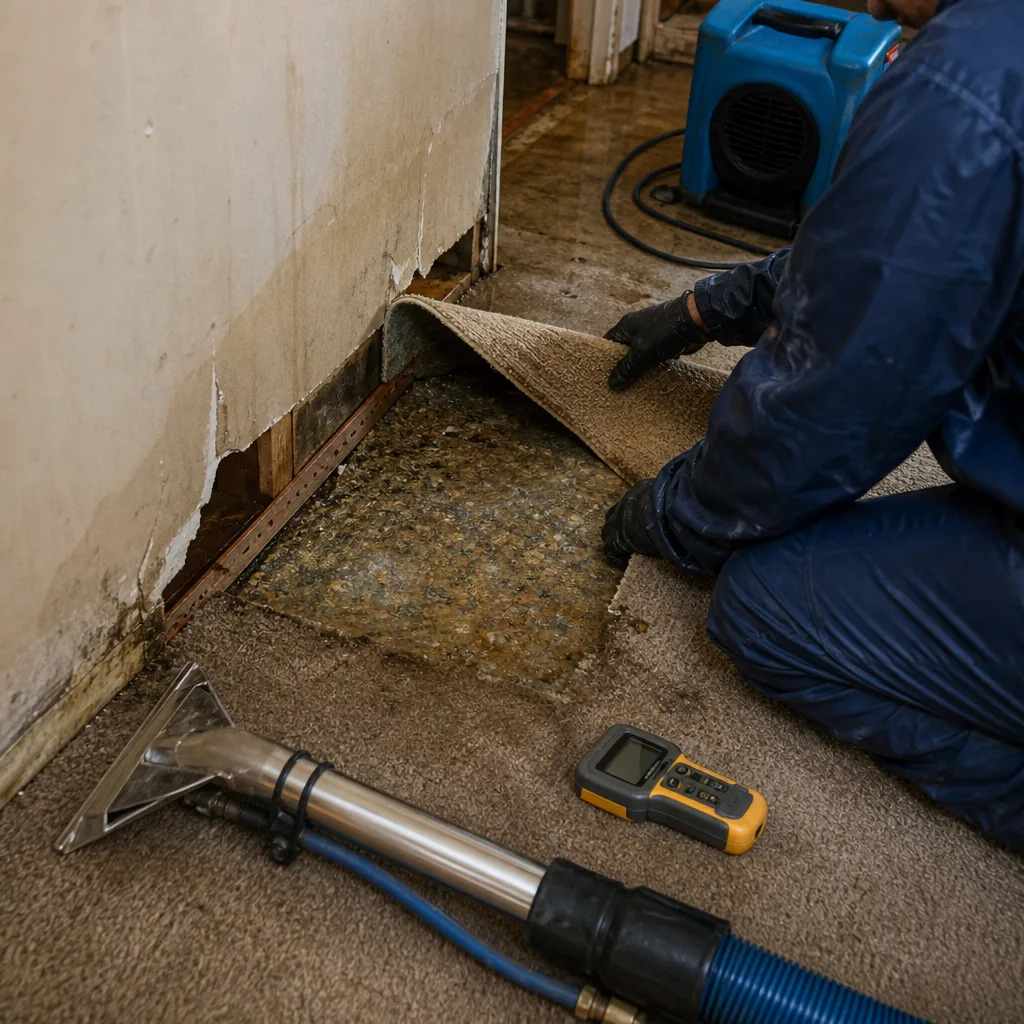
Documentation starts the moment we arrive, not after the work is done. We photograph every room before touching anything, record moisture readings at multiple depths and locations, and maintain daily drying logs that track temperature, relative humidity, and specific humidity against IICRC S500 standards. Your adjuster receives a line-item estimate built on industry-standard pricing, not a lump-sum guess, with direct coordination from our office to resolve questions before they delay payment.
Because Hoboken’s flood zone status and combined-sewer infrastructure create Category 3 classifications that insurers sometimes initially dispute, our documentation package includes water-source verification, contamination testing results, and the specific IICRC protocol citations that justify removal versus restoration decisions. We’ve worked with every major carrier serving Hudson County properties and understand their documentation requirements.
What We Provide Your Insurer
- Thorough documentation of the loss
- Photos of all damage, room by room
- Moisture readings and drying logs
- A detailed, line-item scope of work
- Direct coordination with your carrier
Built for Hoboken’s Loss Calendar
January brings deep freezes that burst galvanized and copper supply lines in unheated third-floor units and crawl spaces. February and March see thaw cycles that crack aging cast-iron drains and push groundwater through foundation walls. Spring thunderstorms deliver flash flooding that overwhelms Hoboken’s combined sewers within minutes - the low-lying blocks near Observer Highway and the rail cut flood first and drain last.
Summer humidity compounds secondary damage: even properly extracted water can re-wet from airborne moisture if dehumidification is undersized for plaster mass. Fall nor’easters drive Hudson River surge against the waterfront and push rainwater backward through storm drains citywide. Winter freeze-thaw cycles stress the original building stock hardest. Our crews carry season-specific equipment configurations, and our documentation reflects seasonal moisture baselines that adjust drying targets accordingly.
Water Damage Restoration Across Hoboken’s Neighborhoods
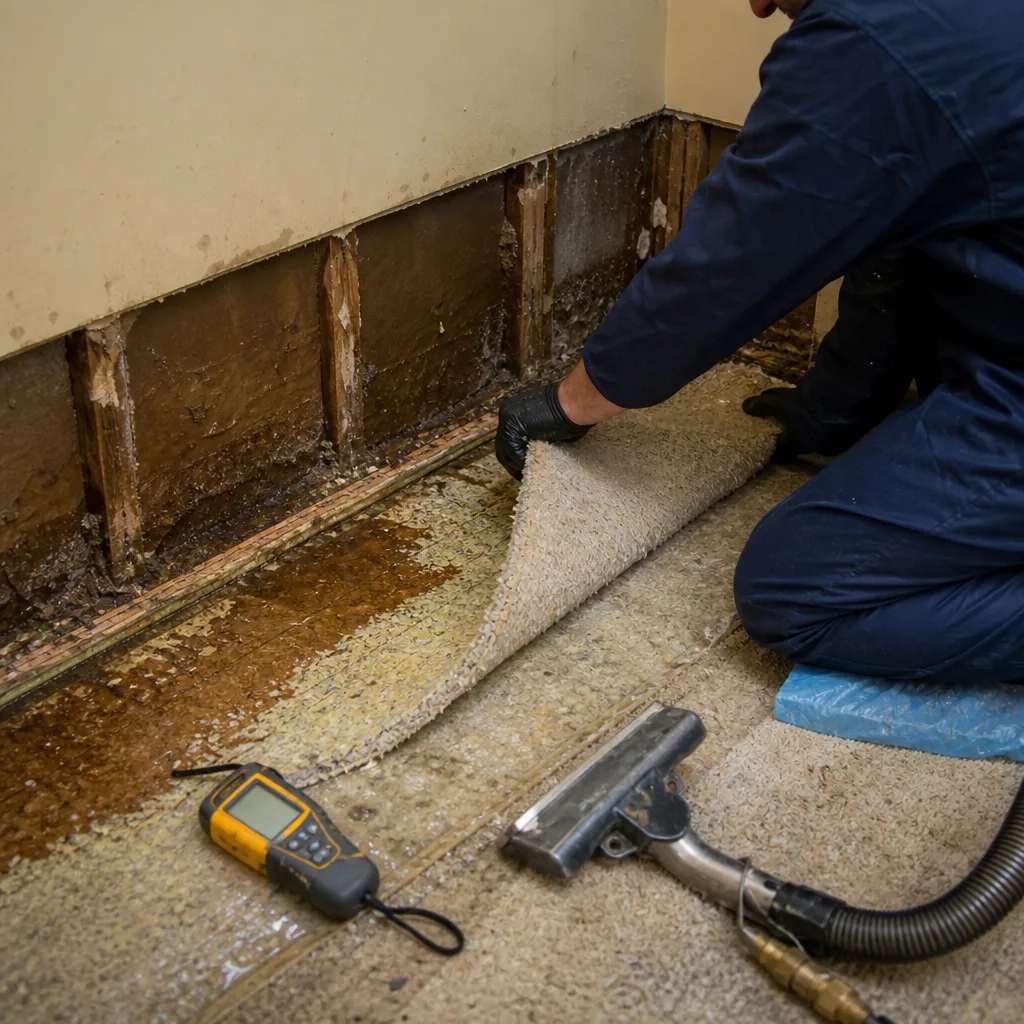
The waterfront corridor from Pier A to Castle Point sees storm-surge exposure and wind-driven rain through aging window systems in converted industrial buildings. Our response routes account for Hudson River Waterfront Walkway event closures and the single-lane choke points on Sinatra Drive.
Washington Street and the surrounding commercial core mix retail basements with residential upper floors - a burst pipe in a second-floor apartment can flood a restaurant’s dry storage below, requiring coordinated extraction across mixed-use occupancy types.
The residential blocks west of Washington Street, particularly near the NJ Transit rail cut, sit at Hoboken’s lowest elevations. Garden-level units here flood repeatedly during combined sewer backups, and we’ve documented Category 3 water in these properties after rain events that never reached flood-warning thresholds elsewhere in the city. Our crews know to run full contamination testing even when the water “looks clean.”
The uptown neighborhoods near 14th Street and the border with Weehawken feature larger pre-war apartment buildings with centralized boiler systems and common laundry facilities - a single supply-line failure can affect multiple units through shared risers and return-air plenums.
Specialized Water Damage Restoration Services We Offer in Hoboken
Emergency Water Extraction
Standing water comes out immediately with truck-mounted and portable extraction systems sized for Hoboken’s tight access - narrow row house staircases, garden-level entries below sidewalk grade, and shared driveways where parking is restricted. We extract from carpet, hardwood, tile, and directly from structural cavities using Injectidry systems when wall interiors are saturated.
Structural Drying & Dehumidification
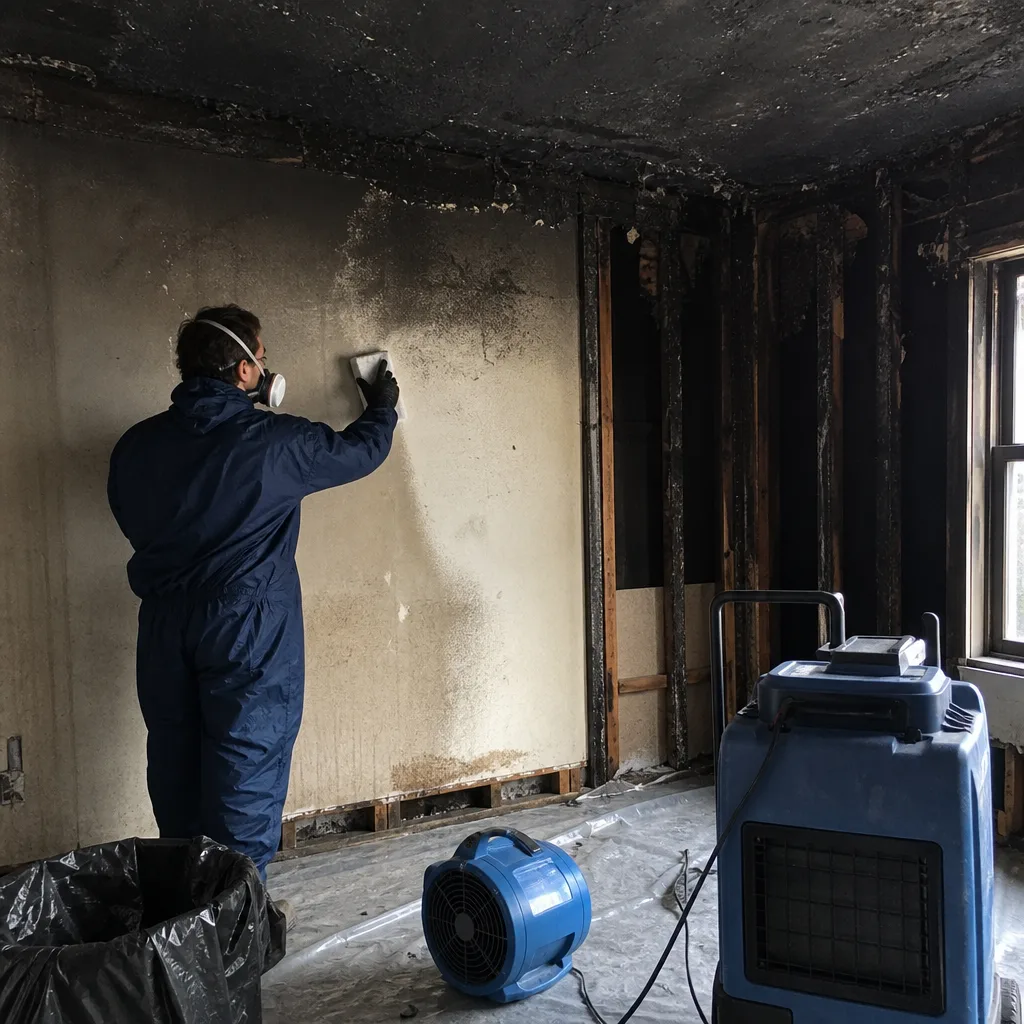
Hoboken’s plaster-and-lath walls and horsehair insulation hold significantly more moisture than modern gypsum construction. We size dehumidification capacity by material mass, not square footage, using Phoenix 200 MAX dehumidifiers and B-Air axial air movers in calculated ratios. Daily moisture logs track specific humidity and vapor pressure differential until bound water readings confirm true dryness, not surface dryness.
Flood Cleanup
Flood events in Hoboken’s AE and AO zones require Category 3 protocols by default: antimicrobial treatment, removal of porous materials, and documented disposal. We got a call from a garden-level unit on the blocks west of Washington Street near the NJ Transit rail cut, where sewage-tinged stormwater had backed up through the floor drain during a nor’easter. Our techs set up containment, ran moisture mapping across the shared masonry party wall, and confirmed Category 3 water with moisture readings before pulling saturated plaster and horsehair insulation. We logged the drying with Dri-Eaz air movers and Phoenix dehumidifiers, applied antimicrobial treatment, and checked building files - the scope of work revealed a prior Sandy-era flood repair that was never fully dried, so we documented both the active loss and the hidden one for the adjuster.
Burst Pipe Restoration
Galvanized supply lines in Hoboken’s pre-war housing stock corrode from the interior, creating pinhole failures that spray inside walls for hours before detection. We locate the full migration path with thermal imaging, document the water classification (typically Category 1 for supply-line bursts), and scope repairs to include not just visible damage but lateral spread through shared framing and masonry.
Basement Water Removal
Hoboken basements and garden-level units are functionally the first floor of flood risk. We extract standing water, evaluate foundation wall seepage patterns, and install temporary sump capacity when permanent systems have failed. Documentation includes groundwater versus sewer-backup source verification - critical for insurance coverage determination.
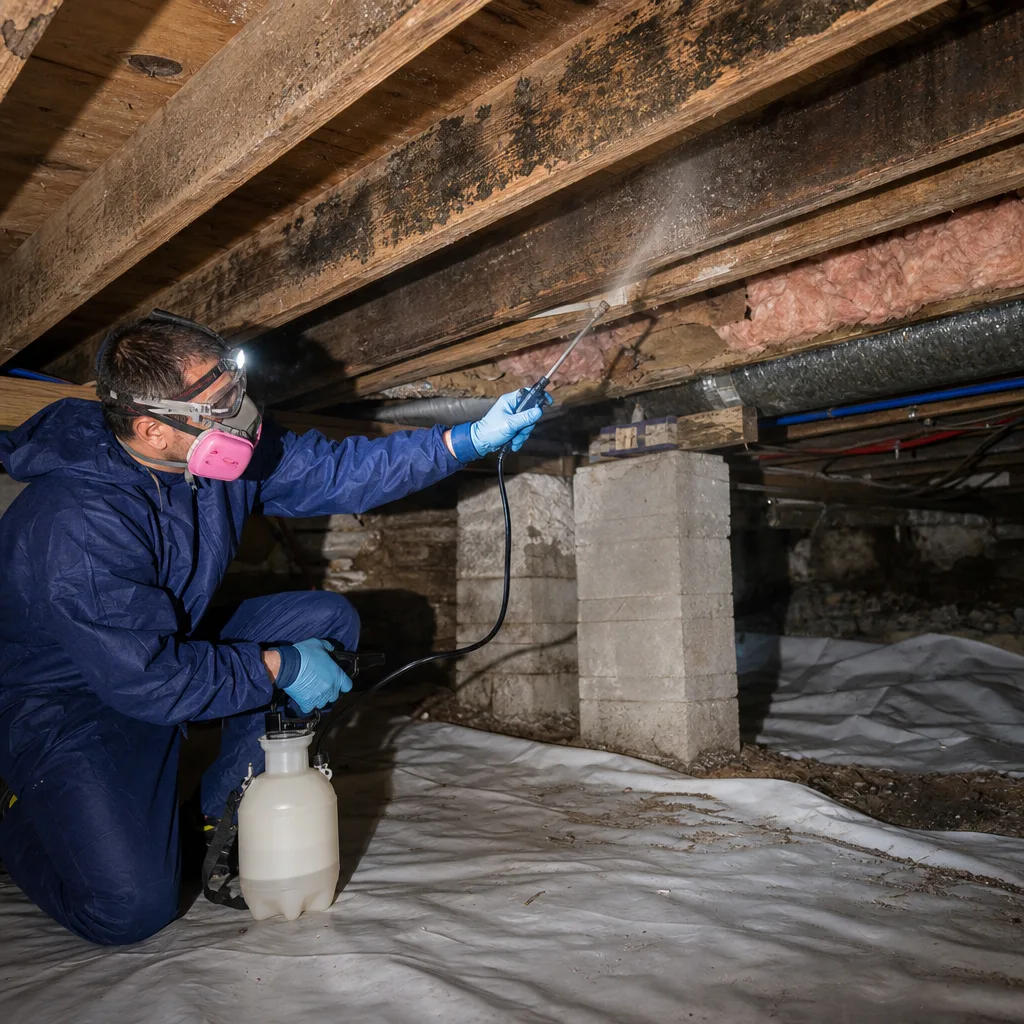
What happens when you call
- 1
A real person answersNo phone trees - you reach a local pro.
- 2
You get an upfront price rangeHonest numbers before anyone is dispatched.
- 3
A background-checked tech heads outLicensed & insured, dispatched right away.
- 4
You approve before work beginsNothing starts until you say go.
Water Damage Restoration Costs in Hoboken, NJ
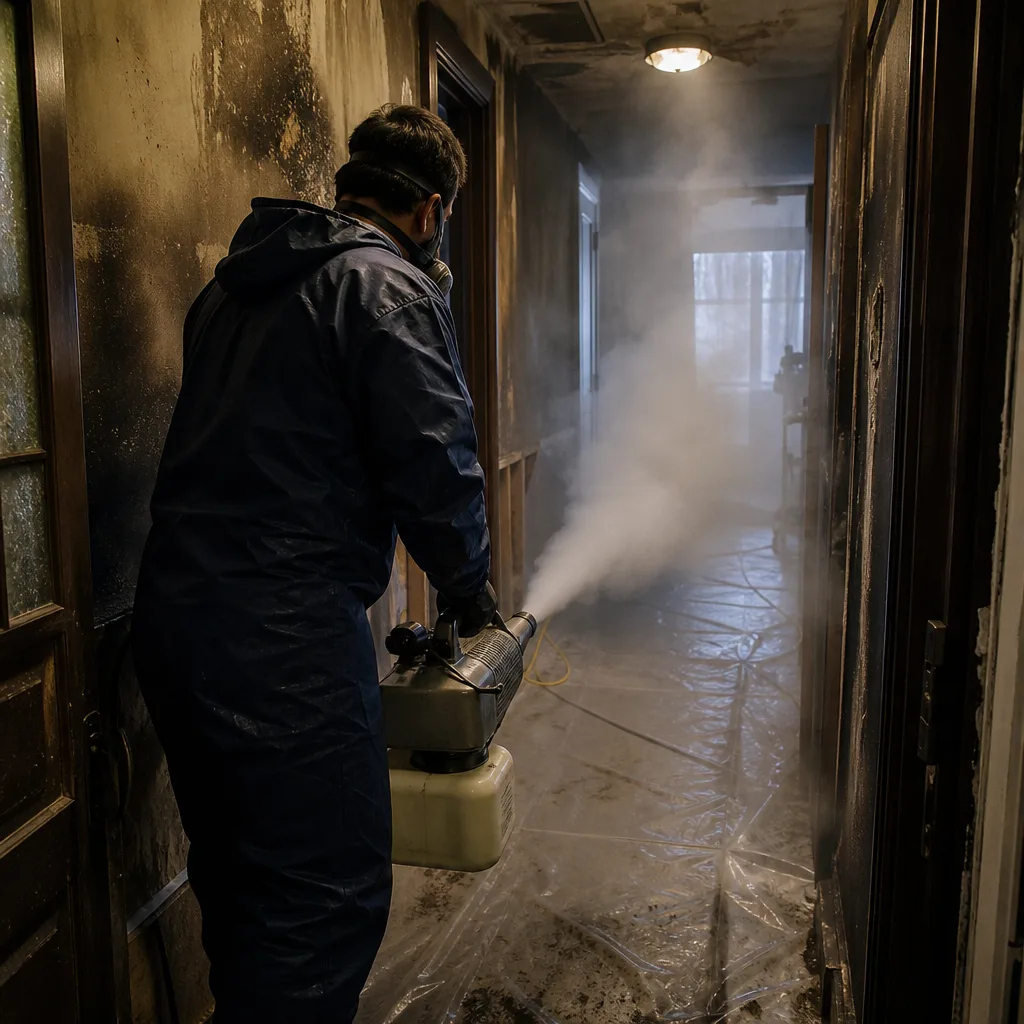
Emergency water extraction in Hoboken typically runs $350-$850 for residential units, depending on standing water volume and access constraints. Structural drying with professional dehumidification and air movement runs $95-$175 per day per piece of equipment, with most Hoboken row houses requiring 3-5 days minimum due to plaster mass. Category 3 flood cleanup with antimicrobial treatment, porous material removal, and disposal starts around $1,800-$4,500 for a single garden-level unit, scaling upward for multi-unit involvement through shared party walls.
What moves the price: water classification (Category 1 vs. 3 changes material removal scope), affected square footage including hidden cavities, whether prior undocumented damage exists, and whether multiple units are involved. Insurance typically covers sudden and accidental water losses with proper documentation; gradual leaks and maintenance-related failures may not. We provide a written price before work begins - Haven Standard, Clause 1 - and offer a Free Second Opinion on any competitor’s written estimate.
We Also Serve Cities Near Hoboken
Our Hoboken crews respond throughout Hudson County and across the river, including Water Damage Restoration for properties in Union City, where similar pre-war housing stock and combined-sewer infrastructure create comparable loss patterns; Palisades Park, with its own low-lying flood exposure near Overpeck Creek; and Fort Lee, where high-rise construction introduces vertical water migration challenges distinct from Hoboken’s row house context. Dispatch and scheduling are coordinated from our New York City office; crews serve Hoboken locally.
Serving Hoboken, NJ - Our Local Coverage Area
We’re based in the Hoboken area and know this community well. Use the map below to see our service coverage - if you’re nearby, we can almost certainly help.
Hoboken Water Damage Restoration Questions, Answered
Why does a stormwater backup in Hoboken sometimes get classified as Category 3 black water instead of Category 2?
Hoboken’s combined sewer system carries sanitary waste and storm runoff in the same pipes, so when heavy rain overwhelms capacity, sewage mixes with stormwater before backing up through floor drains and lowest-level fixtures. IICRC S500 defines Category 3 water as “grossly contaminated,” and any water that has passed through the sanitary sewer system meets that standard regardless of appearance. We test and document the classification with moisture meter readings and contamination indicators, then scope antimicrobial treatment and porous material removal accordingly. Call (551) 213-5277 for a free inspection and written scope.
How fast can your crew actually get to my Hoboken property?
We commit to a 45-minute response time to any Hoboken address, 24 hours a day, with live phone answer and immediate dispatch. Crews know the local street grid, PATH train schedules, and event closures that affect routing. The first hour after water intrusion is critical for salvageability of plaster, hardwood, and contents. Call (551) 213-5277 and a real person will confirm ETA while crews are en route.
Will my insurance cover water damage restoration in Hoboken?
Most sudden and accidental water losses are covered, including burst pipes, appliance failures, and storm damage, provided documentation supports the cause and scope. Coverage disputes most often arise around water-source classification (clean vs. sewer backup), gradual leak exclusions, and documentation quality. We provide photo records, moisture logs, line-item estimates, and direct adjuster coordination from day one to minimize disputes. Call (551) 213-5277 for a free inspection and we’ll review your policy implications before work begins.
Our Hoboken brownstone has plaster walls and horsehair insulation - does that change how you dry it after a flood?
Yes. Plaster and horsehair insulation hold roughly 3-4 times the moisture of modern gypsum drywall, and they release it slowly through evaporation. Surface dryness means nothing; we measure moisture content at depth with penetrating meters and calculate vapor pressure differential to determine when bound water has actually released. Standard air-mover counts based on square footage will under-dry these materials, leading to mold growth within 48-72 hours. We size equipment by material mass and maintain daily psychrometric logs until readings confirm true structural dryness.
A pipe burst in our third-floor unit - why are you checking the first-floor apartment too?
Hoboken’s attached brick row houses share masonry party walls and common floor assemblies that allow water to migrate laterally and vertically through capillary action in century-old mortar joints. We’ve documented losses where water traveled two floors down and across to an adjacent unit through hidden pathways, with no visible damage at the source level. Our moisture mapping protocol includes all potentially affected units to prevent undiscovered damage that becomes a mold problem and a coverage dispute later. Call (551) 213-5277 for full-property assessment.
Why do you pull building files and permits before starting a flood job in Hoboken?
Post-Sandy remediation in 2012-2013 was rushed on thousands of Hoboken units, and it is common to open walls and find prior flood damage that was never fully dried, documented, or disclosed. If we scope and price only the visible loss, the drying logs won’t match the pre-loss condition your adjuster expects, and hidden moisture can reactivate during our drying process. We document both the active loss and any hidden prior damage so your claim reflects actual conditions and our warranty covers what we actually dried. Call (551) 213-5277 for an inspection that includes building-file review.
How fast do we need to act after a water loss in Hoboken to prevent mold?
Mold germination begins at 24-48 hours on wet organic materials, and Hoboken’s humid summer climate accelerates growth. Plaster with horsehair insulation provides ideal substrate. However, the more urgent risk in our market is Category 3 contamination from combined sewer backups, which can render materials non-salvageable within hours regardless of mold timeline. We recommend immediate extraction and same-day antimicrobial treatment for any suspected sewer involvement. Call (551) 213-5277 for emergency response - we answer live and dispatch immediately.
What certifications do your Hoboken water damage restoration technicians hold?
Our lead technicians hold IICRC WRT (Water Damage Restoration Technician), AMRT (Applied Microbial Remediation Technician), and FSRT (Fire & Smoke Restoration Technician) certifications, with ongoing education to maintain current standards. All work is documented to IICRC S500, RIA, and IFA protocols. We are state-licensed, insured, and background-checked, with license numbers available on request. Equipment deployed includes Dri-Eaz, Phoenix, XPOWER, B-Air, and Injectidry systems. Call (551) 213-5277 to verify current credentials and schedule service.
Back to Dry Restoration, led by Alicia Brennan, has operated under The Haven Standard since 2011. Every job receives a written price before work begins, a photo record on every visit, and the 365-Day Done Right Promise. For emergency water damage restoration in Hoboken, call (551) 213-5277 - a real person answers, 24 hours a day.
Written by Alicia Brennan, Owner at Back to Dry Restoration, serving Hoboken since 2011.
Water Damage Restoration in Nearby Areas