
Free visual inspection and a written scope of work before any mitigation begins - photos, moisture readings, and drying logs go in your claim file
The scope we write is the scope we bill. Anything new gets shown to you, in writing, before we touch it.
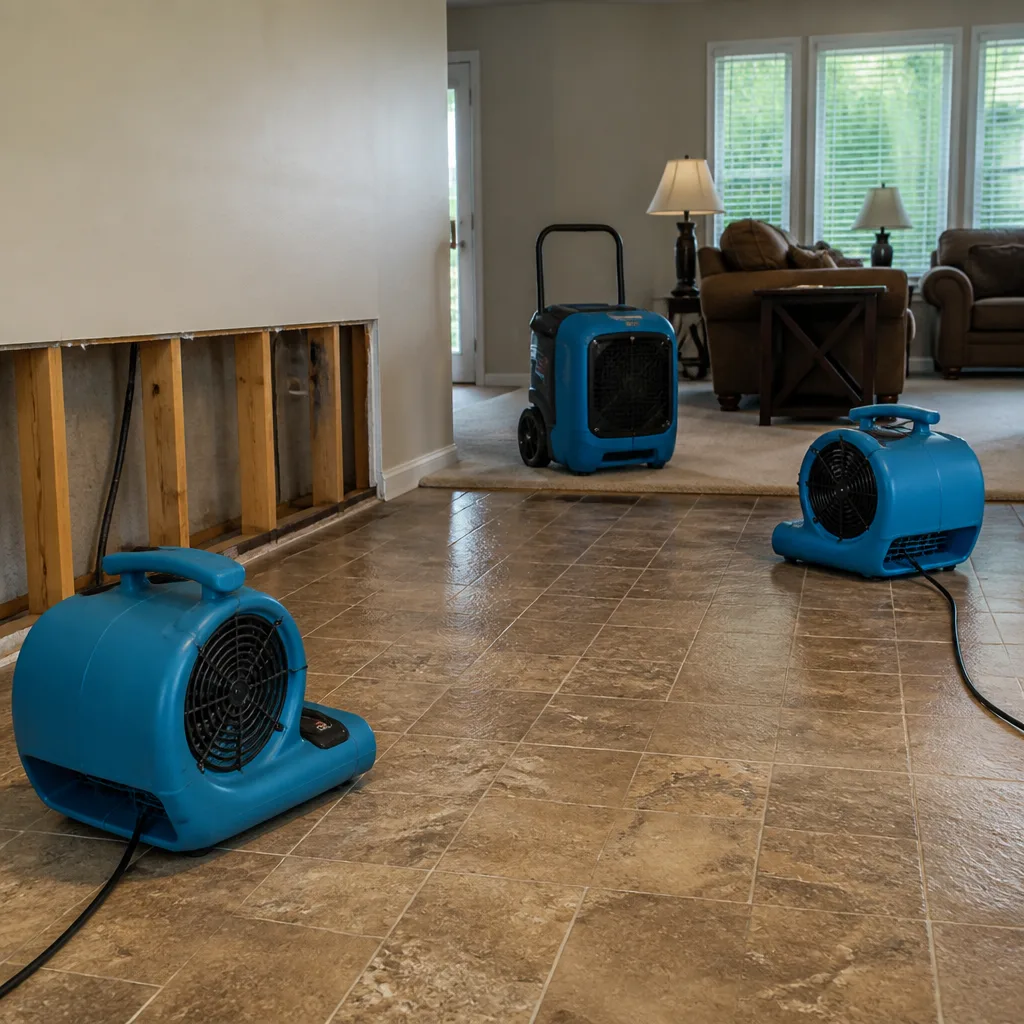
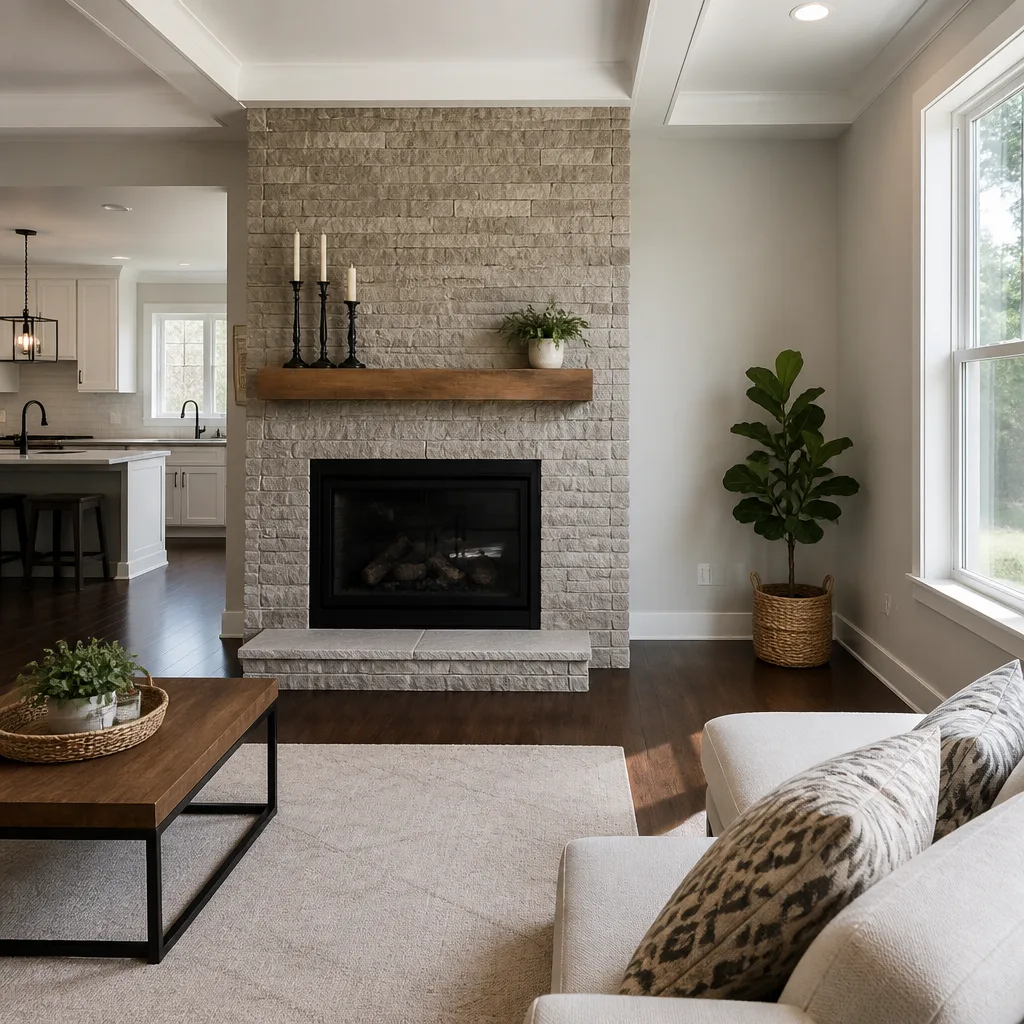
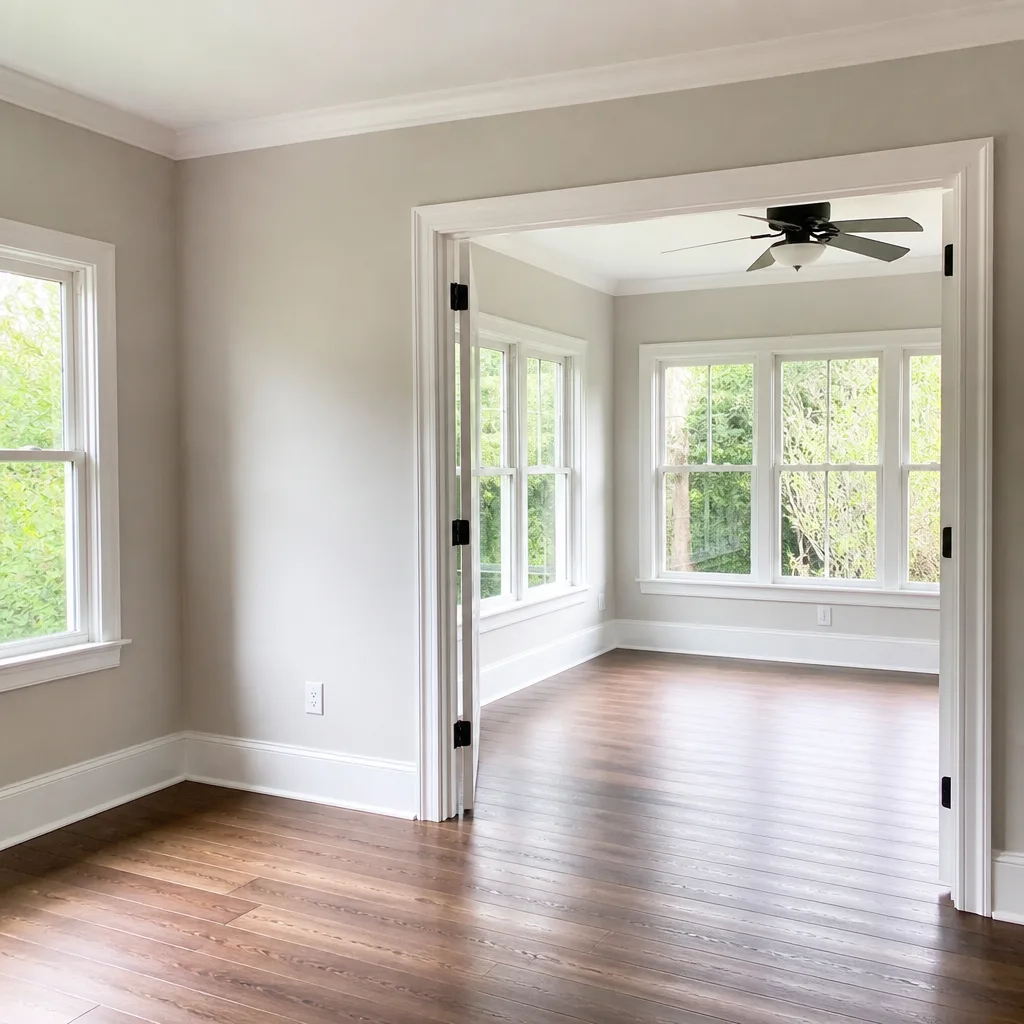
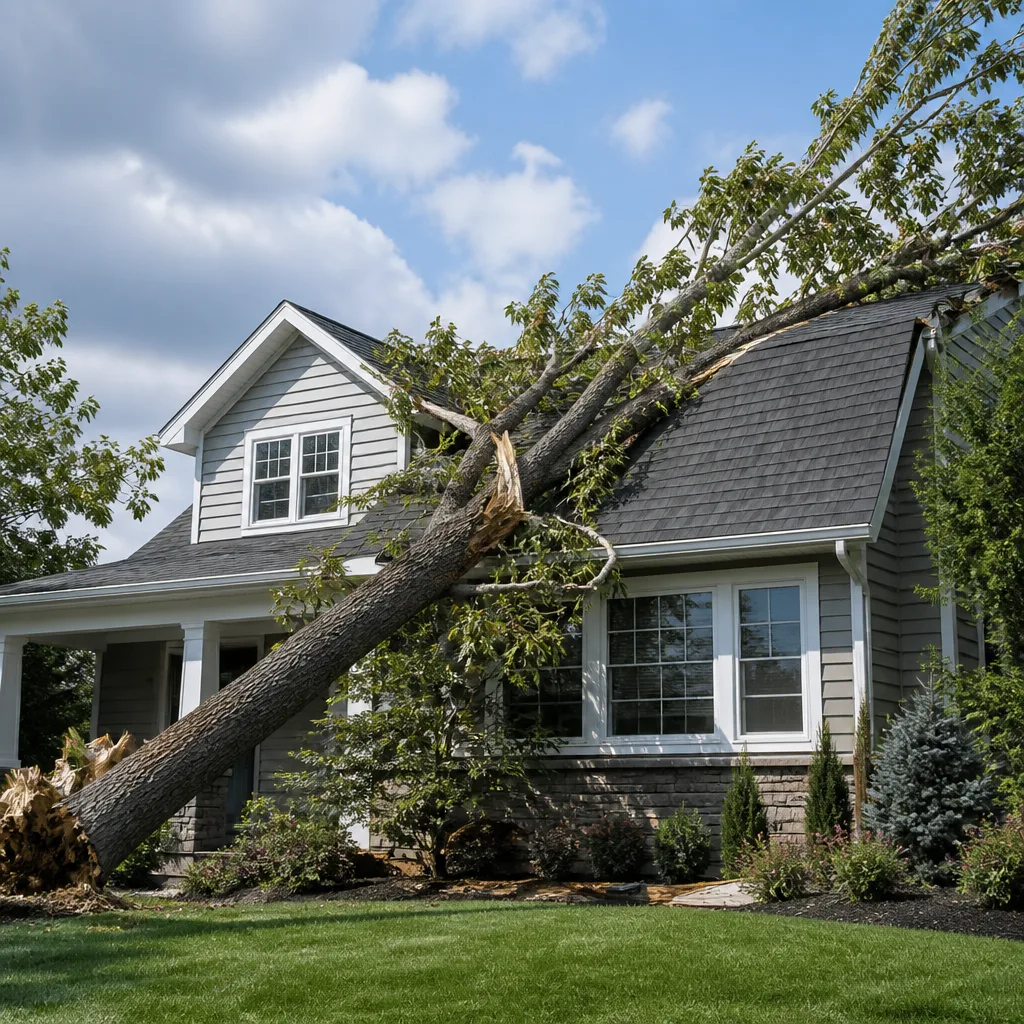
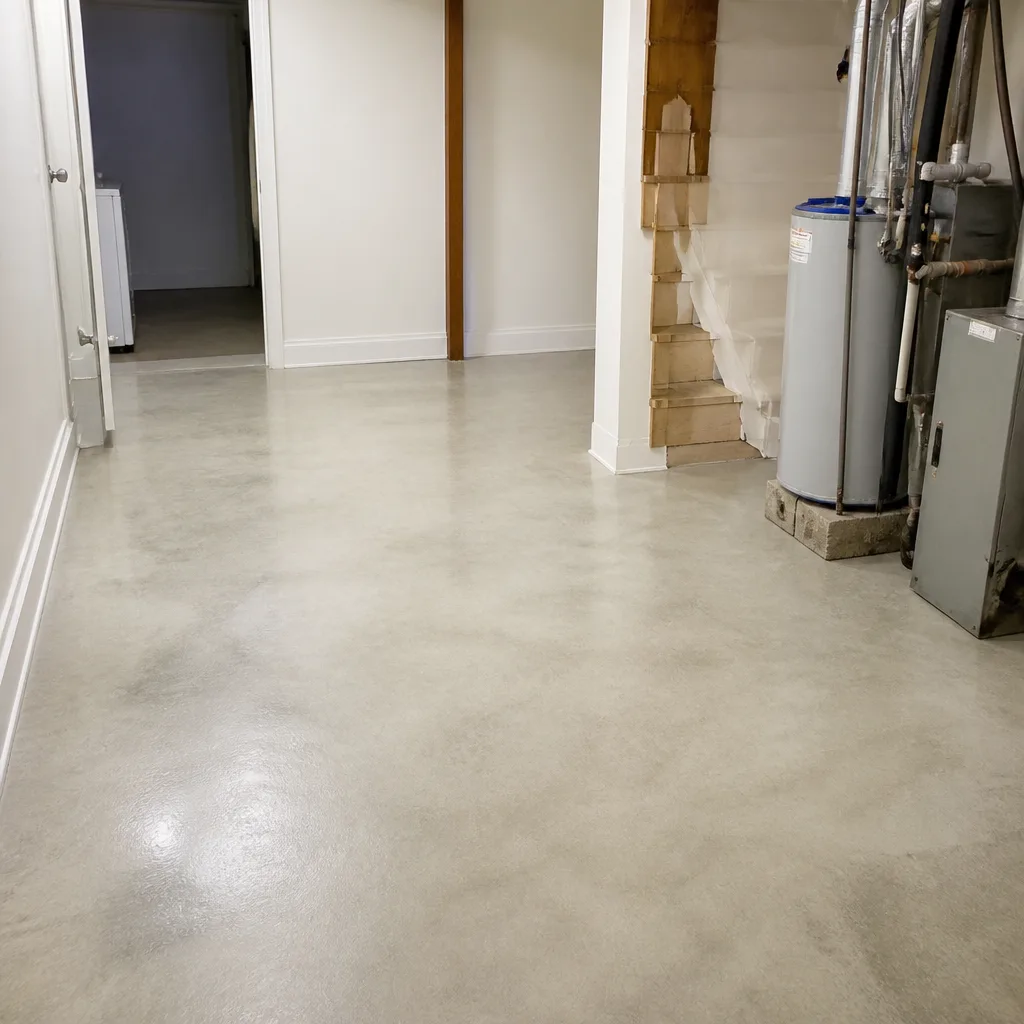
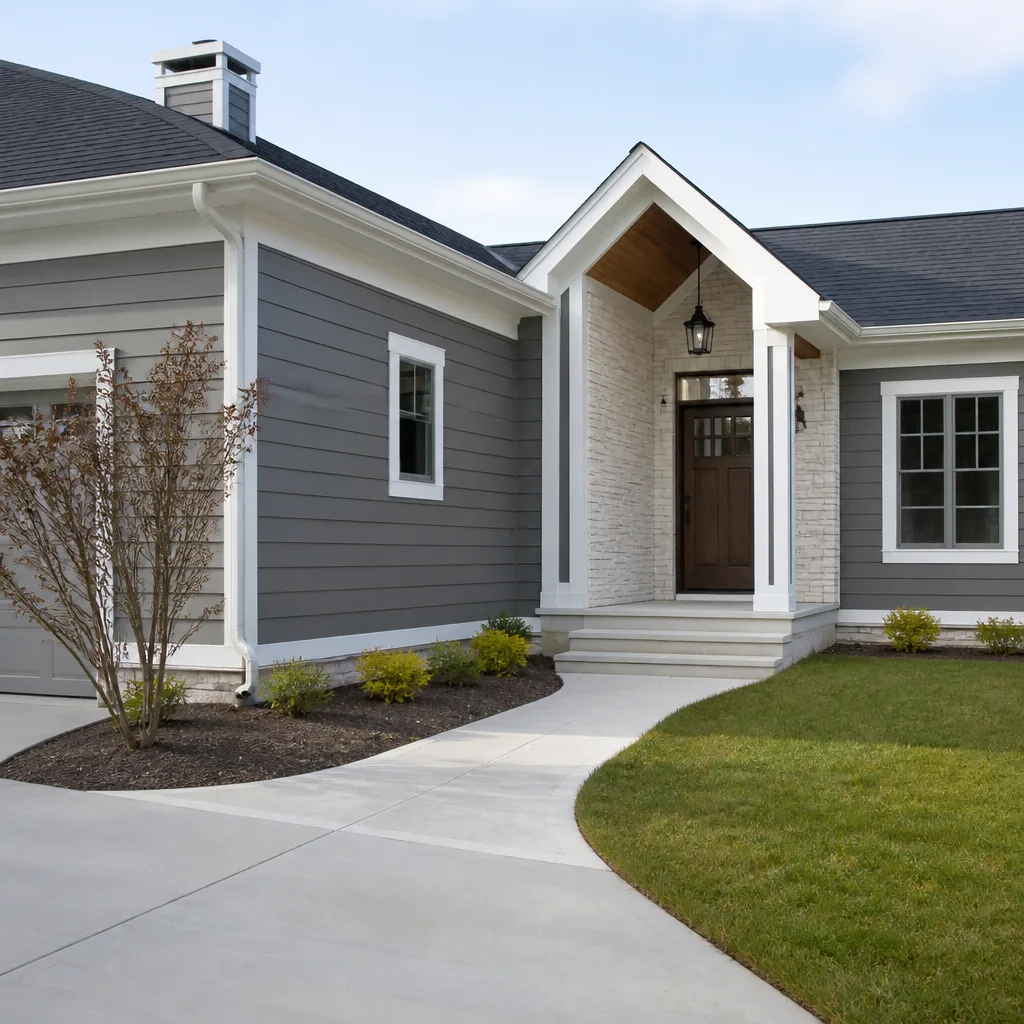
 Before
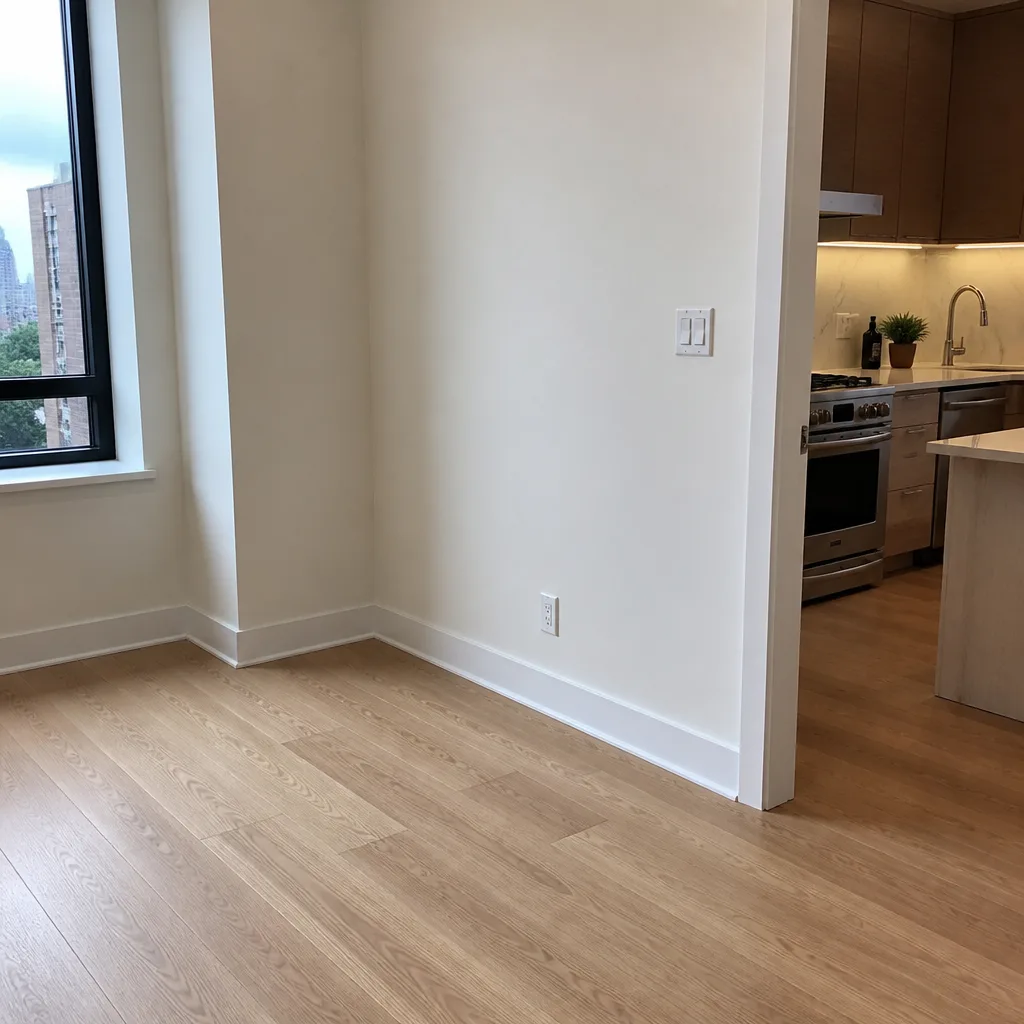 After
After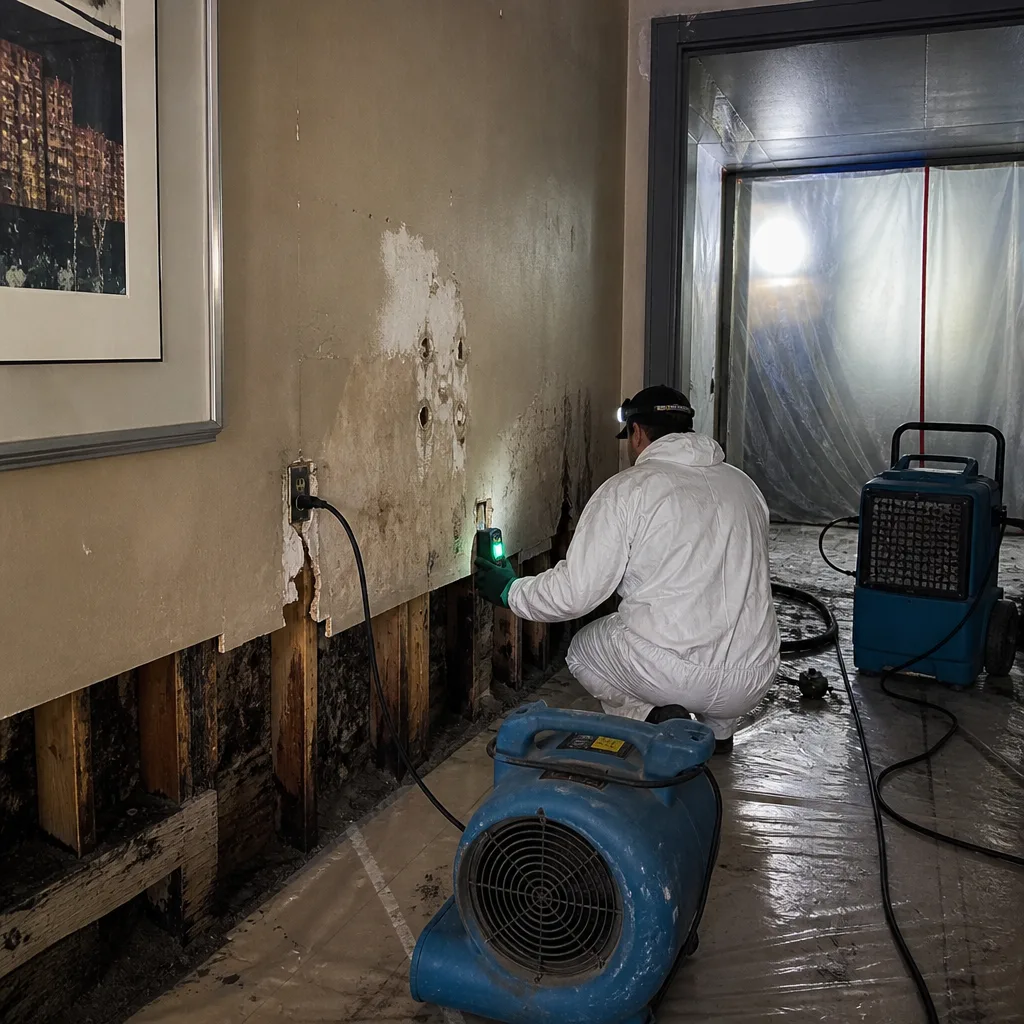 Before
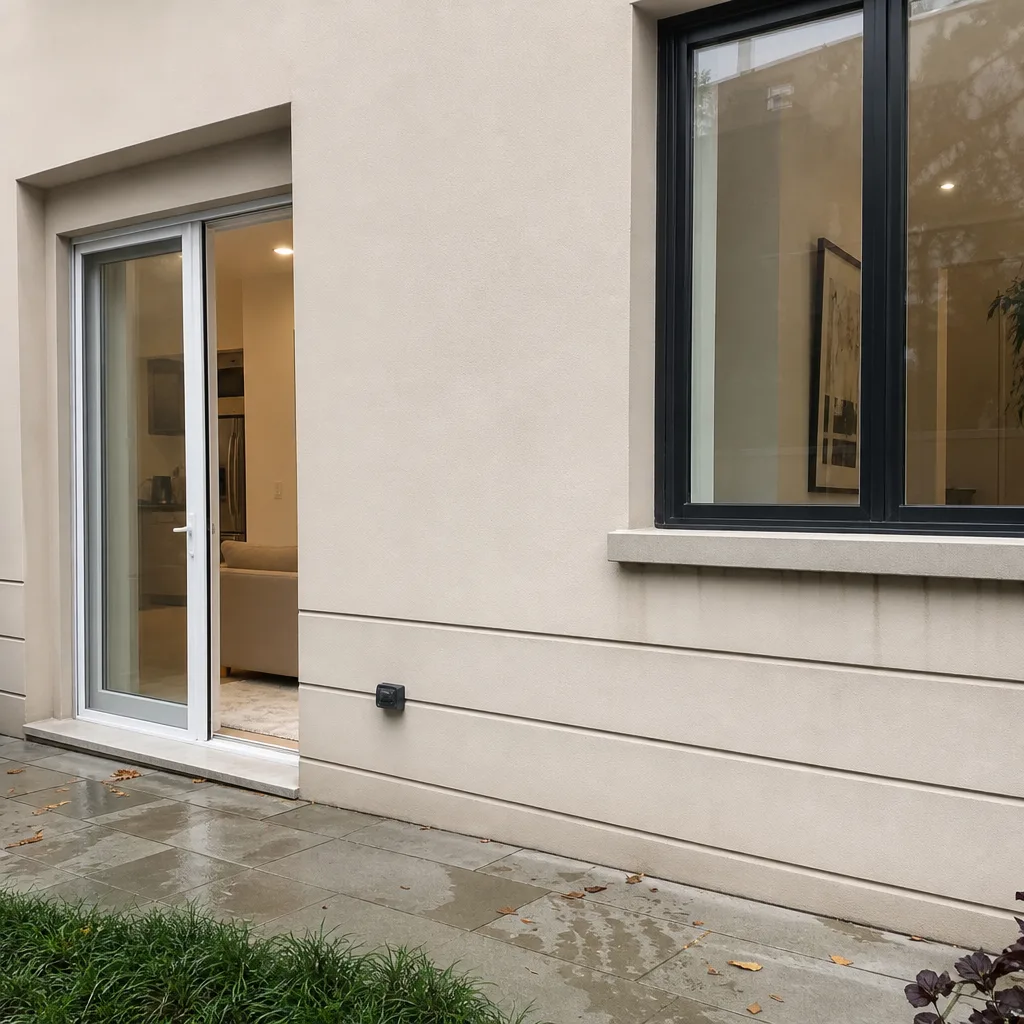 After
After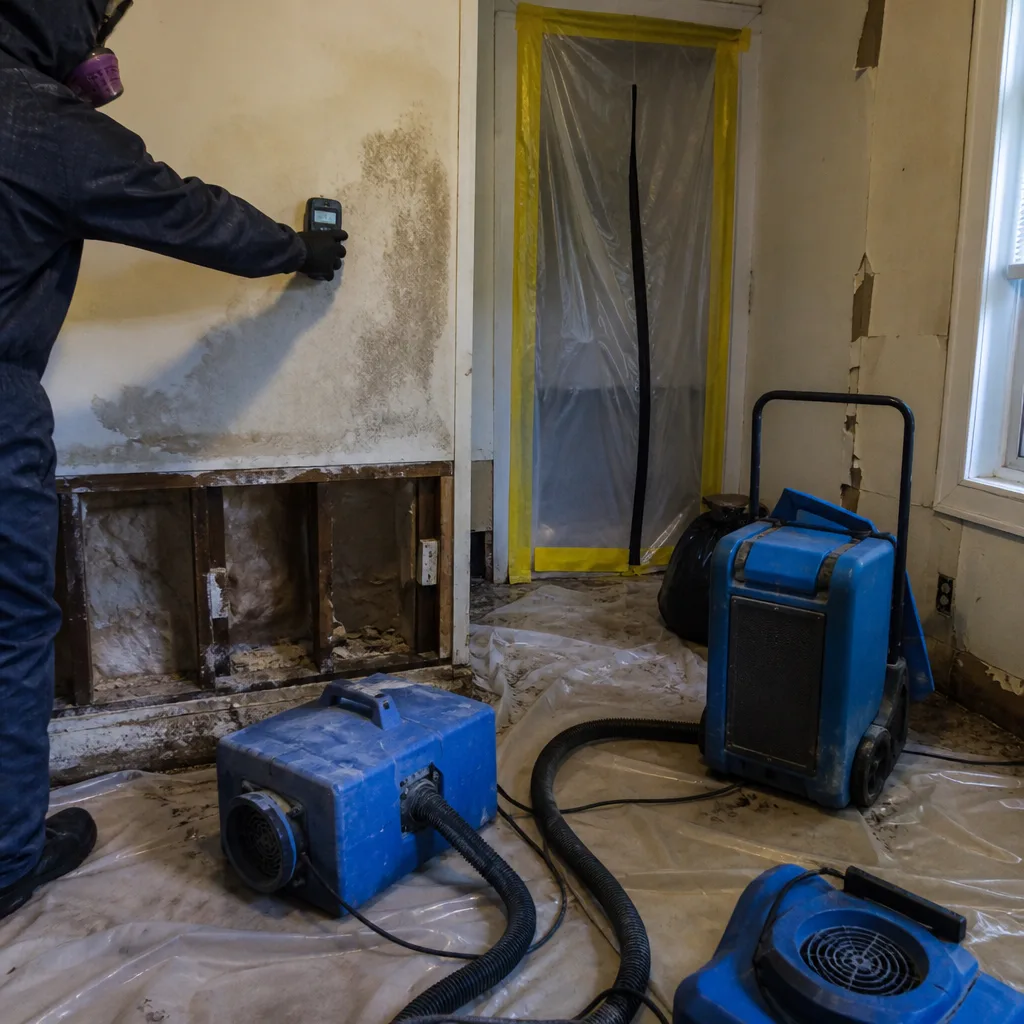 Before
 After
After24/7 Emergency Water Damage Restoration in Palisades Park
Water damage restoration in Palisades Park typically runs $2,800-$6,500 for a standard residential loss, with emergency extraction starting at $450 and full structural drying adding $1,800-$3,200 depending on square footage and category. Crews can be on-site within 45 minutes when you call (551) 213-5277, because in a borough this dense, water doesn’t stay in one unit. Our phones are answered live 24 hours a day, 7 days a week - no voicemail, no callback queue while your ceiling sags into the unit below.
Palisades Park packs roughly 20,000 residents into 1.4 square miles. That means most water losses hit party-wall two-families, postwar garden apartments, or mixed-use Broad Avenue buildings where one burst line instantly involves multiple occupancies and insurance policies. The first hour determines whether we contain the loss to one unit or document damage across three. We offer a free visual inspection, deliver a written price before any work starts, and coordinate directly with every affected carrier.
Understanding Water Damage Restoration Severity in Palisades Park Properties
Water damage falls into three categories measured by contamination level, and Palisades Park’s aging housing stock skews the risk profile. Category 1 - clean water from a supply line - degrades to Category 2 within 24-48 hours once it contacts the borough’s original 1950s-80s construction materials. Category 2, or gray water, carries chemical or biological load from dishwashers, washing machines, or corroded cast-iron drain stacks. Category 3, black water, originates from sewage backups or long-standing flooding, common in ground-floor commercial units when heavy rainfall overwhelms the dense impervious surfaces.
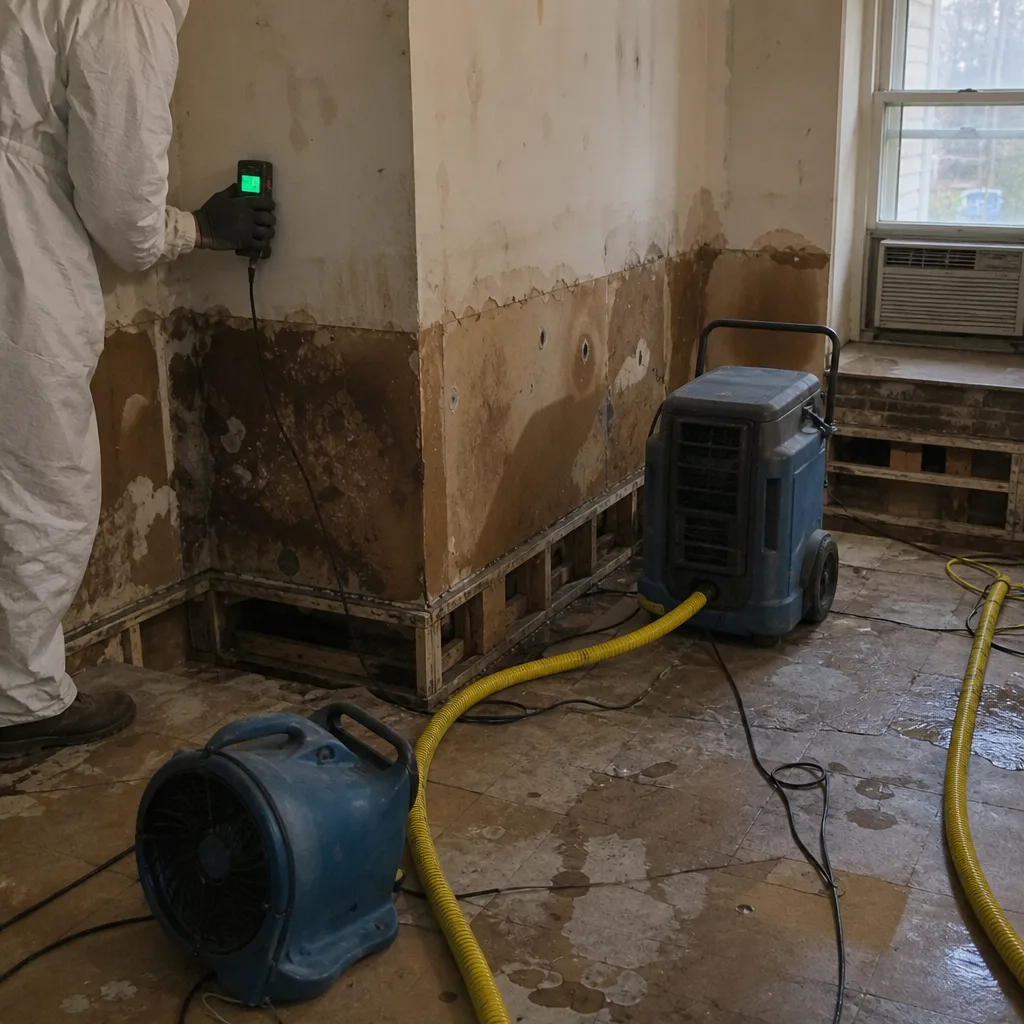
Moisture mapping with thermal imaging and pinless meters tells us what the eye cannot: how far water has wicked through shared party walls, whether vapor pressure differential is driving moisture into adjacent units, and if the substrate behind original plaster or drywall has reached saturation. Structural drying then targets specific material classifications - gypsum board, lath and plaster, or the plywood subfloors common in postwar garden apartments - with psychrometric data tracked daily. Tertiary drying, the final phase, addresses bound water in dense materials that release moisture slowly. Without this documentation, insurers deny secondary damage claims.
Why Palisades Park Property Owners Choose DryMark Restoration Upper East Side
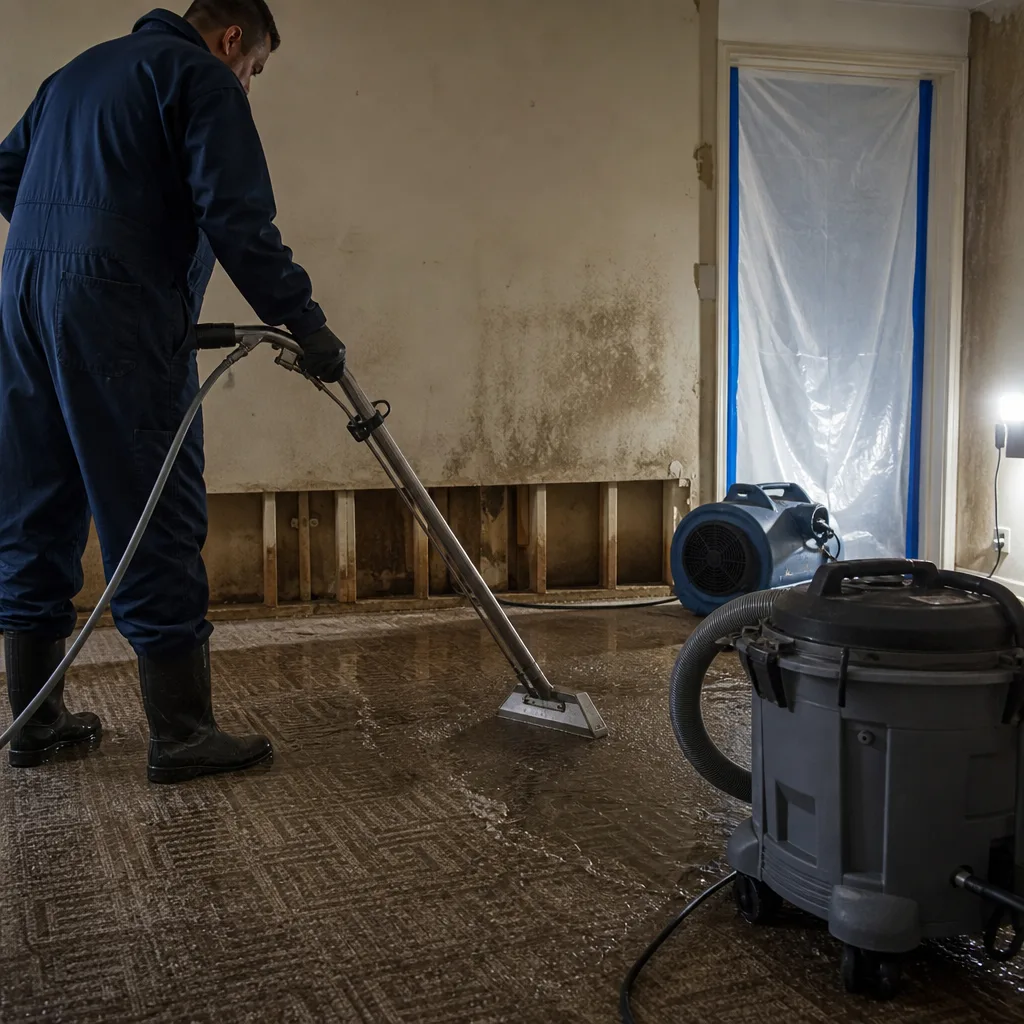
- 45-minute response commitment to Palisades Park from our New York City dispatch office, with crews carrying containment materials sized for narrow alley-load entries and tight townhome clearances.
- 24/7 live answer - a real person, never an automated system or voicemail tree, because water losses at 2 a.m. in a multi-unit building require immediate triage across multiple policies.
- IICRC-certified crews holding WRT (Water Damage Restoration Technician), ASD (Applied Structural Drying), and AMRT (Applied Microbial Remediation Technician) credentials, with license numbers documented on every job file.
- Free visual inspection with moisture readings and photo documentation before any scope is written or any price is discussed.
- Direct insurance billing and adjuster coordination, including daily drying logs formatted to carrier standards so claims process without dispute.
- One team from extraction through reconstruction - no handoff to unknown subcontractors, no gaps in the documentation chain that insurers exploit to reduce payouts.
BeforeAfterOur Water Damage Restoration Process
Inspection & Assessment
We document pre-loss conditions with photos, thermal imaging, and moisture readings in every affected room and adjacent unit. In Palisades Park, this always includes party-wall mapping because water travels horizontally through shared framing before it shows on ceilings below. The written scope and price follow before any equipment is unloaded.
Extraction & Stabilization
Standing water is removed with Dri-Eaz extractors and truck-mounted systems, with category classification confirmed on-site. For basement apartments in dense blocks where access is limited, we run hoses through ground-floor units with signed access agreements and photo documentation of all transit paths.
Drying & Dehumidification
We deploy Phoenix dehumidifiers and XPOWER air movers calculated to the cubic footage and material load, with vapor pressure differential monitored daily. In multi-unit buildings, containment barriers separate drying zones so one unit’s equipment does not disrupt another’s humidity balance or create cross-contamination.
Cleaning & Sanitization
Category 2 and 3 losses receive antimicrobial treatment of affected surfaces, with HEPA air scrubbers running during all active work. We document product application by trade name and concentration for adjuster review, then clean all equipment transit paths through common areas.
Party-Wall Verification & Clearance
Before any drywall is replaced, we verify adjacent units with moisture readings and thermal imaging. This is where single-unit contractors fail in Palisades Park - they dry the visible loss and leave hidden moisture in the shared wall that becomes mold in 30 days. We deliver clearance documentation to all affected owners.
Repairs & Restoration
Reconstruction is scoped in writing, scheduled, and priced as a separate phase per Haven Standard, Clause 1. We match original finishes in postwar garden apartments and Korean commercial storefronts, with photo records at rough-in and final walkthrough.
Need Emergency Water Damage Restoration in Palisades Park Now?
Crews minutes away, answering live 24 hours a day. The sooner we start, the less it costs.
Working With Your Insurance Company
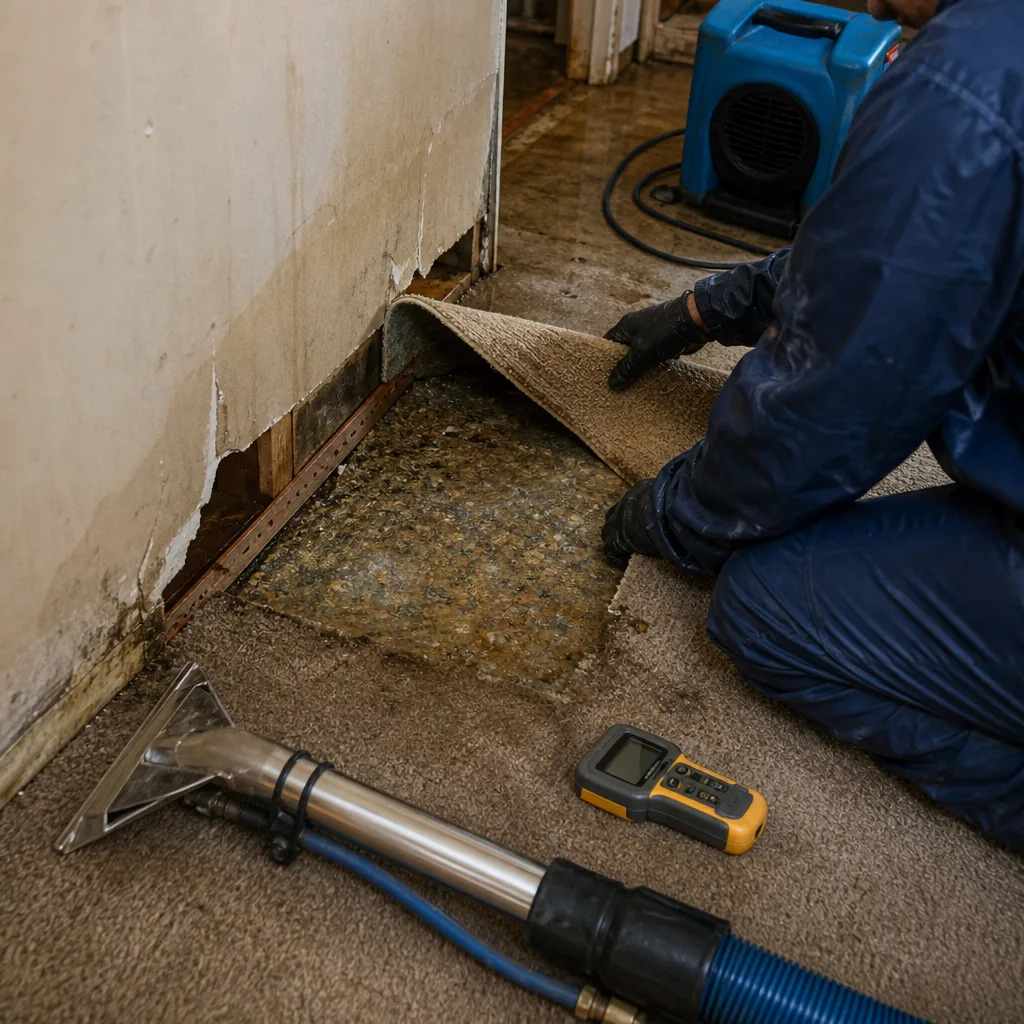
Documentation begins the moment we arrive, because the claims that pay are the claims that prove. Our estimates follow industry-standard pricing databases, but the critical difference is the evidence package: dated photos of every room, moisture readings with meter model and calibration date, daily drying logs showing temperature, relative humidity, and specific humidity at each dehumidifier, and a line-item scope tied to material classifications by trade name.
We coordinate directly with your adjuster, providing the same documentation they would request after a dispute - before they ask. For multi-unit losses in Palisades Park, we separate scopes by occupancy and policy number, so each carrier receives only the relevant line items. This prevents the common delay where one insurer disputes work performed in an adjacent unit.
What We Provide Your Insurer
- Thorough documentation of the loss
- Photos of all damage, room by room
- Moisture readings and drying logs
- A detailed, line-item scope of work
- Direct coordination with your carrier
Built for Palisades Park’s Loss Calendar
January deep freezes split aging galvanized supply lines in two-families built during the 1960s and 70s, with the borough’s hard water accelerating corrosion at joints. Spring thaw brings basement seepage in garden apartments where impervious coverage leaves nowhere for meltwater to percolate. Summer convective storms overwhelm flat-roof commercial membranes along Broad Avenue, and early fall nor’easters drive water through ice-dam gaps that formed the previous winter but were never properly dried.
Freeze-thaw cycles stress the aging flat-roof stock hardest. Korean commercial storefronts share membranes with residential floors above, so a single roof failure channels water through three or four occupancies before the first tenant calls. We plan for this in our response: every Broad Avenue dispatch carries enough containment for multi-unit isolation, and our moisture mapping protocol assumes horizontal travel until proven otherwise.
Water Damage Restoration Across Palisades Park’s Neighborhoods
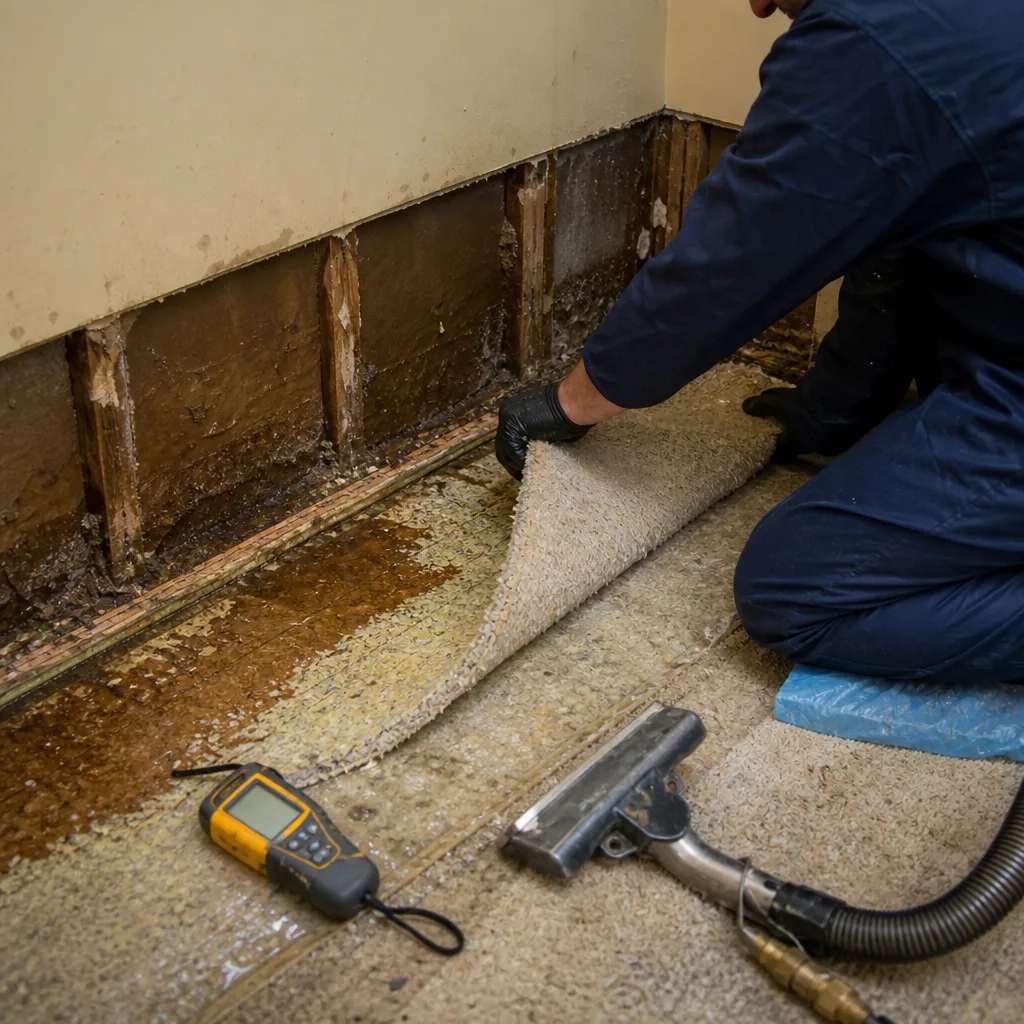
On Broad Avenue, the commercial spine, we respond to combined water and grease-exhaust losses where restaurant kitchens share walls with residential units above. The party walls here are original brick-and-plaster, slow to dry and quick to harbor hidden moisture. Our crews set containment at the property line, run negative air if category 2 or 3 water is present, and document both the storefront and residential losses separately for their respective carriers.
West of Broad, the postwar garden apartments along Highland Avenue and Grant Avenue present repeated cast-iron stack failures. These buildings sit on slab foundations with minimal clearance, so basement apartment losses require specialized extraction wands and low-grain refrigerant dehumidifiers that perform in tight mechanical spaces. The alley-load entries common in this area mean our trucks stage on side streets and we run equipment through ground-floor units - always with signed access agreements and photo documentation.
Along the ridge toward the Fort Lee border, newer mid-rise condos sit adjacent to older two-family stock, creating complex shared-wall scenarios where a loss in a 1960s building migrates into a 2015 structure with different vapor barriers and insulation. Our moisture mapping identifies the boundary between construction eras and adjusts drying targets accordingly. Central Boulevard and the blocks around the municipal complex see the highest concentration of mixed-use buildings, where residential water losses routinely involve commercial policies and require coordinated adjuster calls.
Specialized Water Damage Restoration Services We Offer in Palisades Park
Emergency Water Extraction
Standing water is removed within hours of your call, with extraction capacity scaled to the loss. In Palisades Park’s basement apartments and narrow commercial spaces, we deploy portable Dri-Eaz extractors where truck-mounted units cannot access. Category classification is confirmed before extraction begins, determining whether materials can be restored or must be removed per IICRC S500 standards.
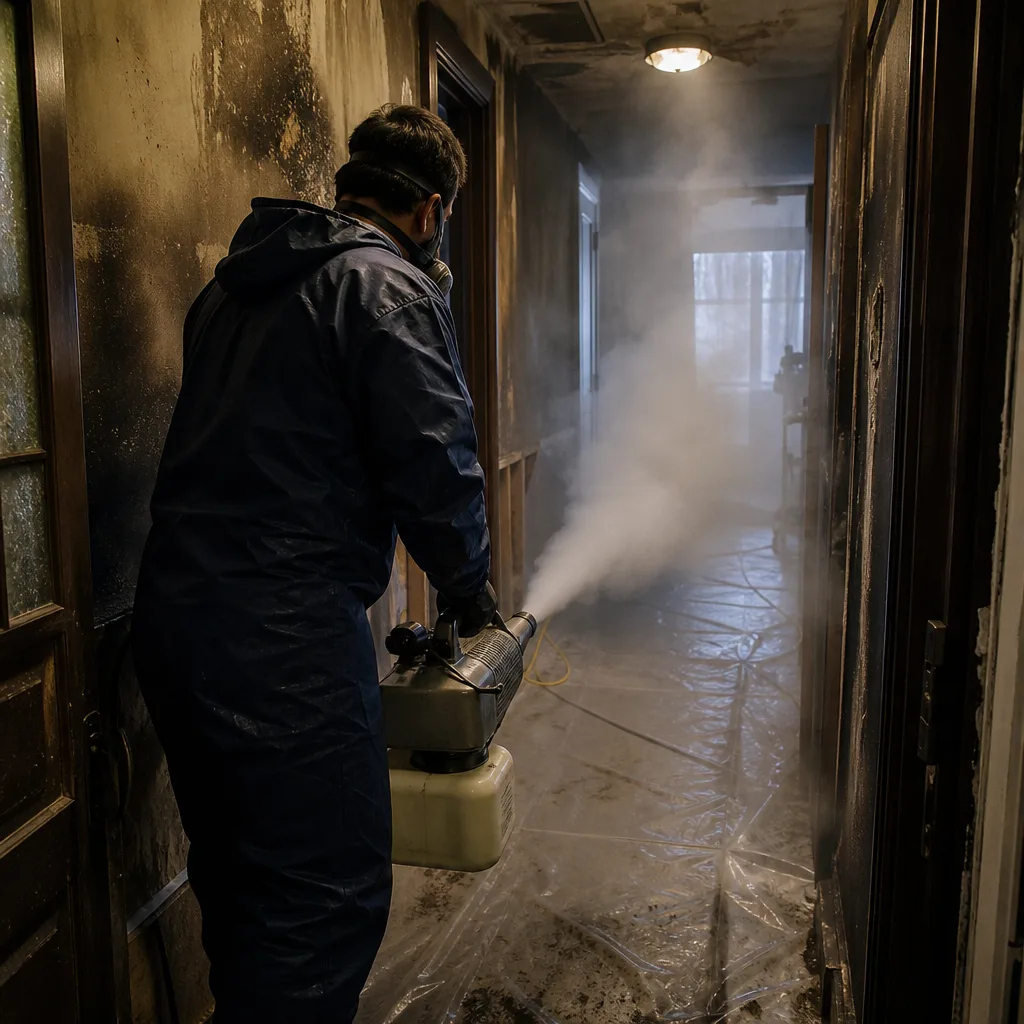
Structural Drying & Dehumidification
We calculate equipment loads from cubic footage, material permeance, and vapor pressure differential, then monitor daily with hygrometers and thermal imaging. Phoenix LGR dehumidifiers and XPOWER air movers are positioned for airflow across wet surfaces without disrupting adjacent units. Daily drying logs track specific humidity, temperature, and grain depression - the psychrometric data that turns restoration invoices into payable claims.
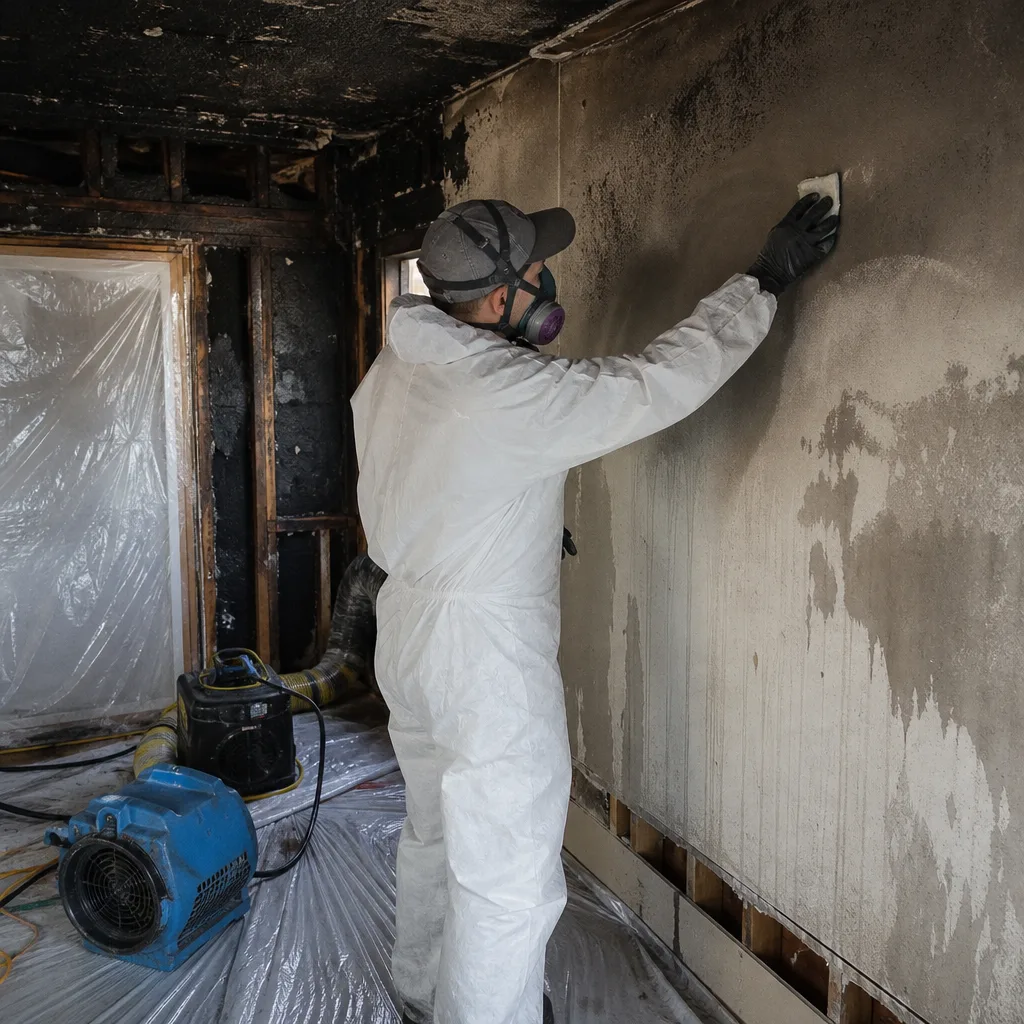
Flood Cleanup
Ground-floor commercial units and basement apartments in Palisades Park flood when heavy rainfall overwhelms the dense impervious coverage. We extract, classify the water category (typically Category 2 or 3 in these scenarios), sanitize affected surfaces, and document pre-existing conditions to distinguish storm damage from deferred maintenance disputes with carriers.
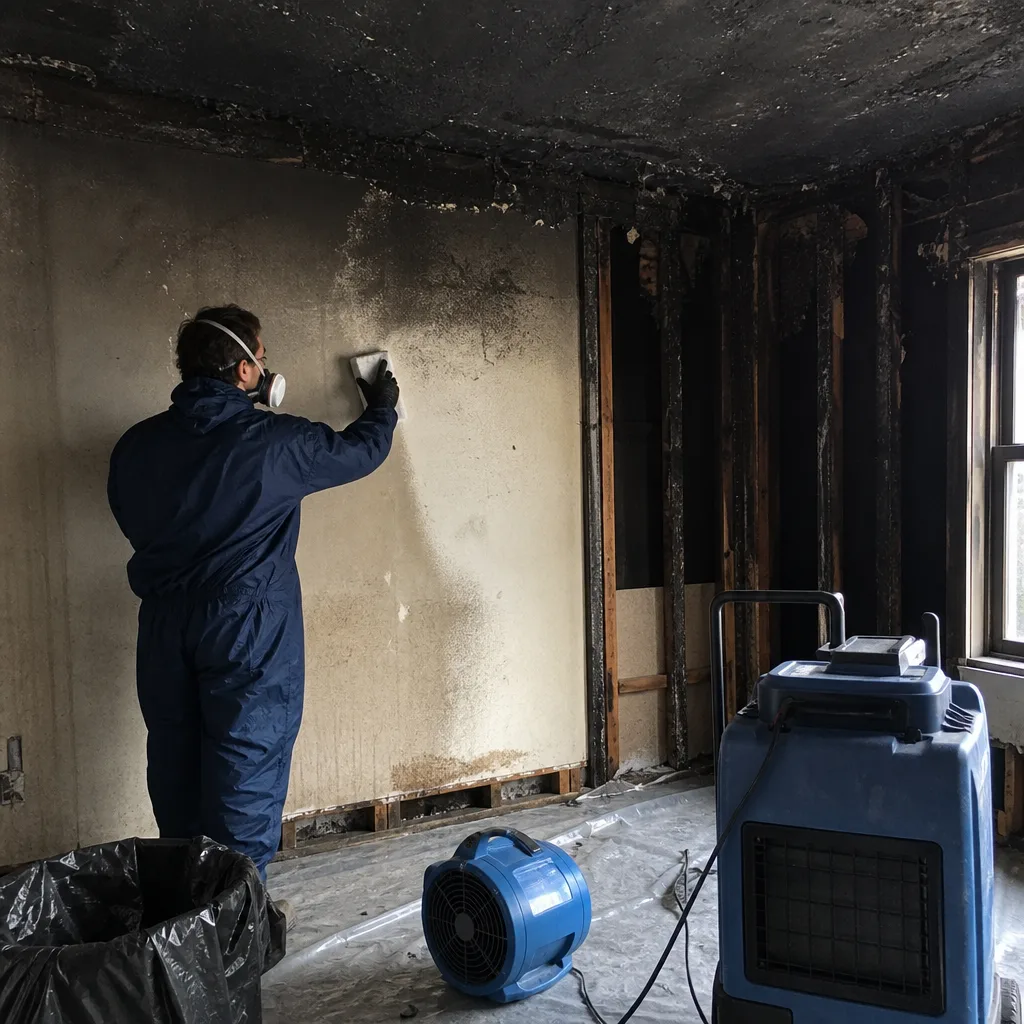
Burst Pipe Restoration
Galvanized supply lines and cast-iron drain stacks from the 1950s-80s fail predictably in this borough’s hard water. We extract the immediate loss, map moisture through shared walls, and coordinate with licensed plumbers for line replacement. The scope separates restoration from plumbing repair, with each trade’s work documented separately for insurance clarity.
Ceiling & Roof Leak Water Damage
Flat-roof commercial buildings along Broad Avenue and mixed-use structures with aging membranes require ceiling removal to inspect roof deck condition. We document the water path from roof to ceiling, identify whether the leak is isolated or systemic, and scope drying for all affected floors. In multi-occupancy buildings, this means separate documentation for the commercial policy below and the residential policies above.
Basement Water Removal
Below-grade units in garden apartments and two-families present access challenges and category uncertainty - seepage may be Category 1 initially but degrades after contacting soil or sewage. We test and classify before extraction, then deploy low-profile dehumidifiers sized for the reduced headroom common in Palisades Park’s older stock.
What happens when you call
- 1
A real person answersNo phone trees - you reach a local pro.
- 2
You get an upfront price rangeHonest numbers before anyone is dispatched.
- 3
A background-checked tech heads outLicensed & insured, dispatched right away.
- 4
You approve before work beginsNothing starts until you say go.
Water Damage Restoration Costs in Palisades Park, NJ
Emergency water extraction in Palisades Park starts at $450 for a contained single-room loss and ranges to $1,200 for multi-unit basement or commercial extraction. Structural drying and dehumidification typically adds $1,800-$3,200 for residential properties and $3,500-$6,500 for multi-unit commercial losses requiring coordinated containment. Full restoration including drywall, flooring, and finish replacement runs $4,200-$9,800 for standard residential scope.
What moves the price: category classification (Category 3 losses require more removal and sanitation), square footage affected, whether party-wall demolition is needed in multi-unit buildings, and the presence of asbestos or lead in pre-1980 construction. Insurance typically covers sudden and accidental losses - burst pipes, roof failures, appliance ruptures - but excludes long-term leaks and maintenance issues. We provide a written price before any work starts, per Haven Standard, Clause 1, and offer a Free Second Opinion on any competitor’s written estimate.
We Also Serve Cities Near Palisades Park
Our crews respond throughout the immediate service area including Palisades Park, Fort Lee, Union City, and Hoboken from our New York City dispatch office. Each city receives the same documentation protocol and written-price guarantee, with response times adjusted for bridge and tunnel traffic patterns.
Serving Palisades Park, NJ - Our Local Coverage Area
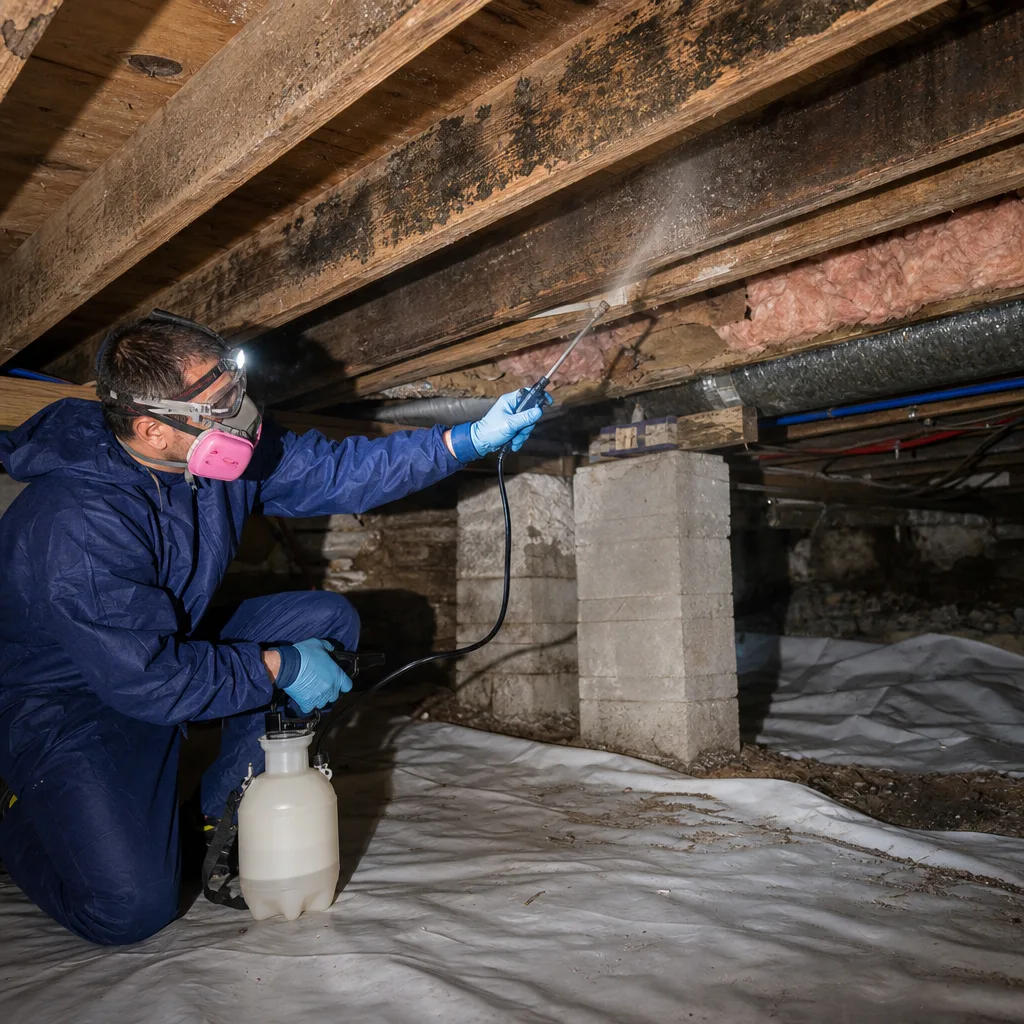
We’re based in the Palisades Park area and know this community well. Use the map below to see our service coverage - if you’re nearby, we can almost certainly help.
Palisades Park Water Damage Restoration Questions, Answered
We share a party wall with a storefront below us on Broad Avenue - does a leak in our unit mean their unit gets opened up too?
Not automatically, but it must be verified with moisture mapping before any drywall is sealed. We run thermal imaging and pinless meters along the full party wall, document readings on both sides, and provide those records to both property owners and their carriers. If moisture has wicked through shared framing, we scope containment and drying for both occupancies with separate line items per policy. Call (551) 213-5277 for a free inspection with written findings.
Our Palisades Park two-family has an old cast-iron stack - how do you tell if it’s a hidden leak or just condensation?
We distinguish active leaks from condensation with moisture mapping over time: a leak shows rising moisture content at the stack connection points, while condensation patterns follow temperature differentials and improve with ventilation changes. Thermal imaging reveals the temperature signature of evaporative cooling at active leak sites. We document the findings with photos and meter readings, then provide a written scope if restoration is needed. Call for a free visual inspection.
Can you handle a water loss in a basement apartment when the building is packed right up against the next one?
Yes. Alley-load access and tight clearances are standard in Palisades Park’s dense blocks. We deploy portable extraction and drying equipment sized for narrow entries, run hoses through ground-floor units with signed access agreements, and stage trucks on adjacent streets. Our drying strategy accounts for shared foundation walls that may transfer moisture to neighboring structures. Call (551) 213-5277 to discuss access for your specific building.
A roof leak over our flat-roof commercial space hit the residential floors too - who scopes what?
We scope each occupancy separately with distinct line items and policy numbers. The commercial policy covers the roof membrane and commercial interior; residential policies cover each affected unit’s finishes and contents. Our documentation package separates these from the first photo, so no carrier disputes scope overlap. We coordinate adjuster access for all parties and deliver drying logs to each. Call for a free inspection and written scope breakdown.
If the water came from a toilet or kitchen drain, is it still dryable or does everything have to come out?
Category 2 gray water and Category 3 black water require removal of porous materials that cannot be sanitized - carpet pad, drywall below the water line, and insulation. Hard surfaces and some structural materials can often be restored with antimicrobial treatment and HEPA air scrubbing during drying. We classify the water on arrival, document what must be removed versus what can be dried, and provide that scope in writing before demolition begins. Call for a free assessment.
How fast can someone actually get to Palisades Park?
Our commitment is 45 minutes from dispatch to on-site, with live phone coverage 24 hours a day. Dispatch is coordinated from our New York City office, and crews carry equipment for immediate extraction and containment. The first hour of a water loss determines whether damage is contained to one unit or cascades through multiple occupancies. Call (551) 213-5277 now for immediate dispatch.
Will insurance cover water damage restoration in Palisades Park?
Sudden and accidental losses - burst pipes, appliance failures, storm intrusion through damaged roofs - are typically covered under standard homeowner and commercial policies. Long-term leaks, maintenance issues, and groundwater seepage are usually excluded. We document the loss cause, provide the evidence package insurers require, and coordinate directly with your adjuster. Our daily drying logs and photo records are formatted to carrier standards. Call for a free inspection and coverage discussion.
How long does structural drying take in Palisades Park’s older buildings?
Standard residential drying runs 3-5 days; dense materials in postwar construction with plaster and lath may extend to 7-10 days. Multi-unit commercial losses with party-wall complexity add 2-3 days for verification across occupancies. We do not declare a structure dry until moisture readings meet IICRC standards for the specific material classification, documented in daily logs. Call (551) 213-5277 for a timeline estimate based on your specific loss.
We got called to a two-family on Broad Avenue after a second-floor supply line let go above a Korean storefront - category 2 water was already wicking through a shared party wall into the ground-floor unit and basement. Our techs ran moisture mapping on both floors, set containment along the party wall, and pulled standing water with a Dri-Eaz extractor before racking Phoenix dehumidifiers and XPOWER air movers to dry the shared framing. We delivered drying logs to both owners and the storefront’s carrier so all three policies could be scoped off the same pre-loss condition.
Our Water Damage Restoration team serves Palisades Park with the documentation-first approach that turns claims into payments. Every job carries the 365-Day Done Right Promise under The Haven Standard: if it’s not done right, we make it right. Alicia Brennan built this company in 2011 after seeing how sloppy documentation cost homeowners their claims, and that origin shapes every protocol we follow.
Written by Alicia Brennan, Owner at DryMark Restoration Upper East Side, serving Palisades Park since 2011.
Water Damage Restoration in Nearby Areas