

Free visual inspection and a written scope of work before any mitigation begins - photos, moisture readings, and drying logs go in your claim file
The scope we write is the scope we bill. Anything new gets shown to you, in writing, before we touch it.
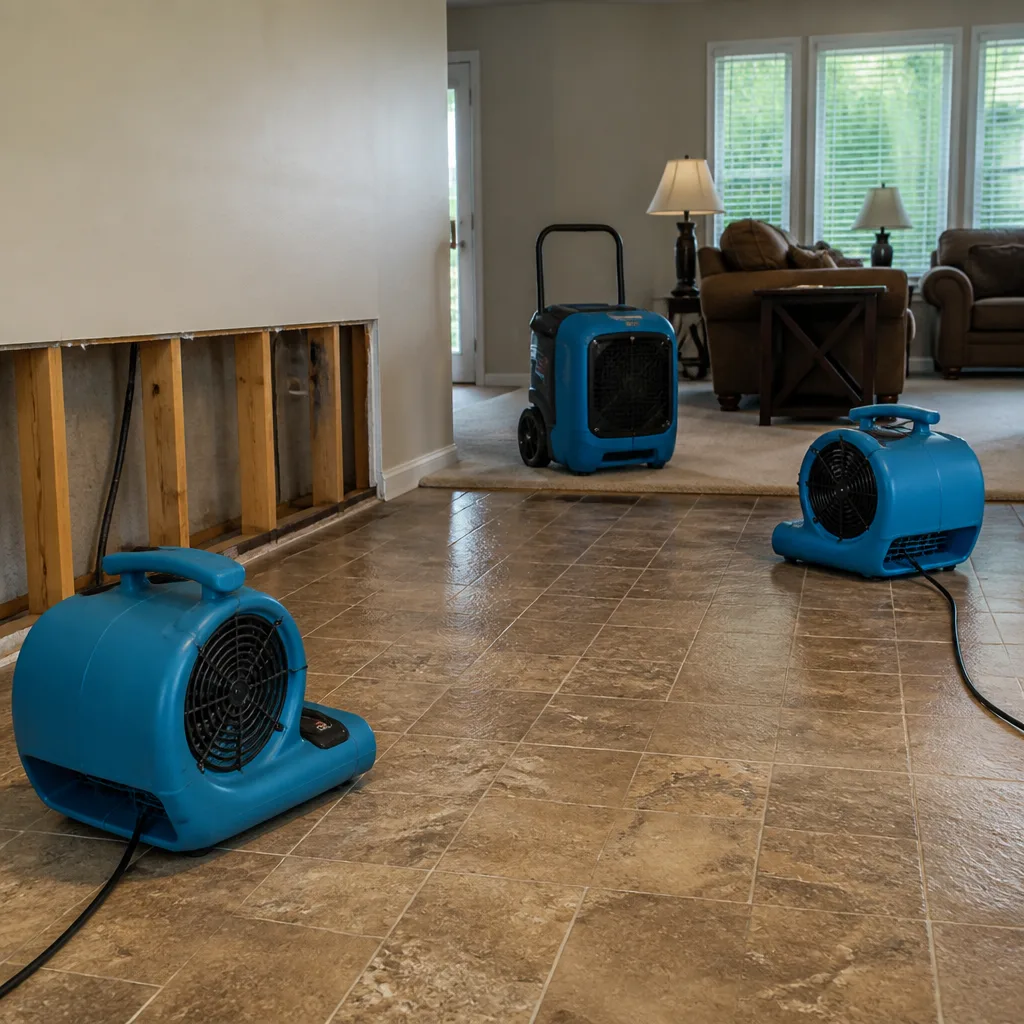

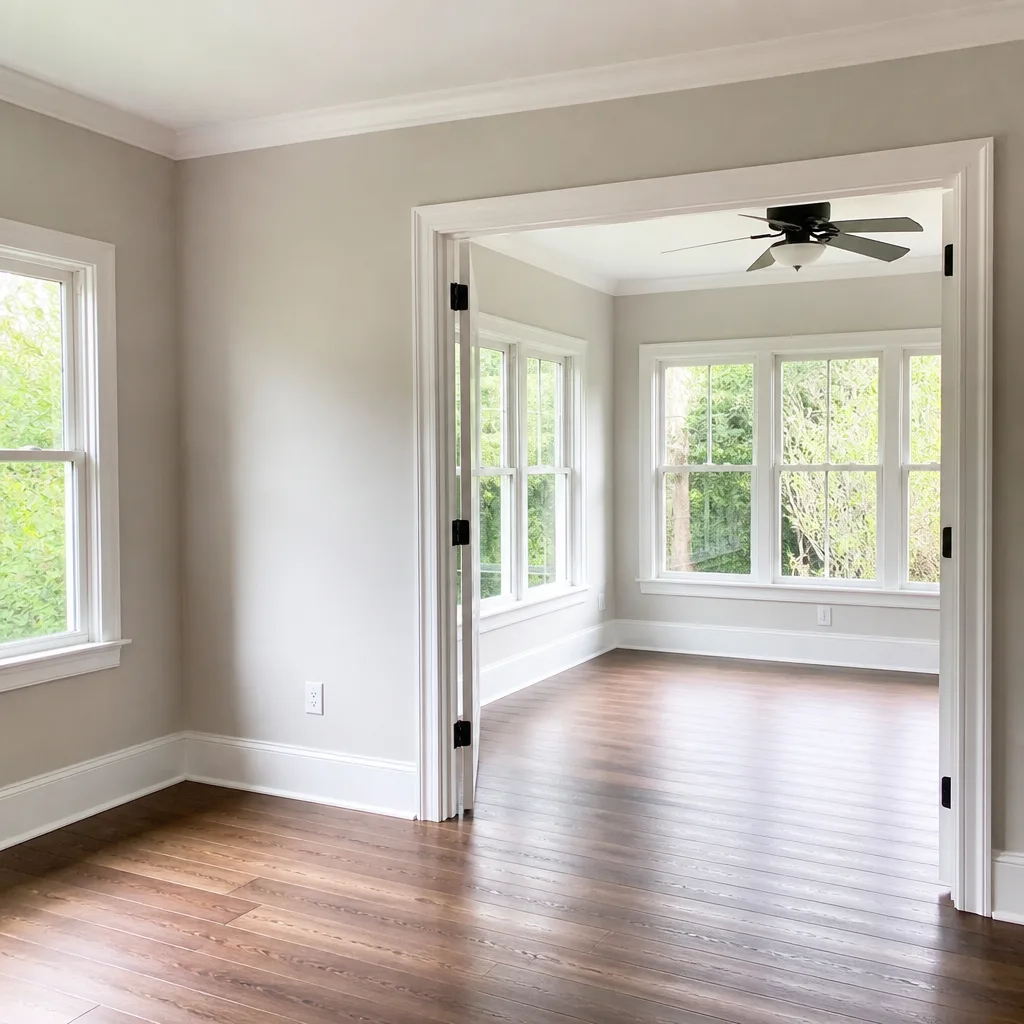
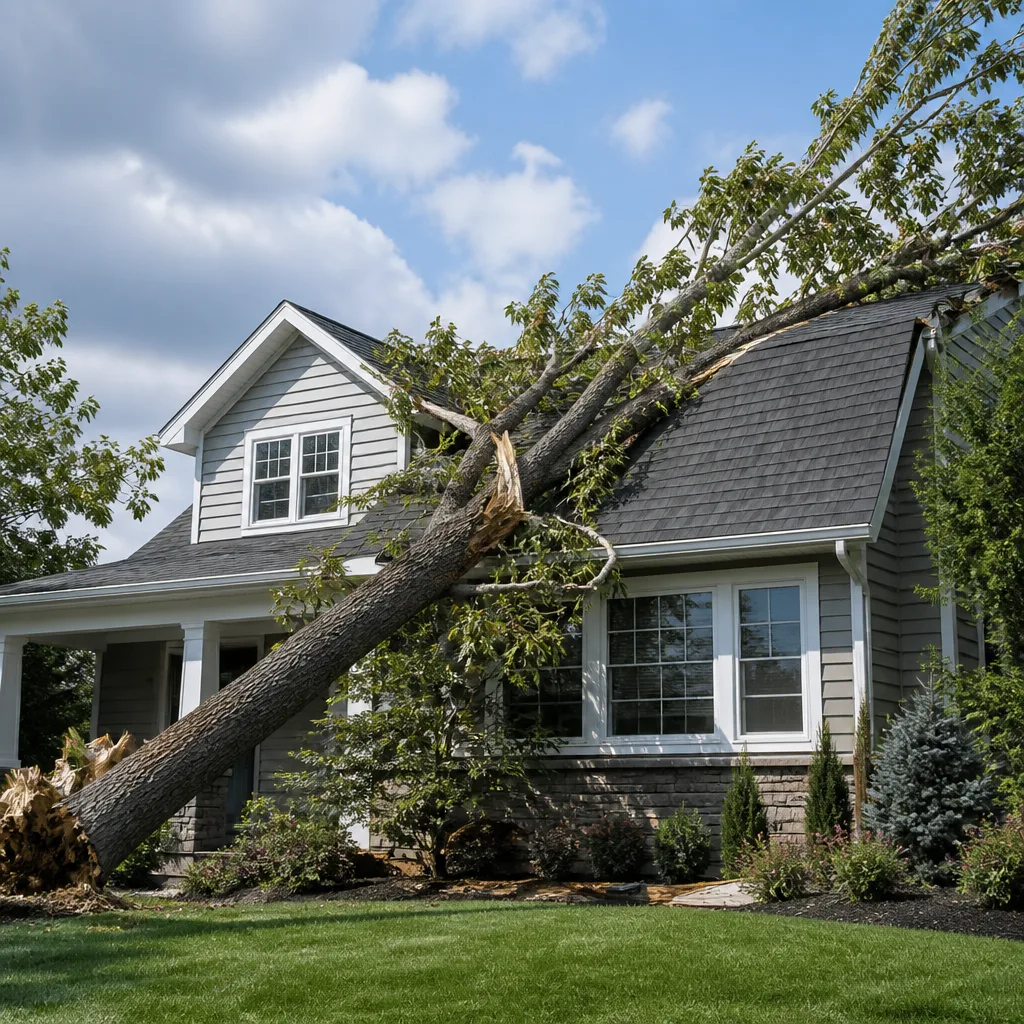
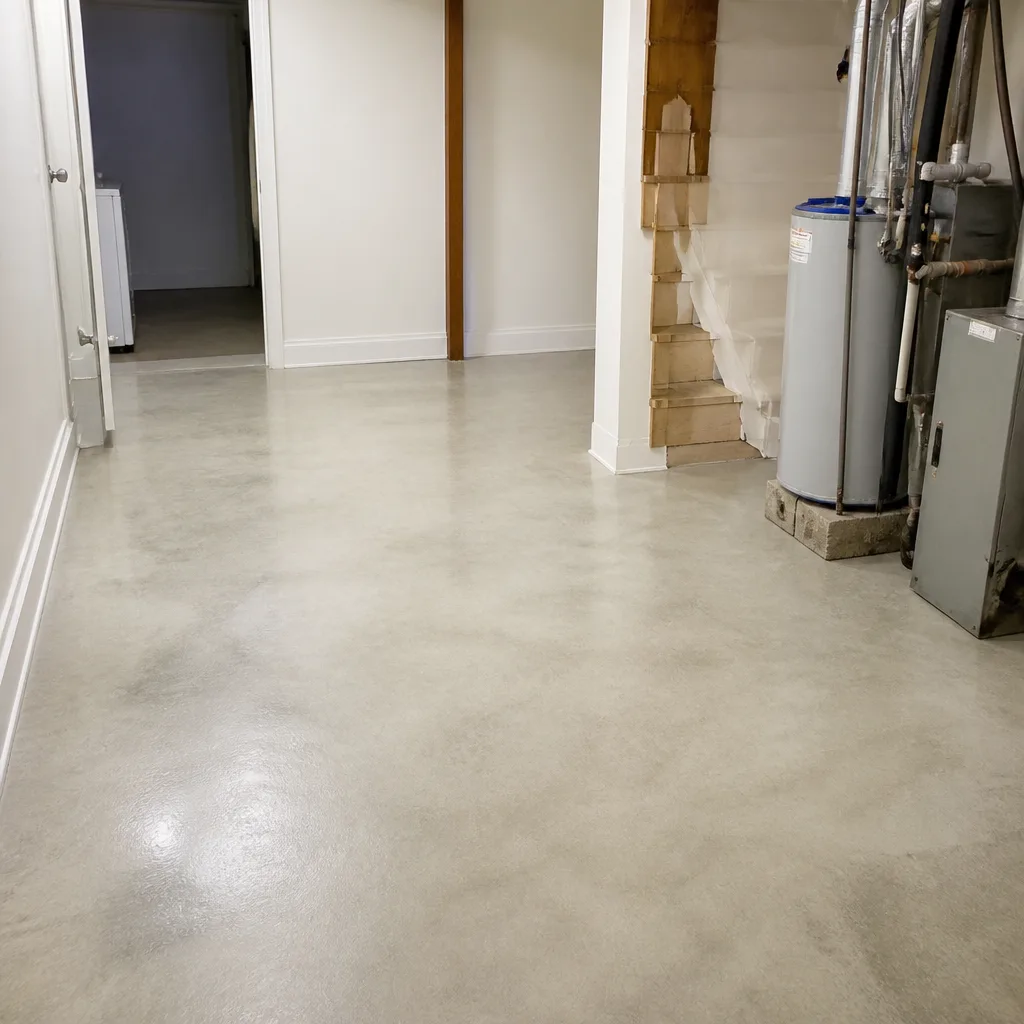
 Before
 After
After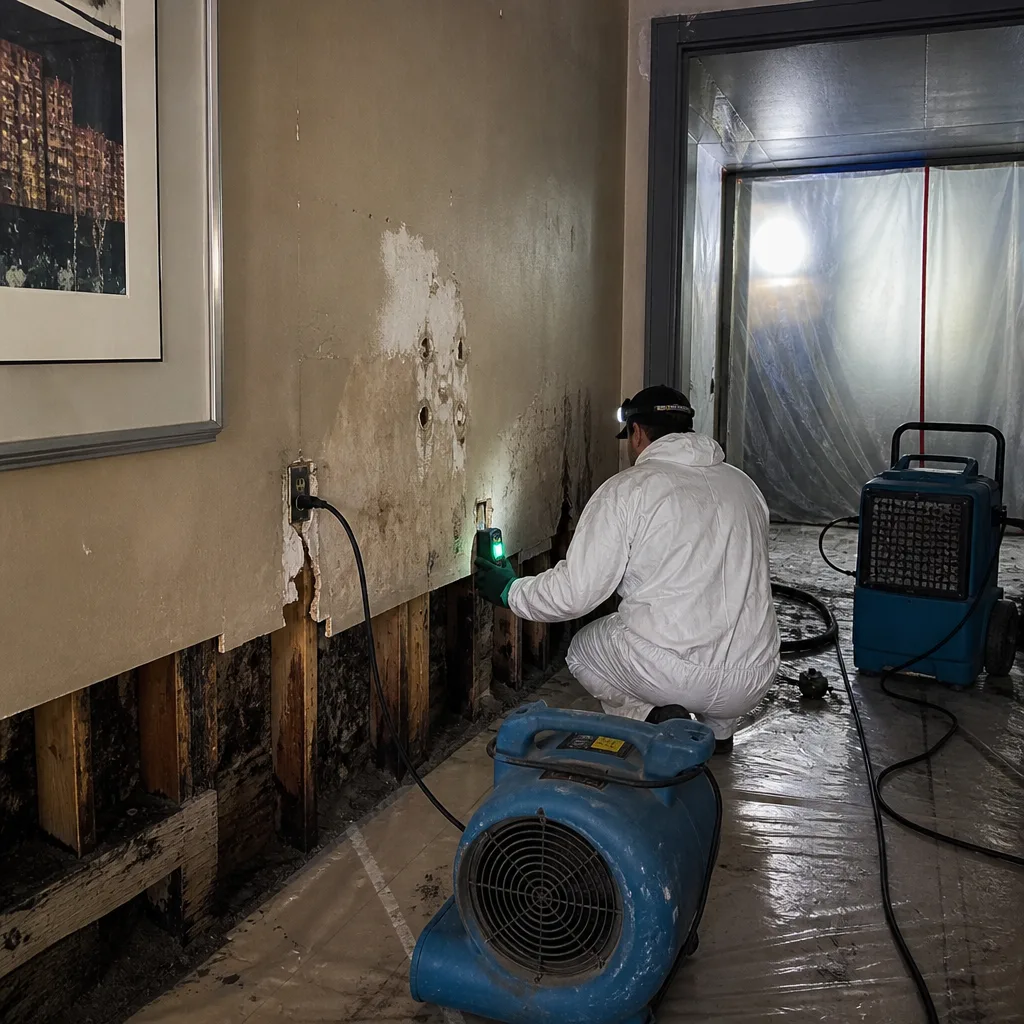 Before
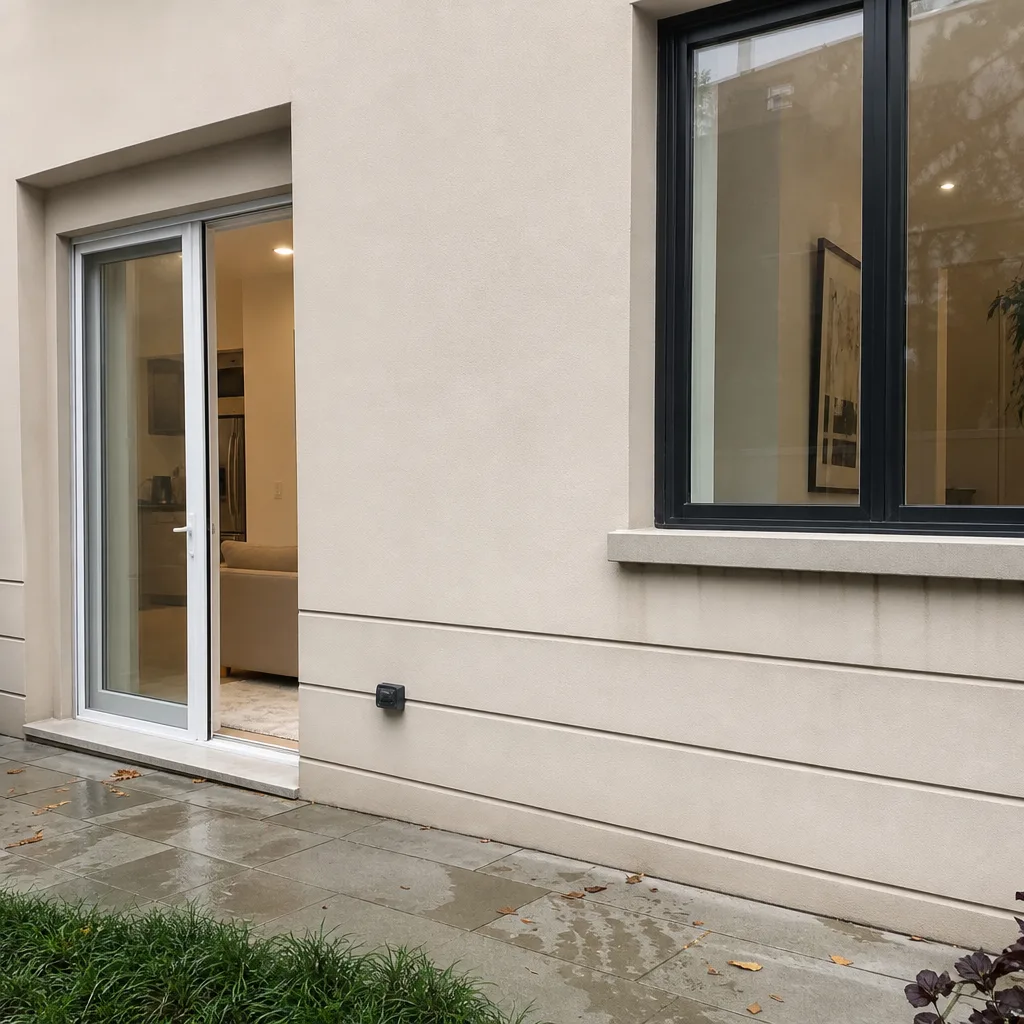 After
After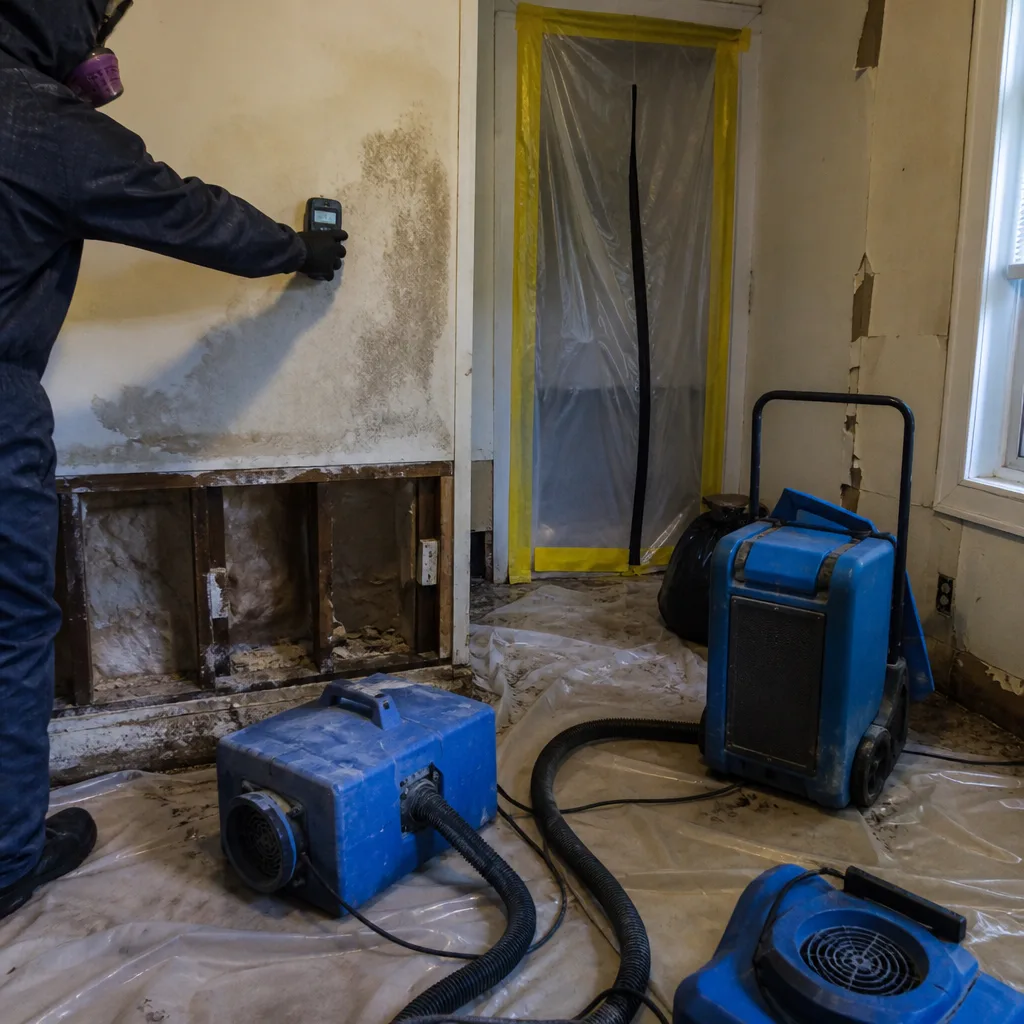 Before
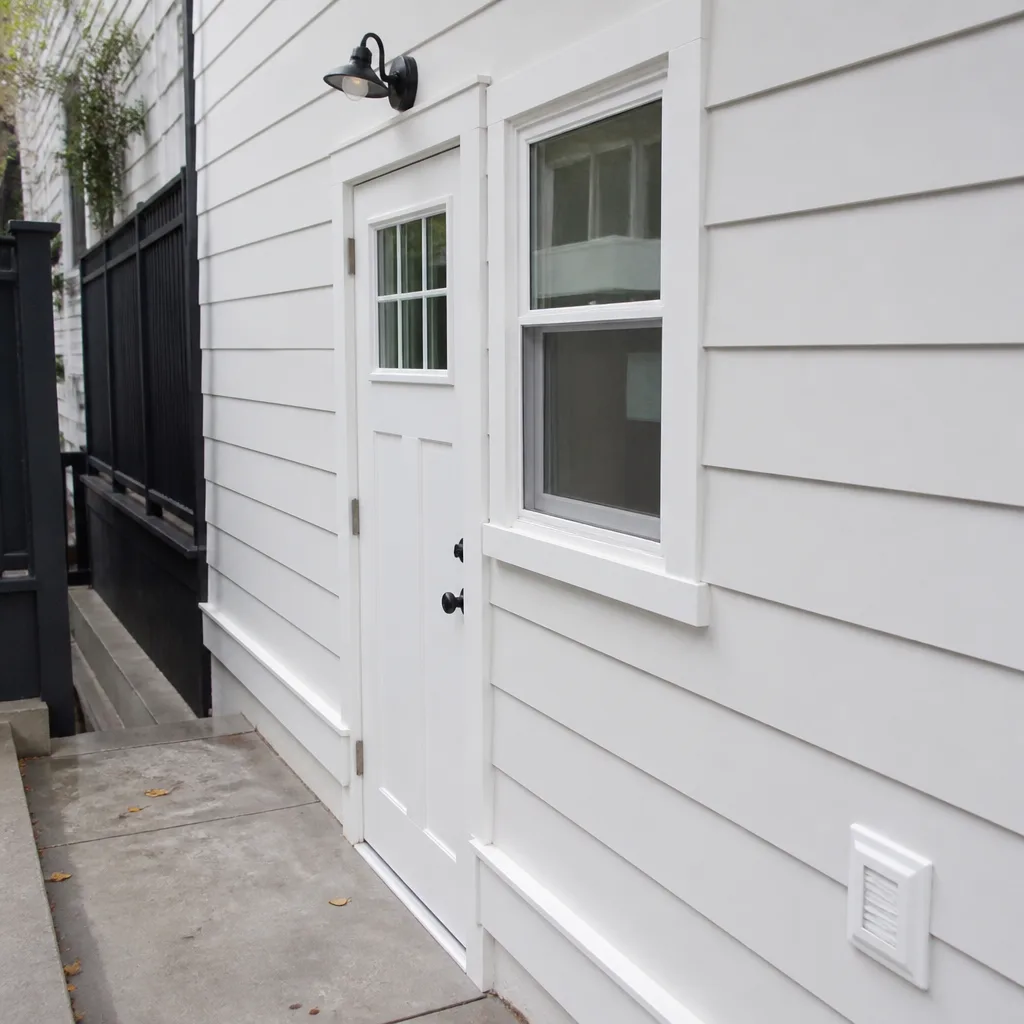 After
After24/7 Emergency Mold Remediation in Financial District
Mold remediation in Financial District properties typically runs $2,800-$8,500 depending on affected square footage and whether the source is storm surge, chronic groundwater seepage, or mechanical system failure. Our crews dispatch throughout the Financial District area within 45 minutes of your call to (551) 213-5277, and we provide a free visual inspection with a written scope before any work begins. The first hour matters because mold colonies in FiDi’s below-grade spaces - mechanical rooms, storage levels, and converted basement units - establish airborne spore loads rapidly in shared high-rise HVAC systems, turning a localized problem into a building-wide air quality issue before most property managers detect it.
Understanding Mold Remediation Severity in Financial District Properties
We classify mold contamination by affected material, airborne spore concentration, and moisture source classification. Category 1 sources involve clean water intrusion - typically a failed lobby door gasket during harbor surge - where mold growth is limited to surface materials and responds to containment, HEPA air scrubbing, and antimicrobial treatment. Category 2 involves gray water with chemical or biological loading, common when storm surge mixes with street-level contaminants before entering subgrade spaces. Category 3 black water contamination requires full PPE protocols, negative air pressure containment, and disposal of porous materials.
In Financial District’s converted 1910s-1930s skyscrapers, we encounter a fourth condition: chronic Category 1 that presents as Category 3 severity. The water table beneath landfill at or below sea level never fully recedes, so moisture vapor drives through foundation walls year-round. We map this with thermal imaging and psychrometric data - measurements of temperature, relative humidity, and vapor pressure differential that tell us whether moisture is actively migrating or residual from a past event. Tertiary drying, the final phase of moisture removal from dense masonry and terracotta, often takes 72-96 hours longer in FiDi’s thick historic construction than in standard frame buildings. Without documented moisture readings proving vapor pressure equilibrium, mold returns behind new finishes within one humidity season.
Why Financial District Property Owners Choose DryMark Restoration Upper East Side
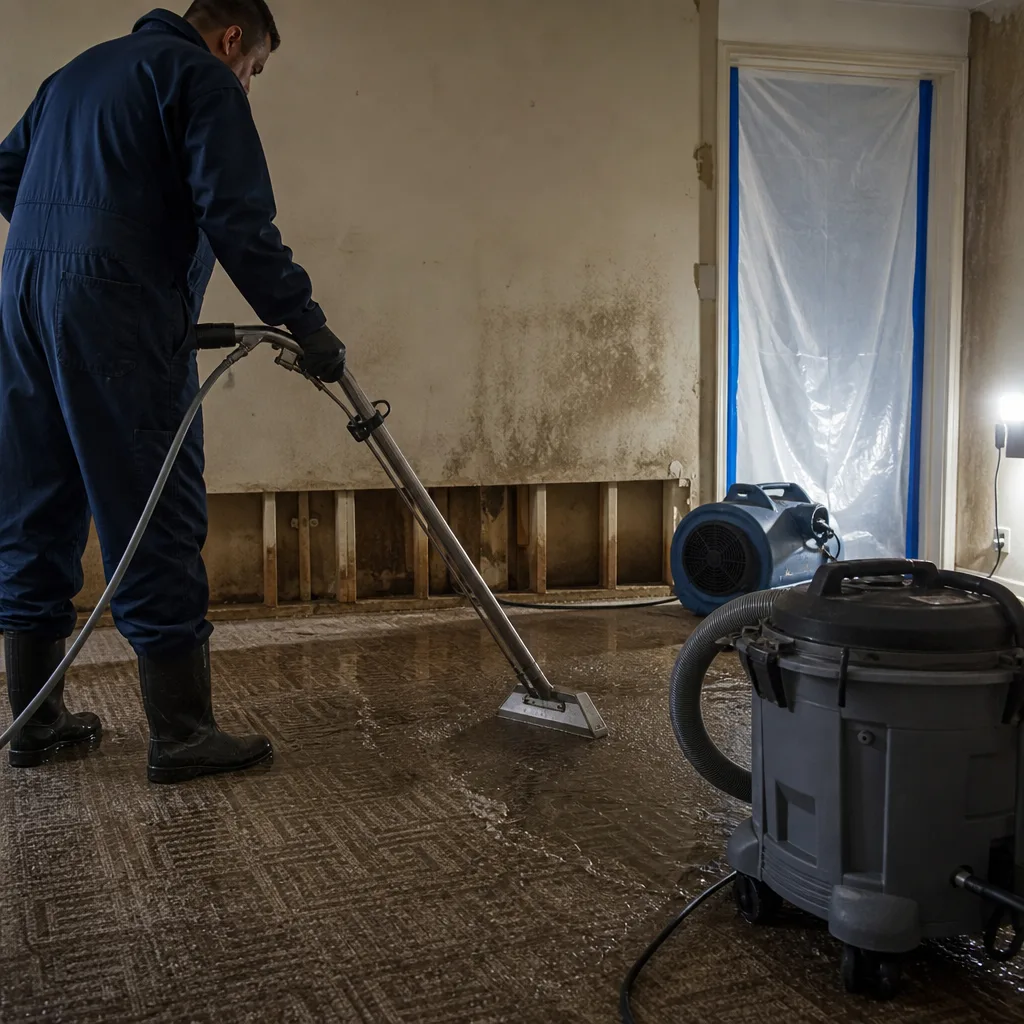
- 45-minute response commitment to the Financial District area, with crews staged for harbor surge events and high-rise mechanical failures.
- 24/7 live answer - a real person, never an automated system, picks up every call to coordinate with your building’s 24-hour concierge or security desk.
- IICRC-certified crews holding WRT (Water Damage Restoration Technician), AMRT (Applied Microbial Remediation Technician), and ASD (Applied Structural Drying) credentials, with license numbers documented on every job file.
- Free visual inspection with a written scope and price before any containment is established - Haven Standard, Clause 1.
- Direct insurance billing with photo-documented assessments that adjusters recognize from the first submission, reducing claim cycle time.
- One team from mold remediation through reconstruction, eliminating handoff gaps that leave moisture sources unaddressed.
BeforeAfterOur Mold Remediation Process
1. Inspection & Assessment
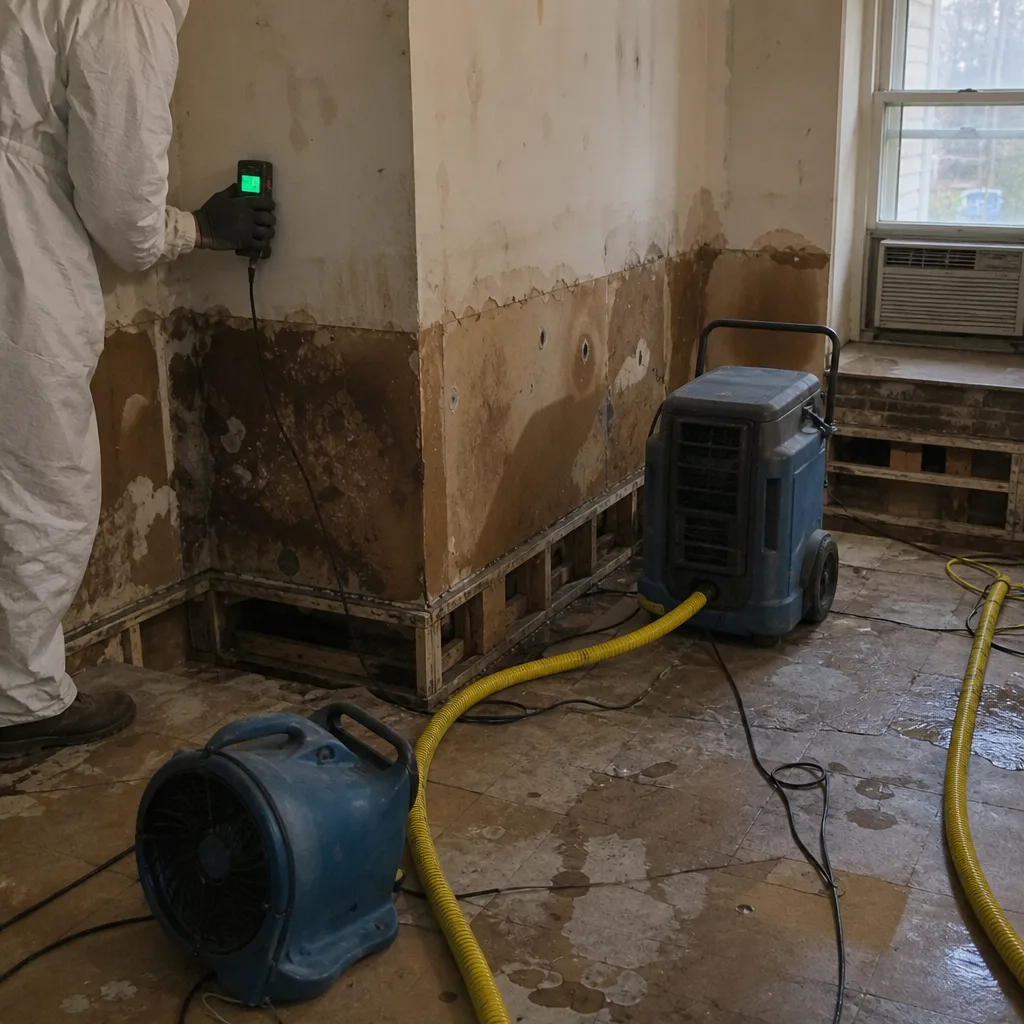
We arrive with moisture meters, thermal imaging cameras, and borescopes to map hidden colonization behind terracotta and plaster finishes. In Financial District buildings, we test air quality on multiple floors when shared mechanical systems are involved, documenting pre-loss condition with photographs before any disturbance.
2. Containment & Air Filtration
We establish polyethylene containment barriers and negative air pressure using HEPA-filtered air scrubbers - critical in high-rises where elevator shafts and HVAC risers can transport spores vertically. Our crews seal return air grilles and coordinate with building engineers to isolate affected zones.
3. Moisture Source Elimination
We distinguish storm surge from chronic seepage using moisture mapping timestamps and vapor pressure readings. Active leaks get temporary stabilization; groundwater intrusion requires identification of failed waterproofing retrofits, which we document for your structural engineer’s permanent repair scope.
4. Mold Removal & Antimicrobial Treatment
Non-porous materials get HEPA vacuuming and antimicrobial application per IICRC S520 standards. Porous materials with root penetration - drywall, insulation, carpet cushion - are removed and disposed of as regulated waste. In landmark-protected interiors, we hand-clean historic finishes with pH-neutral biocides approved by preservation consultants.
5. Drying & Dehumidification
We deploy Dri-Eaz and XPOWER dehumidifiers with Injectidry cavity drying systems to pull moisture from masonry cavities and sub-slab spaces. Daily moisture logs track specific humidity, grains per pound, and vapor pressure differential until readings prove equilibrium - the documentation that turns your invoice into a payable claim.
6. Clearance Testing & Restoration
Third-party or in-house air and surface sampling confirms spore counts at or below outdoor baseline before containment removal. We then restore removed materials, matching historic finishes where landmark rules apply, and deliver a photo record, drying log, and signed 365-Day Done Right Promise under The Haven Standard.
Need Emergency Mold Remediation in Financial District Now?
Crews minutes away, answering live 24 hours a day. The sooner we start, the less it costs.
Working With Your Insurance Company
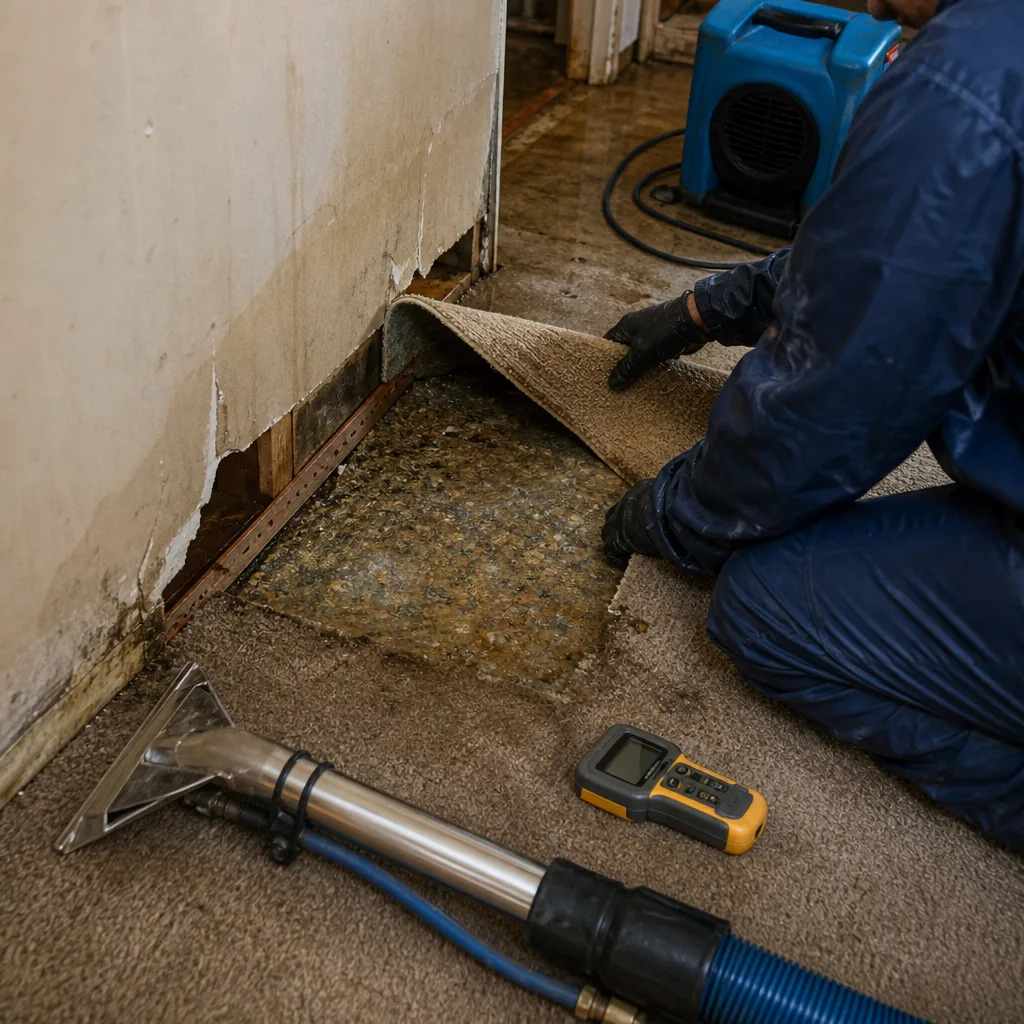
Our documentation starts when we cross your threshold, not when the adjuster arrives. Every Financial District job file opens with timestamped photographs, moisture readings, and a narrative of visible conditions before any equipment runs. We produce industry-standard estimates in Xactimate format, the pricing database most carriers use, and we communicate directly with your adjuster rather than routing through a third-party administrator.
Storm surge claims in FiDi often involve disputed causation - was the mold from Hurricane Sandy’s legacy, a subsequent nor’easter, or chronic maintenance failure? Our moisture mapping with dated readings establishes the timeline. We have handled claims where carriers initially denied coverage based on flood exclusions, and our documentation of wind-driven rain versus rising groundwater changed the determination.
What We Provide Your Insurer
- Thorough documentation of the loss
- Photos of all damage, room by room
- Moisture readings and drying logs
- A detailed, line-item scope of work
- Direct coordination with your carrier
Built for Financial District’s Loss Calendar
January through March brings deep freeze events that burst domestic water risers in uninsulated chase walls of converted commercial buildings. The thaw that follows drives meltwater through expansion cracks in masonry never designed for residential temperature cycling. April and May deliver nor’easters with sustained onshore winds that push harbor surge against FiDi’s seawall; even moderate storms overtop Battery Park and infiltrate through lobby-level vulnerabilities. June through September adds thunderstorm microbursts and tropical systems, with Hurricane Season peaking when building cooling loads strain aging mechanical infrastructure.
October and November see the highest frequency of our mold calls. Not from active storms, but from property managers discovering colonization behind finishes that were dried cosmetically after summer surge events, without vapor pressure verification. The “dry” wall was still wet at the masonry interface. Mold grew slowly through September’s humidity, becoming visible only when HVAC switched to heating mode and air circulation patterns changed. We see this pattern annually in buildings from Pearl Street to the Battery.
Mold Remediation Across Financial District’s Neighborhoods
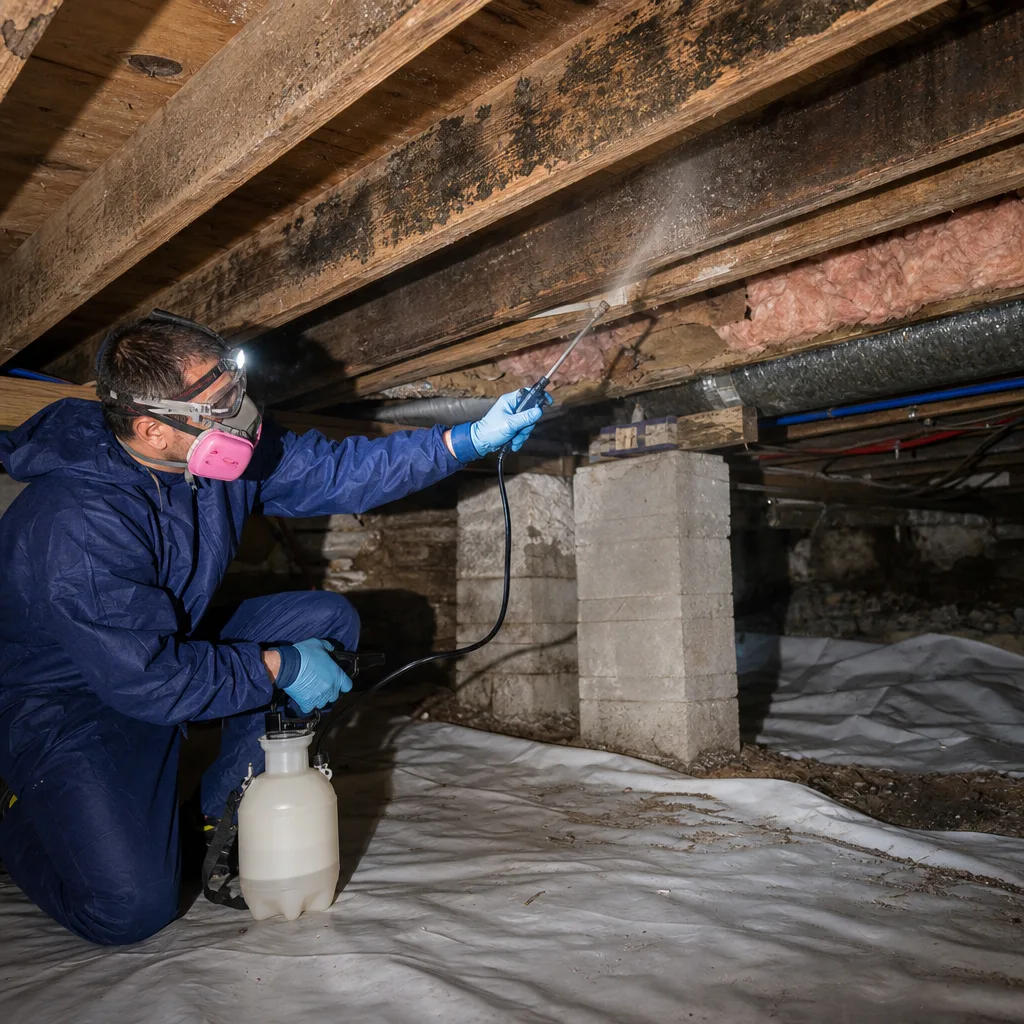
Our crews know the building-specific challenges from Pearl Street’s 1920s office conversions to the residential towers near the Battery. On Broad Street, we respond to pre-war commercial buildings with shallow basements where groundwater intrusion is constant; moisture readings at slab level rarely drop below 18% wood moisture equivalent even in dry weeks. Near Wall Street, converted banking halls with 14-foot ceilings and ornamental plaster require scaffold containment and HEPA filtration scaled to volume, not square footage.
Along Water Street and the East River waterfront, post-Sandy buildings with new flood barriers present a different problem: the barriers keep surge out, but they also trap groundwater seepage that previously drained through weep systems. We find mold behind vapor barriers installed without drainage planes. Near the World Trade Center campus, newer construction with tighter envelopes depends on mechanical ventilation for moisture control; when DOAS units fail, humidity spikes in interior units with no operable windows.
After a nor’easter pushed harbor surge into a converted 1920s tower near 20 Exchange Place, we found the lobby-level storefront door gasket blown and water tracking along the terracotta base into the subgrade mechanical room. We pulled standing water, ran moisture mapping across the slab, set containment with air movers and Dri-Eaz dehumidifiers, and treated the wall cavity for mold that had likely been feeding on chronic seepage for years. Because the building carries landmark protections on its interior finishes, we documented pre-loss condition before any removal and coordinated the scope of work with the property’s preservation rules.
Specialized Mold Remediation Services We Offer in Financial District
Mold Inspection & Testing
We begin with air sampling and ERMI/HERSTMI-2 dust analysis in Financial District units where occupants report symptoms without visible growth. In shared high-rise systems, we sample multiple floors to trace HVAC-borne spore migration. Lab results with chain-of-custody documentation support insurance claims and medical consultations.
Mold Removal
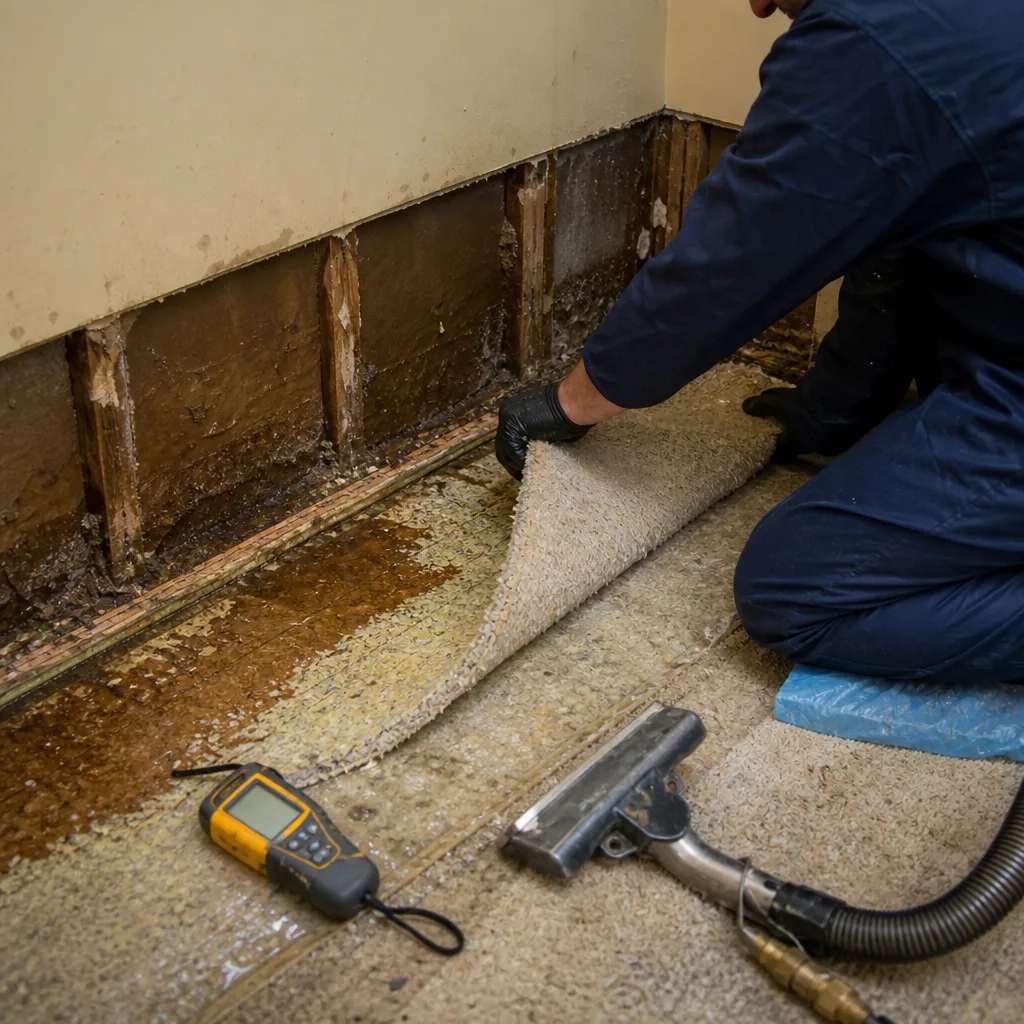
Our removal protocols scale from contained bathroom colonization in studio conversions to full mechanical room decontamination in 40-story buildings. We handle regulated waste transport from FiDi’s density-restricted loading docks and coordinate with building management for after-hours elevator access when containment size requires it.
Black Mold Remediation
Stachybotrys and Chaetomium species require full containment with negative air pressure and disposable protective equipment. In Financial District’s chronic seepage conditions, these slow-growing species establish behind finishes that were “dried” without cavity verification. We identify them with tape lift sampling and treat with EPA-registered antimicrobials at extended contact times.
Air Quality Restoration
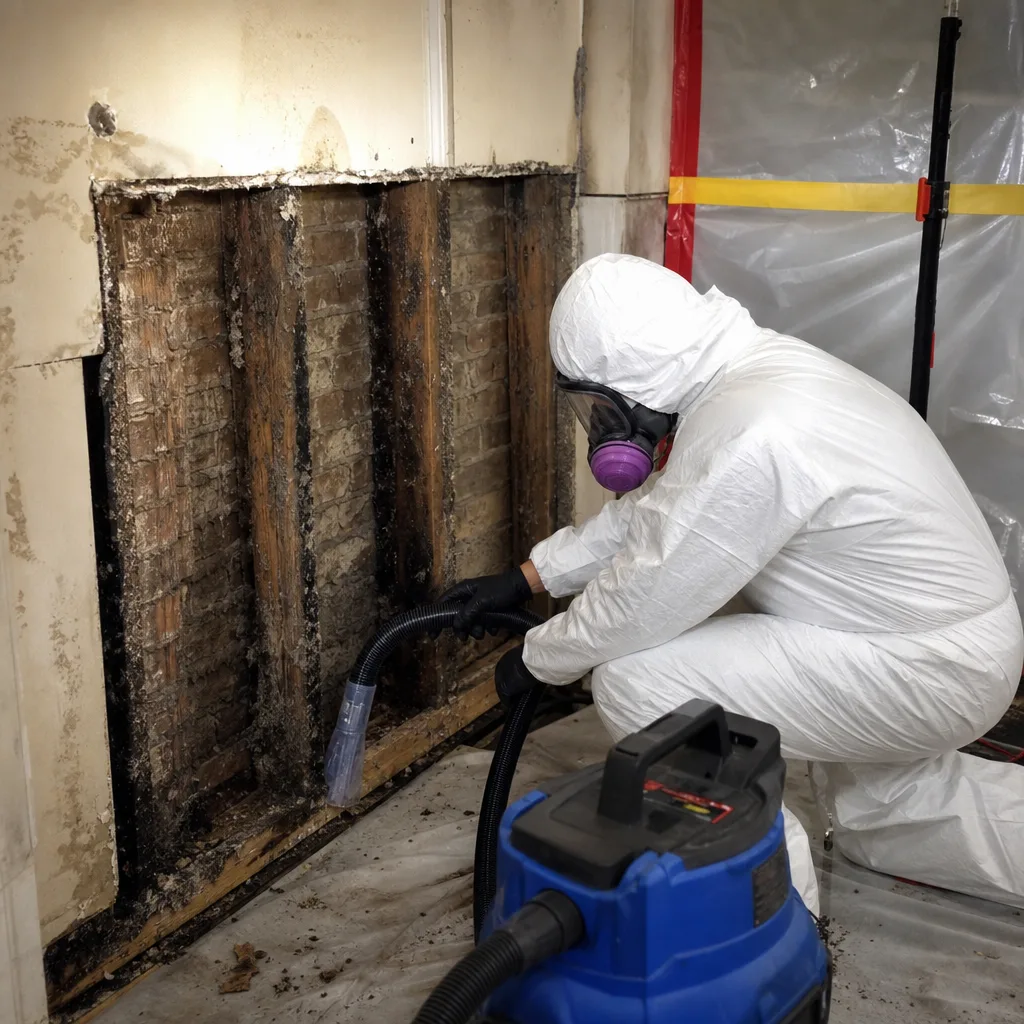
After remediation, we restore breathable air through HEPA filtration, duct cleaning where spore deposition occurred, and balanced ventilation verification. In buildings with centralized systems, we require mechanical contractor sign-off before releasing containment.
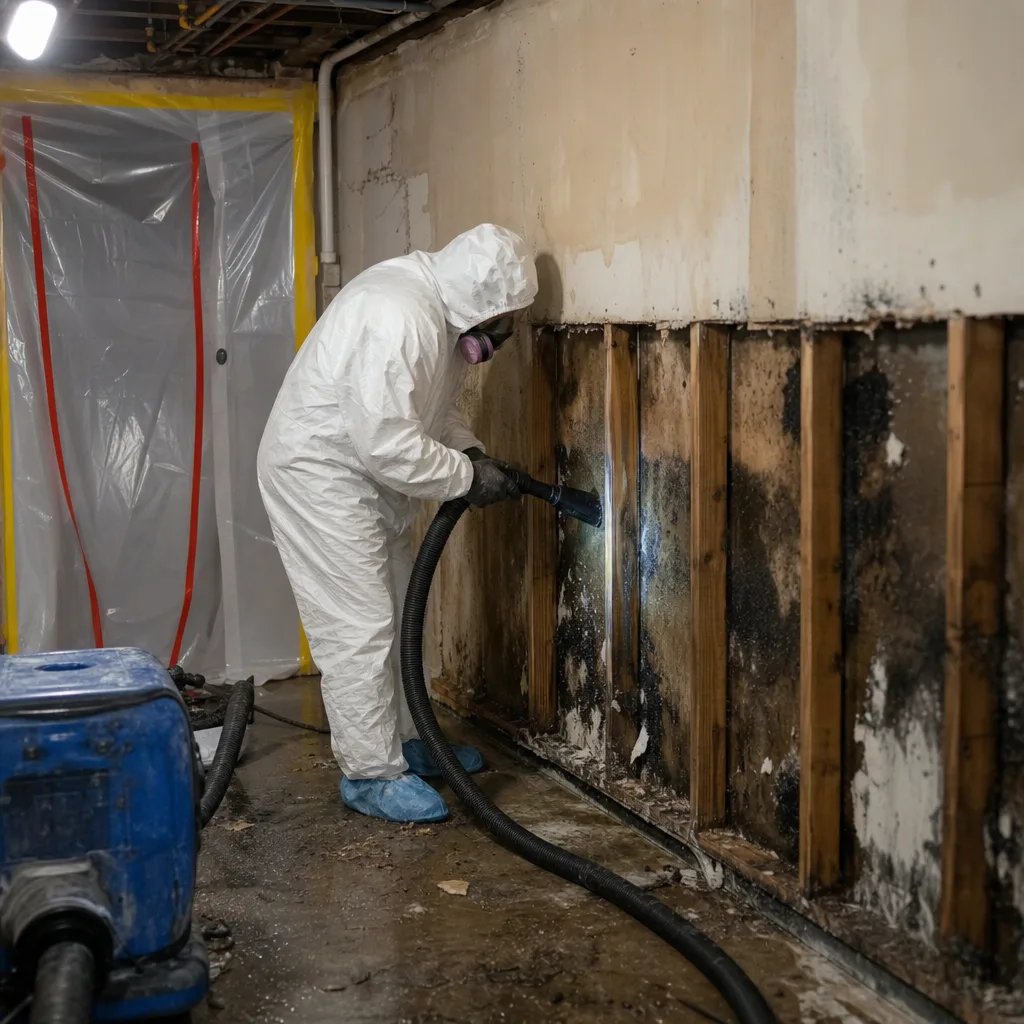
Crawl Space Treatment
FiDi’s few remaining low-rise structures, particularly near South Street Seaport, have crawl spaces with dirt floors and stone foundations where groundwater wicks directly into floor joists. We install vapor barriers with sealed seams and conditioned dehumidification, not passive vents that admit humid harbor air.
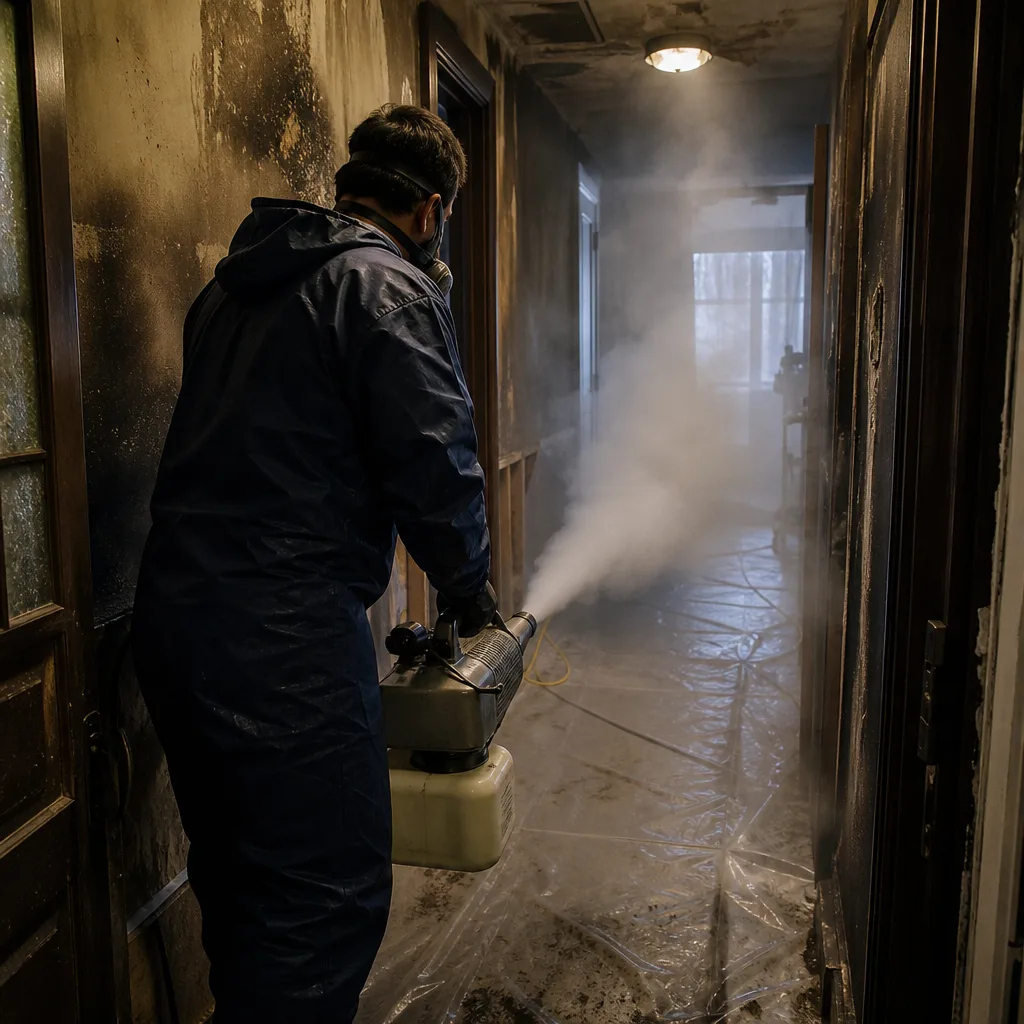
Moisture & Humidity Control
Our permanent solutions for recurring Financial District mold include sub-slab depressurization systems, interior drainage with sump pumps sized for high water table conditions, and continuous dehumidification with remote monitoring. We specify equipment with data logging that your property manager can review, proving the investment prevents future claims.
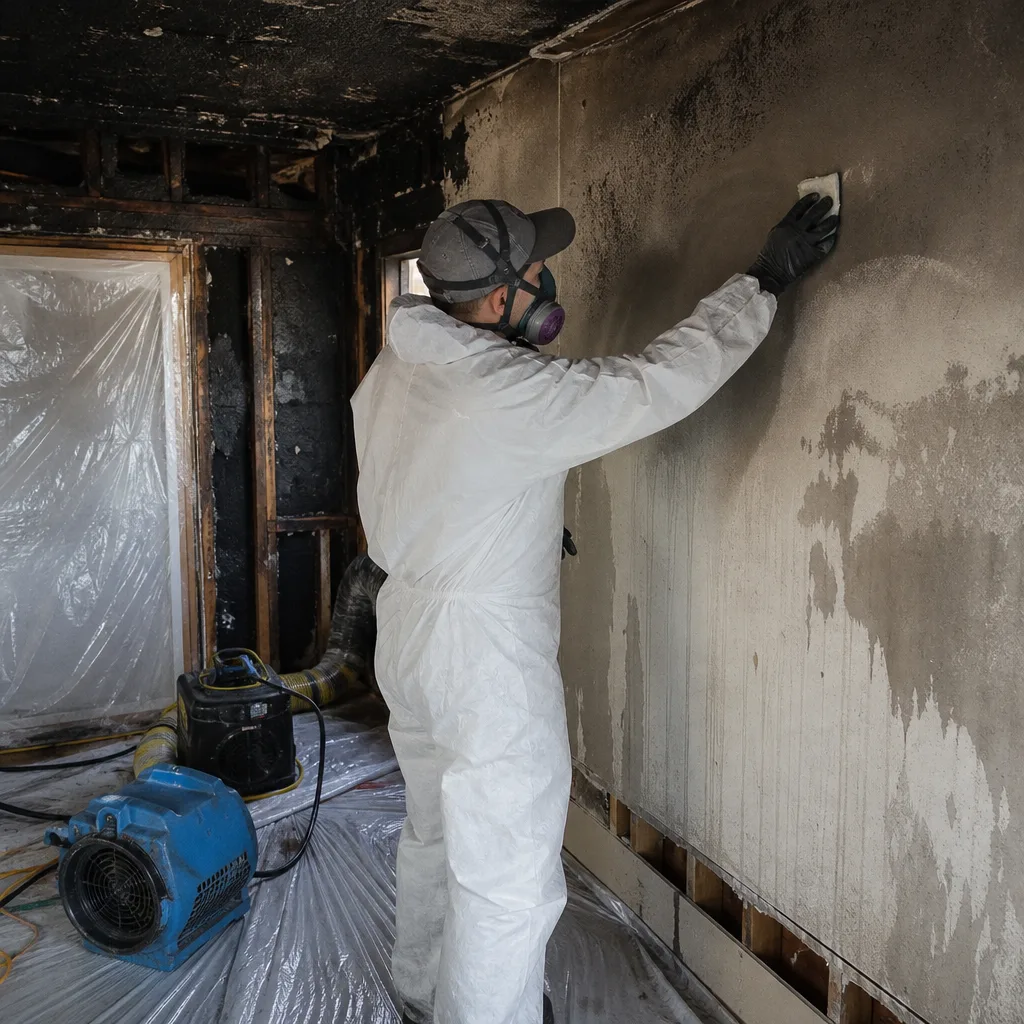
What happens when you call
- 1
A real person answersNo phone trees - you reach a local pro.
- 2
You get an upfront price rangeHonest numbers before anyone is dispatched.
- 3
A background-checked tech heads outLicensed & insured, dispatched right away.
- 4
You approve before work beginsNothing starts until you say go.
Mold Remediation Costs in Financial District, NY
| Service | Typical Range in Financial District |
|---|---|
| Mold inspection with air/surface sampling | $450-$850 |
| Contained remediation, single room (<150 sq ft) | $2,800-$4,200 |
| Multi-room remediation with HVAC isolation | $4,500-$7,500 |
| Full mechanical room / subgrade space | $6,500-$12,000+ |
| Black mold (Stachybotrys) with full PPE protocol | Add 25-40% to base |
| Post-remediation clearance testing | $350-$600 |
What moves the price: affected square footage, whether containment requires after-hours building access, the presence of landmark-protected finishes requiring hand-cleaning versus removal, and whether HVAC system decontamination is needed. Insurance typically covers mold remediation when it results from a covered water loss - burst pipe, storm surge through wind damage, mechanical failure - but excludes long-term maintenance neglect. Our free visual inspection includes a candid assessment of likely coverage; we have no interest in starting uncovered work that generates disputes.
Call (551) 213-5277 for your written scope and exact price - estimates are free, and Haven Standard, Clause 1 applies.
We Also Serve Cities Near Financial District
Our New York City office dispatches crews throughout lower Manhattan and across the river. We regularly handle Mold Remediation in Financial District and neighboring areas including Mold Remediation for Upper East Side, Manhattan, Upper West Side, and Astoria properties. Each area gets the same documentation standard, adjusted for local building stock and loss patterns.
Serving Financial District, NY - Our Local Coverage Area
We’re based in the Financial District area and know this community well. Use the map below to see our service coverage - if you’re nearby, we can almost certainly help.
Financial District Mold Remediation Questions, Answered
Why does mold keep coming back in my Financial District basement even after a previous remediation?
Because the Financial District sits on landfill at or below sea level, the water table beneath converted 1910s-1930s skyscrapers like 70 Pine and 20 Exchange Place essentially never recedes - so mold found in a below-grade unit is usually chronic groundwater seepage, not a single leak, and recurs wherever post-Sandy waterproofing retrofits were left uneven. Previous remediation likely treated visible colonization without addressing vapor pressure differential in the masonry cavity. We test with embedded probes to prove the moisture source is eliminated before declaring completion. Call (551) 213-5277 for a second-opinion inspection at no charge.
A storm surged and water came through our lobby door - how fast does mold start in a converted FiDi high-rise?
Mold colonization begins 24-72 hours after water intrusion on organic material at 60% relative humidity or above. In Financial District buildings, the critical factor is not time alone but the combination of harbor water’s biological loading and warm mechanical room temperatures that accelerate growth. We have documented active colonization behind lobby baseboards within 48 hours of surge events. Speed matters for drying, but speed without containment risks spore distribution through shared HVAC. Call (551) 213-5277 for immediate response.
Does the landmark status of buildings like 70 Pine or 20 Exchange Place change how you handle mold remediation?
Yes. Landmark-protected interiors require pre-loss photographic documentation, pH-neutral cleaning agents approved by preservation consultants, and hand-cleaning techniques that preserve historic terracotta, plaster ornament, and decorative metalwork. We cannot remove and replace these finishes with modern materials; we must remediate in place. Our scopes include preservation consultant coordination and materials testing to confirm compatibility. This extends timeline and cost compared to standard demolition remediation, which we disclose in writing before work begins.
How do you tell storm-surge water from chronic seepage in a FiDi subgrade space?
Storm surge carries distinctive markers: sediment loading, petroleum sheen from street runoff, and salinity levels measurable with a conductivity meter. Chronic seepage is typically clear, consistent in mineral content, and shows staining patterns aligned with foundation cracks rather than uniform flooding. We sample water chemistry, review moisture meter timestamps across the slab, and correlate findings with weather data. When both sources are present - common in FiDi - we document each separately for insurance causation purposes. Call (551) 213-5277 for forensic moisture mapping.
Can you remediate mold in a shared high-rise where the mechanical system serves both commercial and residential tenants?
Yes, with engineered containment. We isolate affected zones with negative air pressure, seal return air pathways, and coordinate with building engineers to temporarily relocate or filter supply air. Remediation proceeds floor by floor with air quality verification before releasing adjacent spaces. We have completed projects in mixed-use Financial District towers without business interruption to commercial tenants. The key is early communication with building management and documented isolation protocols that satisfy both IICRC standards and your engineer’s operational requirements.
How long does mold remediation take in a typical Financial District property?
Contained single-room remediation: 3-5 days including clearance testing. Multi-room or mechanical room projects in high-rises: 7-14 days, extended by building access restrictions and preservation requirements. Tertiary drying of dense masonry in converted skyscrapers adds 2-4 days compared to frame construction. We provide a written timeline with your scope, updated daily with moisture log data, so you have evidence of progress rather than promises.
Will my insurance cover mold remediation, or is it always out of pocket?
Coverage depends on causation. Sudden and accidental water losses - burst pipes, storm surge through verified wind damage, mechanical failures - typically trigger mold coverage under most HO-3 and commercial property policies. Long-term seepage, maintenance neglect, or pre-existing conditions are generally excluded. Our documentation establishes the timeline and cause; we have successfully appealed initial denials where our moisture data proved sudden loss versus gradual deterioration. We offer direct adjuster coordination and provide the line-item scope in Xactimate format. Call (551) 213-5277 for a coverage assessment with your free inspection.
What should I do in the first 30 minutes after discovering mold in my Financial District unit?
Do not disturb visible growth - agitation releases spores. Turn off HVAC if the unit is isolated, or contact building management if central. Photograph the area for your records. Then call (551) 213-5277 for our 45-minute response. We will assess containment needs, test air quality in adjacent spaces, and provide a written scope before any work begins. Do not attempt DIY removal in high-rise buildings; spore migration through shared systems creates liability beyond your unit.
Written by Alicia Brennan, Owner at Back to Dry Restoration, serving Financial District since 2011.
Mold Remediation in Nearby Areas