
Free visual inspection and a written scope of work before any mitigation begins - photos, moisture readings, and drying logs go in your claim file
The scope we write is the scope we bill. Anything new gets shown to you, in writing, before we touch it.
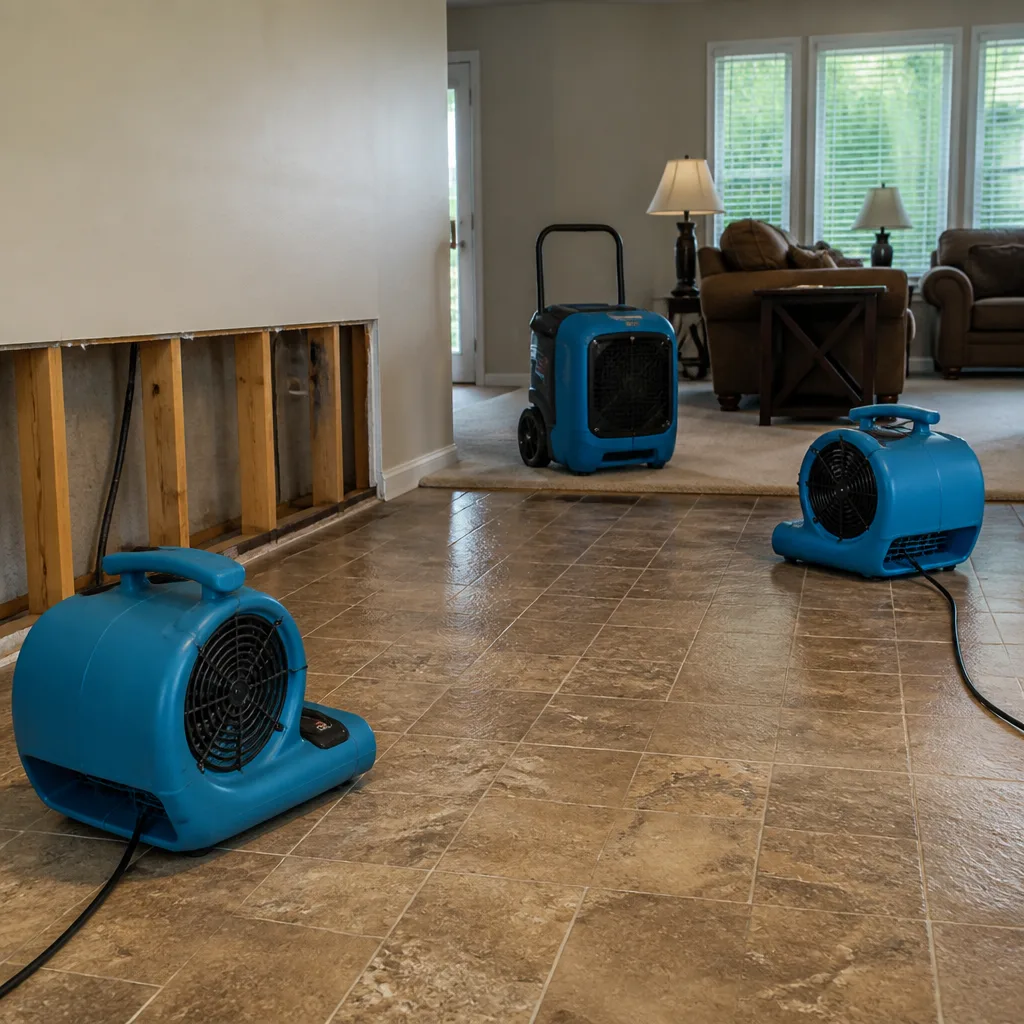

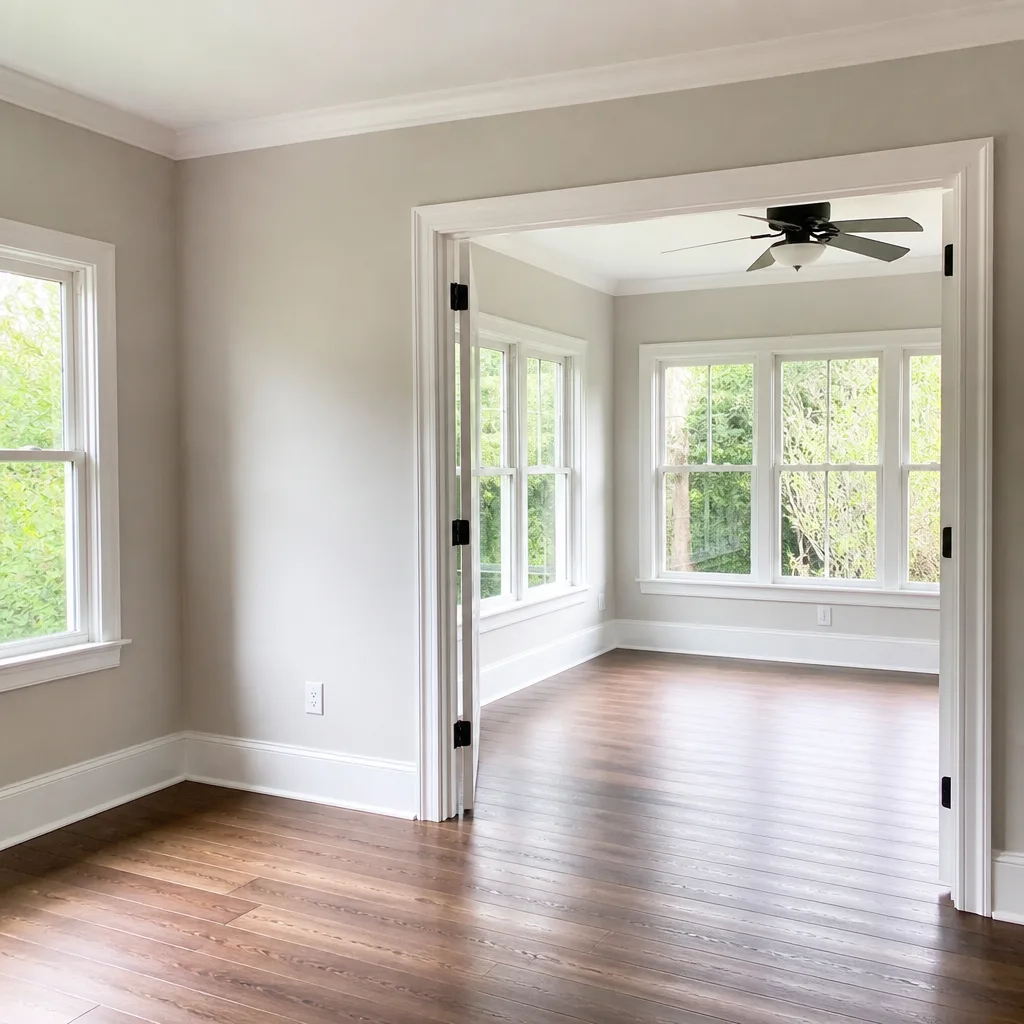
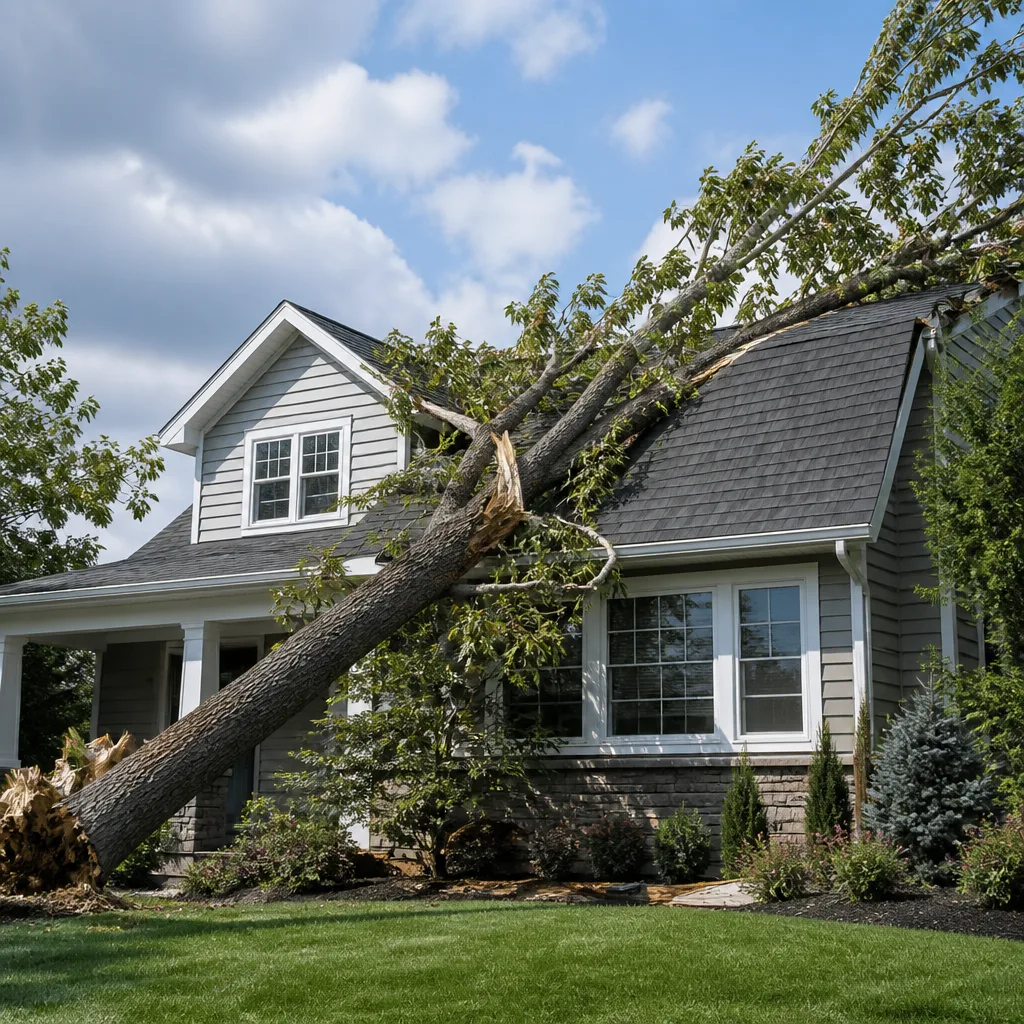
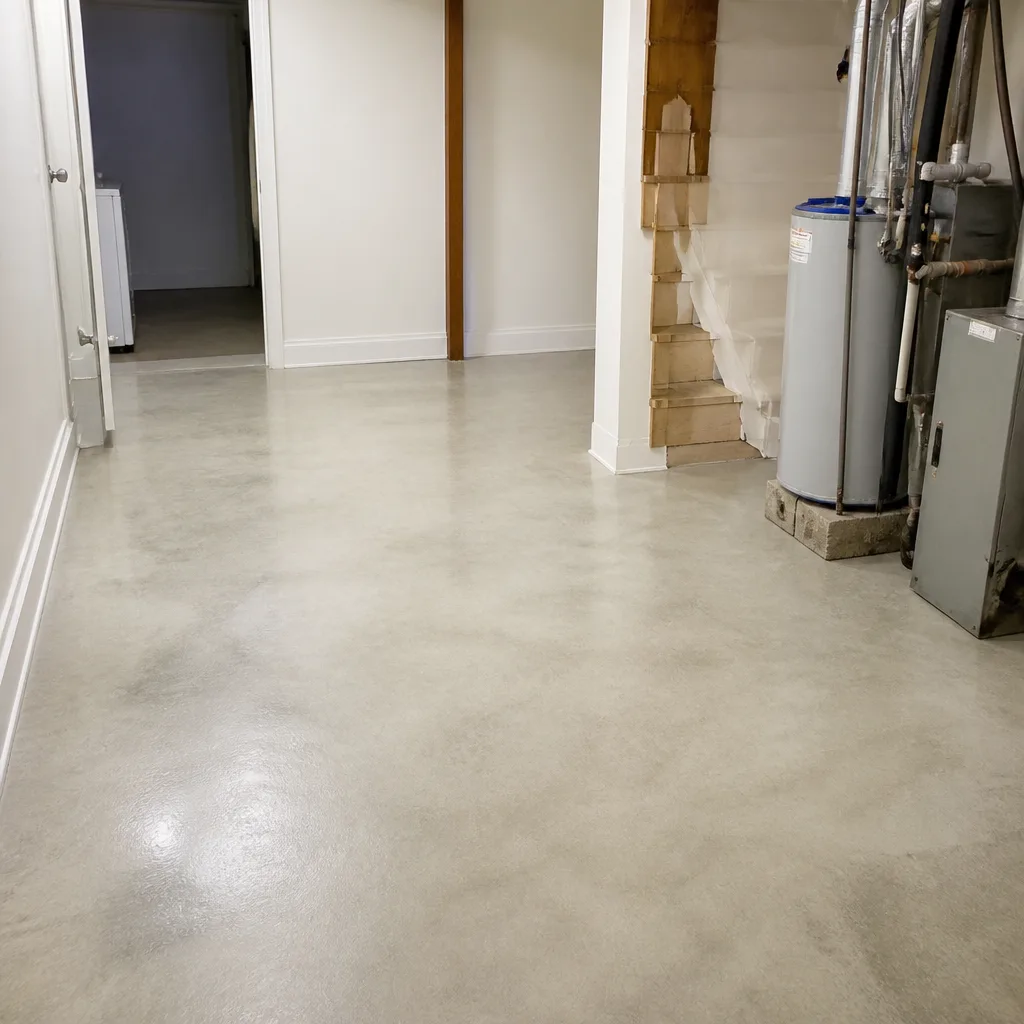
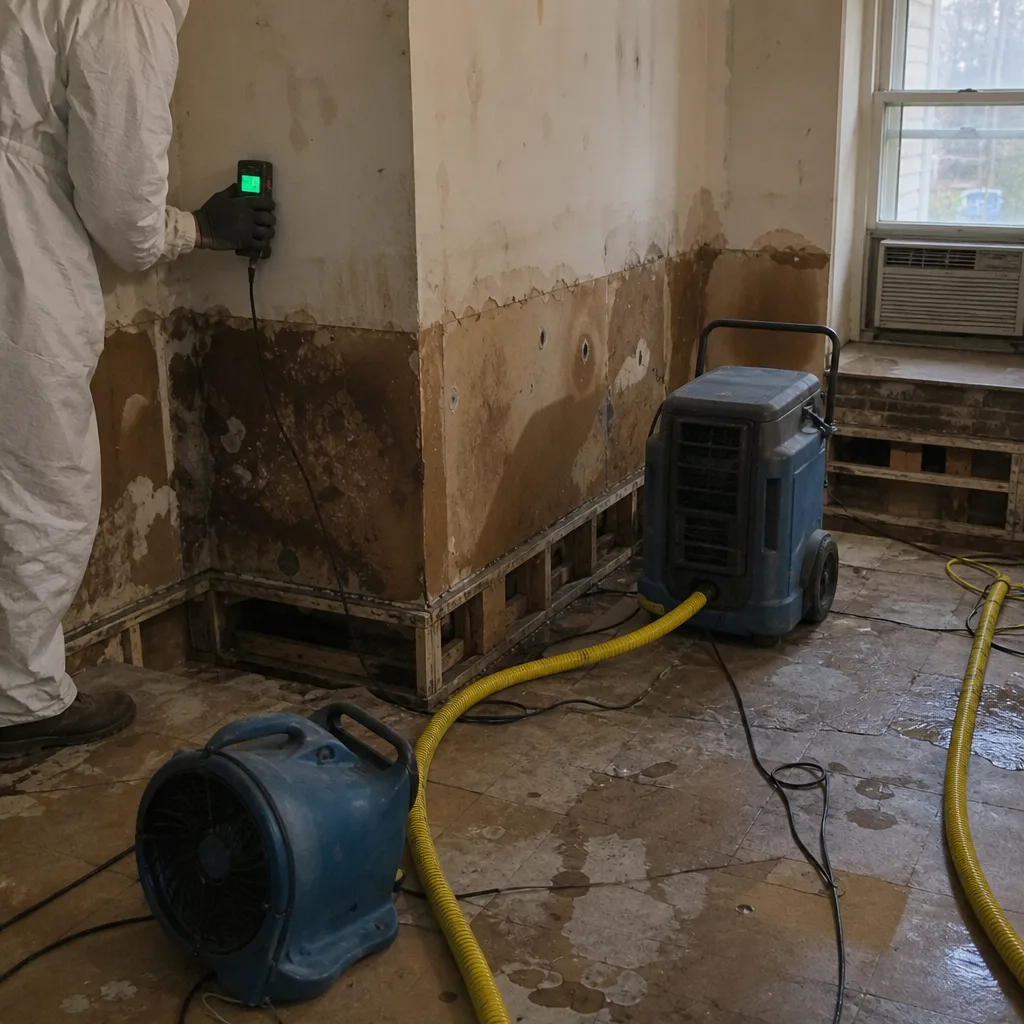 Before
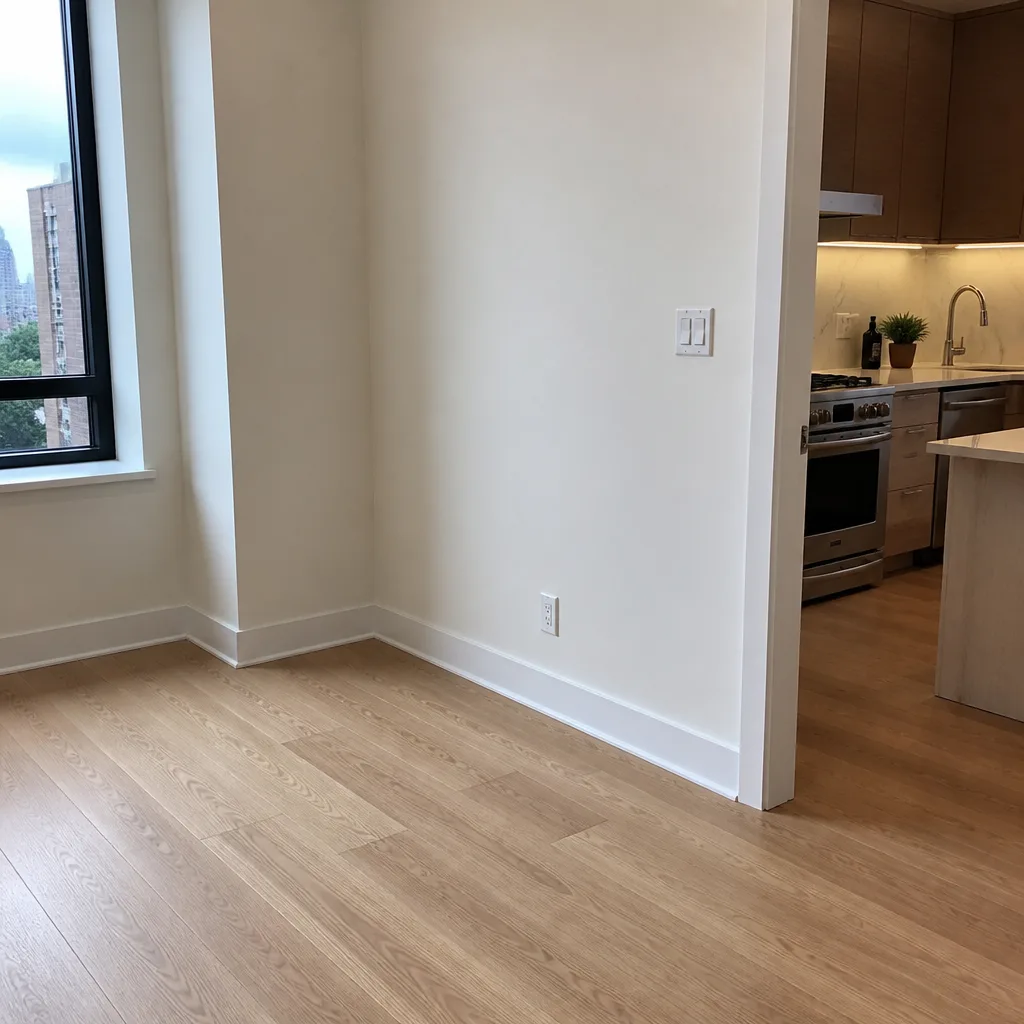 After
After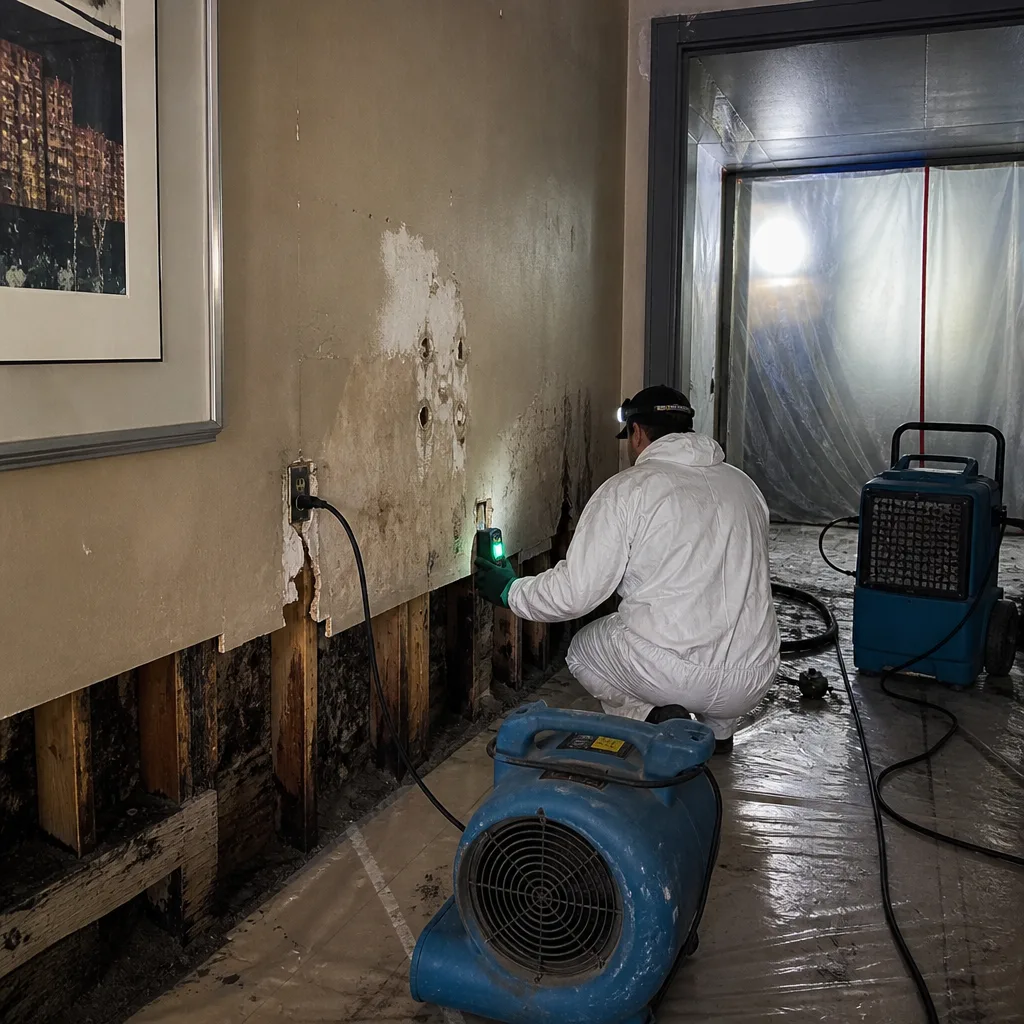 Before
 After
After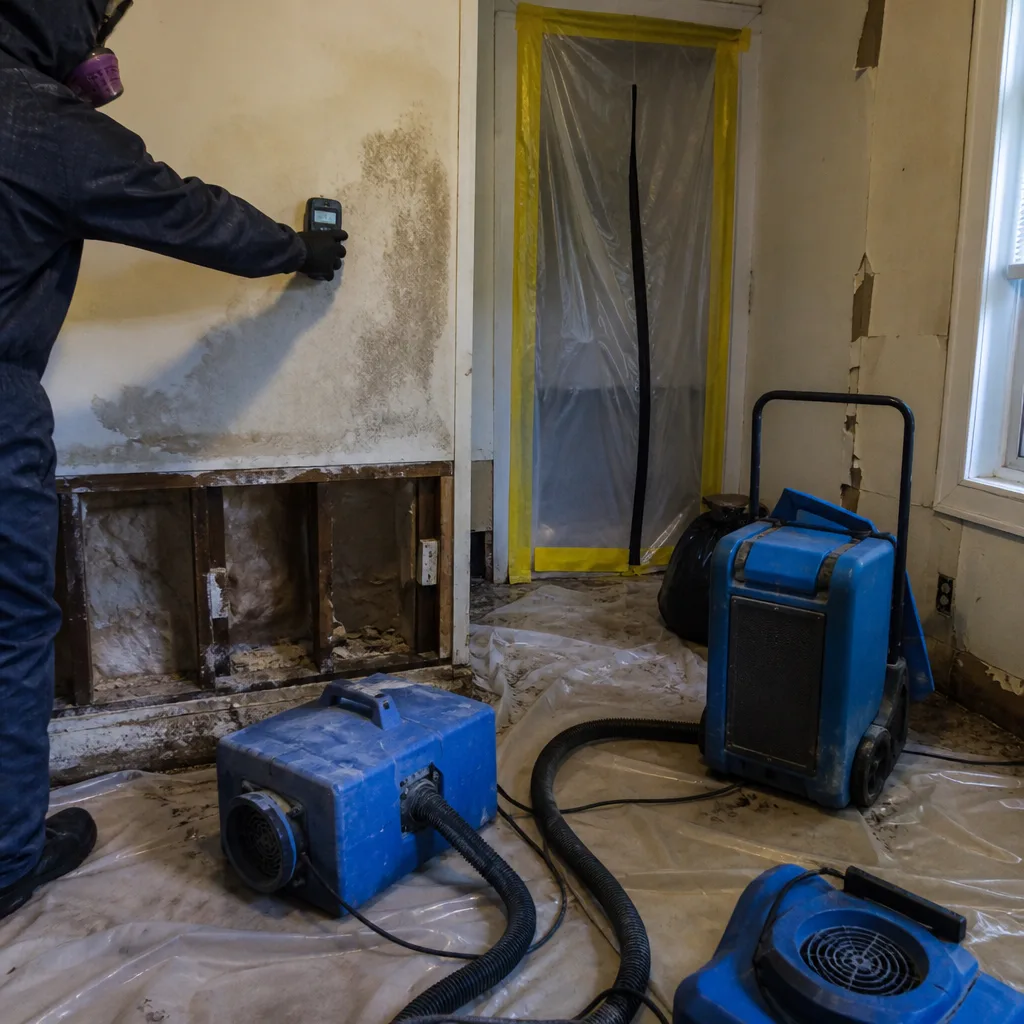 Before
 After
After24/7 Emergency Water Damage Restoration in Murray Hill
Water damage restoration in Murray Hill typically costs $2,800-$7,500 for a standard pre-war apartment mitigation, with emergency extraction starting at $1,200-$2,400 and full structural drying adding $1,600-$5,100 depending on affected square footage and material type. Crews from DryMark Restoration Upper East Side answer live at (551) 213-5277, 24 hours a day, 7 days a week - no voicemail, no callback queue. We dispatch to Murray Hill within 45 minutes of your call because water does not wait for business hours. In a neighborhood where a single steam riser failure can cascade through six to twelve floors of stacked units, the first hour determines whether you’re looking at extraction and drying or a full gut renovation with mold remediation, asbestos abatement, and displaced tenants.
We offer a free visual inspection on every call. A technician arrives with moisture meters, thermal imaging, and a written scope pad. You get a documented price before anyone touches your walls. Haven Standard, Clause 1.
Understanding Water Damage Restoration Severity in Murray Hill Properties
Water damage in Murray Hill falls into three categories under IICRC standards, and the neighborhood’s building stock makes Category 2 and 3 losses far more common than in newer construction. Category 1 is clean water from a broken supply line - still time-sensitive, but manageable with extraction and rapid structural drying. Category 2, gray water, carries chemical or biological contaminants; think a failed steam riser in a 1920s building where the water has picked up rust, pipe sediment, and whatever sits in century-old galvanized lines. Category 3, black water, is sewage or floodwater from street backup - a recurring summer problem in Murray Hill’s converted brownstone cellars when cloudbursts overwhelm the combined sewer.
Murray Hill’s pre-war buildings, predominantly 1910-1950 brick elevator structures, complicate every severity level. Original plaster-and-lath walls wick moisture vertically through wall cavities and horizontally across ceiling joist bays, spreading damage far beyond the visible stain. Cast-iron steam risers run through chases that connect multiple floors, creating hidden pathways for water migration. Moisture mapping with thermal imaging is not optional here - it is the only way to find where water has traveled before it breeds mold behind intact plaster. We document psychrometric data, vapor pressure differential, and specific humidity at every visit; these readings form the drying log your insurer and your co-op board will both require.
Why Murray Hill Property Owners Choose DryMark Restoration Upper East Side
- 45-minute response commitment to Murray Hill from our New York City office - we know the parking constraints on Lexington Avenue and the service entrances on Third, and we plan routes accordingly.
- 24/7 live answer - a real person picks up every call, never an automated system, because water moving through a pre-war building at 2 a.m. cannot wait for a callback.
- IICRC-certified crews - our technicians hold WRT (Water Damage Restoration Technician), ASD (Applied Structural Drying), and AMRT (Applied Microbial Remediation Technician) certifications, with license numbers documented on every job file.
- Free visual inspection - we arrive, assess, and deliver a written scope and price before any equipment is deployed or any wall is opened.
- Direct insurance billing - we coordinate with your adjuster from hour one, providing photo documentation, moisture logs, and line-item scopes in the format carriers expect.
- One team from extraction to reconstruction - no handoffs between mitigation contractors and rebuild crews, no gaps in documentation, no disputes about whether the drying was done right.
BeforeAfterOur Water Damage Restoration Process
1. Inspection & Assessment
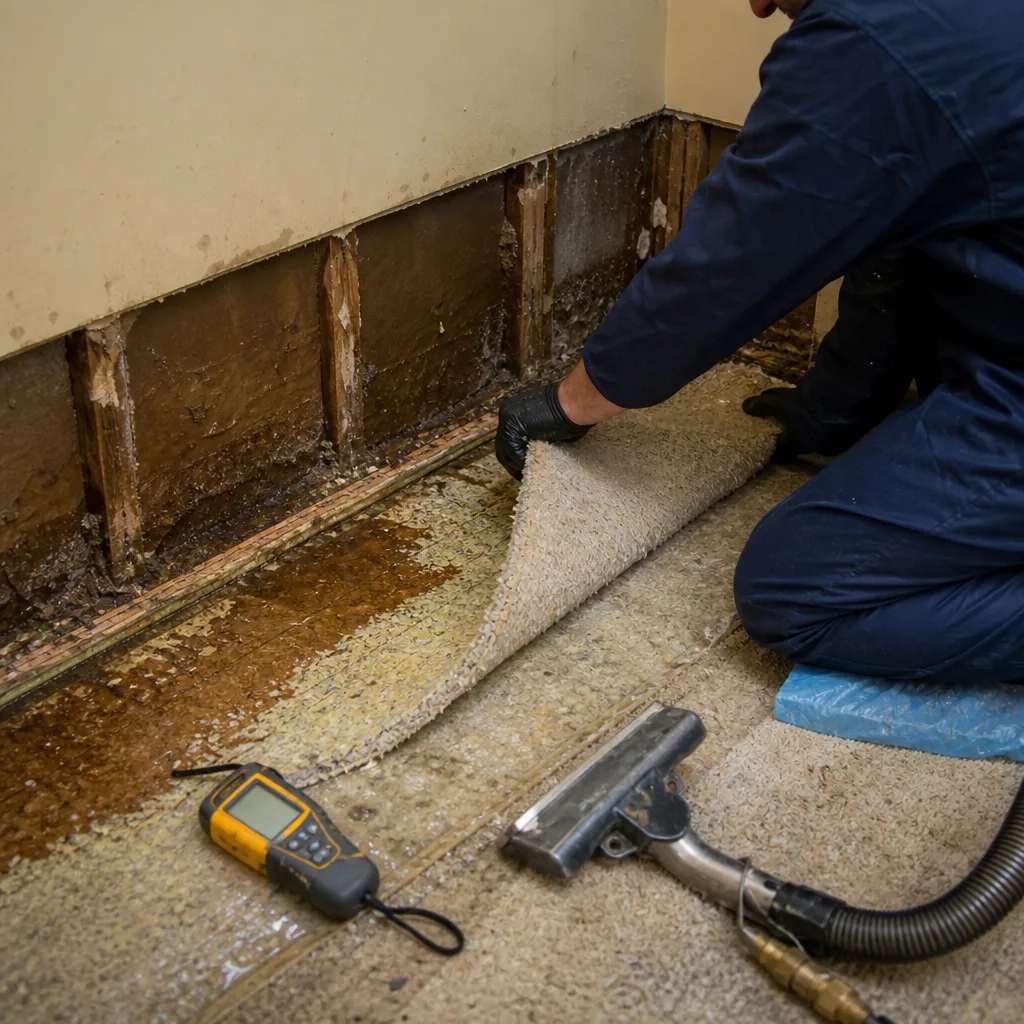
We arrive with thermal imaging cameras, penetrating and non-penetrating moisture meters, and hygrometers to map the full extent of water migration. In Murray Hill’s pre-war buildings, we inspect the floors above and below the visible damage - water travels through riser chases and plaster cavities that hide saturation from casual observation. You receive a written scope, a firm price, and a photo record before work begins.
2. Extraction & Stabilization
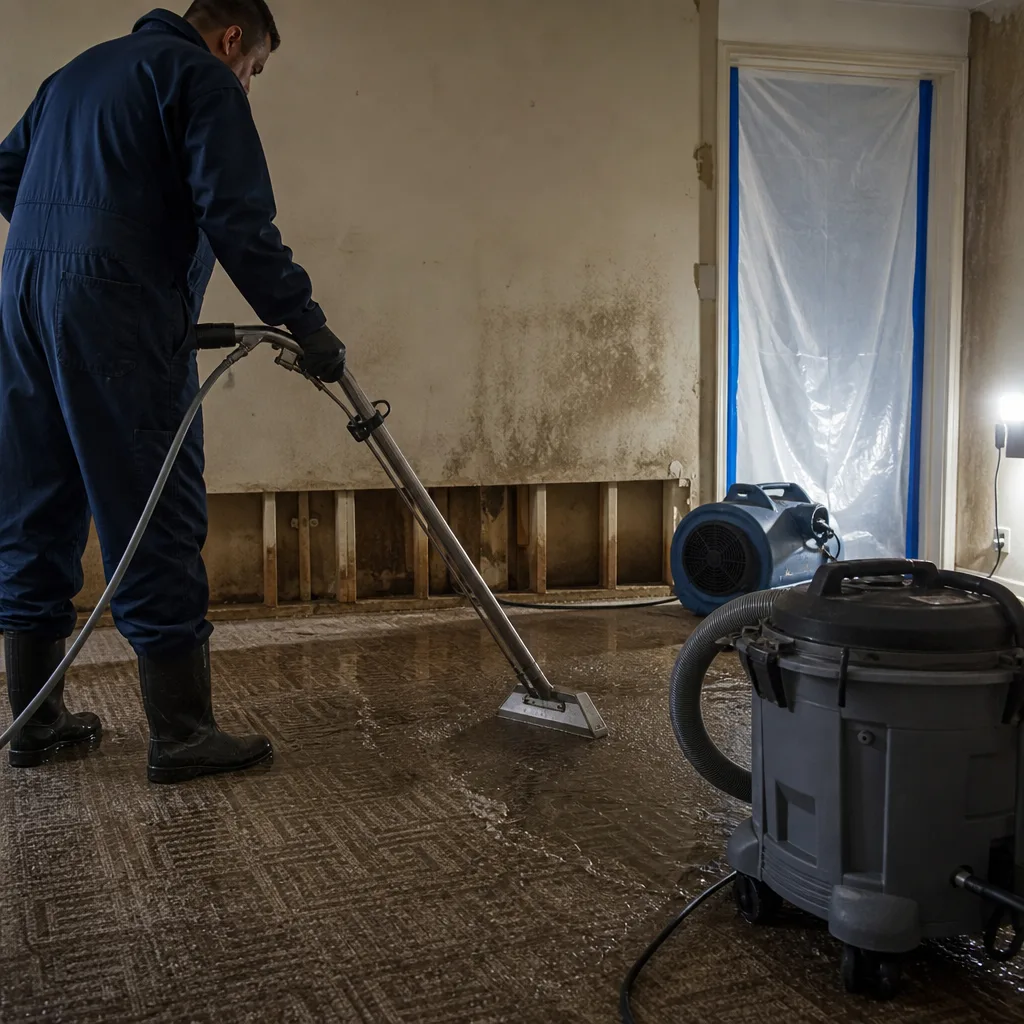
Standing water is removed with truck-mounted extraction systems and portable units sized for tight Manhattan elevator access. For Category 2 and 3 losses, we establish containment barriers and deploy HEPA air scrubbers to prevent cross-contamination. We document every gallon extracted.
3. Drying & Dehumidification
We deploy low-grain refrigerant dehumidifiers from Dri-Eaz and Phoenix, axial and centrifugal air movers from XPOWER and B-Air, and Injectidry mat systems for hardwood and plaster drying. Drying is monitored daily with psychrometric readings - temperature, relative humidity, and specific humidity - logged to prove progress to your insurer and your board.
4. Cleaning & Sanitization
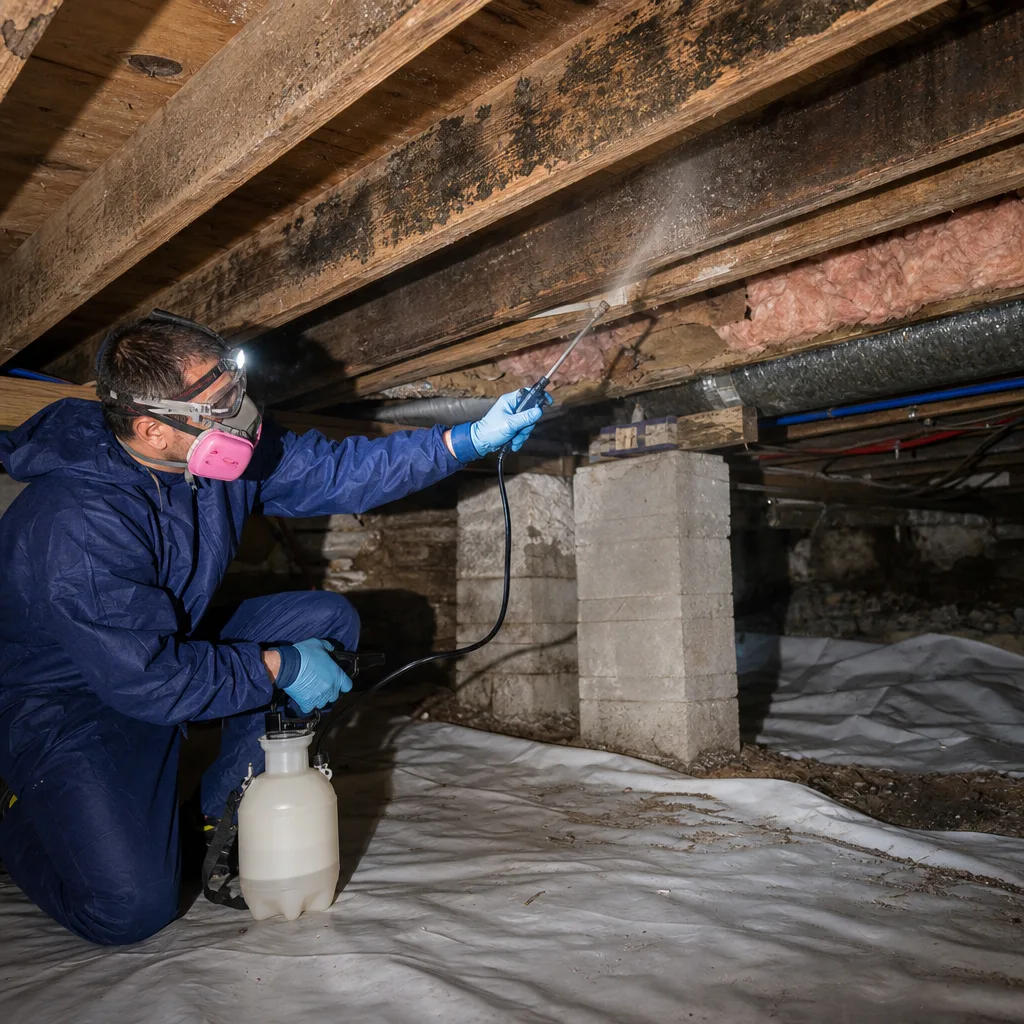
Category 2 and 3 losses receive antimicrobial treatment of affected surfaces, HEPA vacuuming of particulate, and air scrubbing until airborne spore counts meet clearance criteria. We document sanitation with before-and-after photos and written certification.
5. Asbestos Assessment & Abatement Coordination
Murray Hill’s pre-war buildings routinely contain asbestos pipe wrap, floor-tile mastic, and ceiling plaster. If tearout exposes suspect materials, we halt work, coordinate with a licensed NYC DEP abatement contractor, and maintain drying equipment on unaffected areas so the timeline is not lost. This step is unique to Murray Hill’s building stock and Local Law 76 compliance.
6. Repairs & Restoration
Once drying goals are met and any abatement is cleared, our crew repairs or replaces drywall, plaster, flooring, and trim to match existing finishes. The 365-Day Done Right Promise applies: if it’s not right, we make it right, in writing, under The Haven Standard.
Need Emergency Water Damage Restoration in Murray Hill Now?
Crews minutes away, answering live 24 hours a day. The sooner we start, the less it costs.
Working With Your Insurance Company
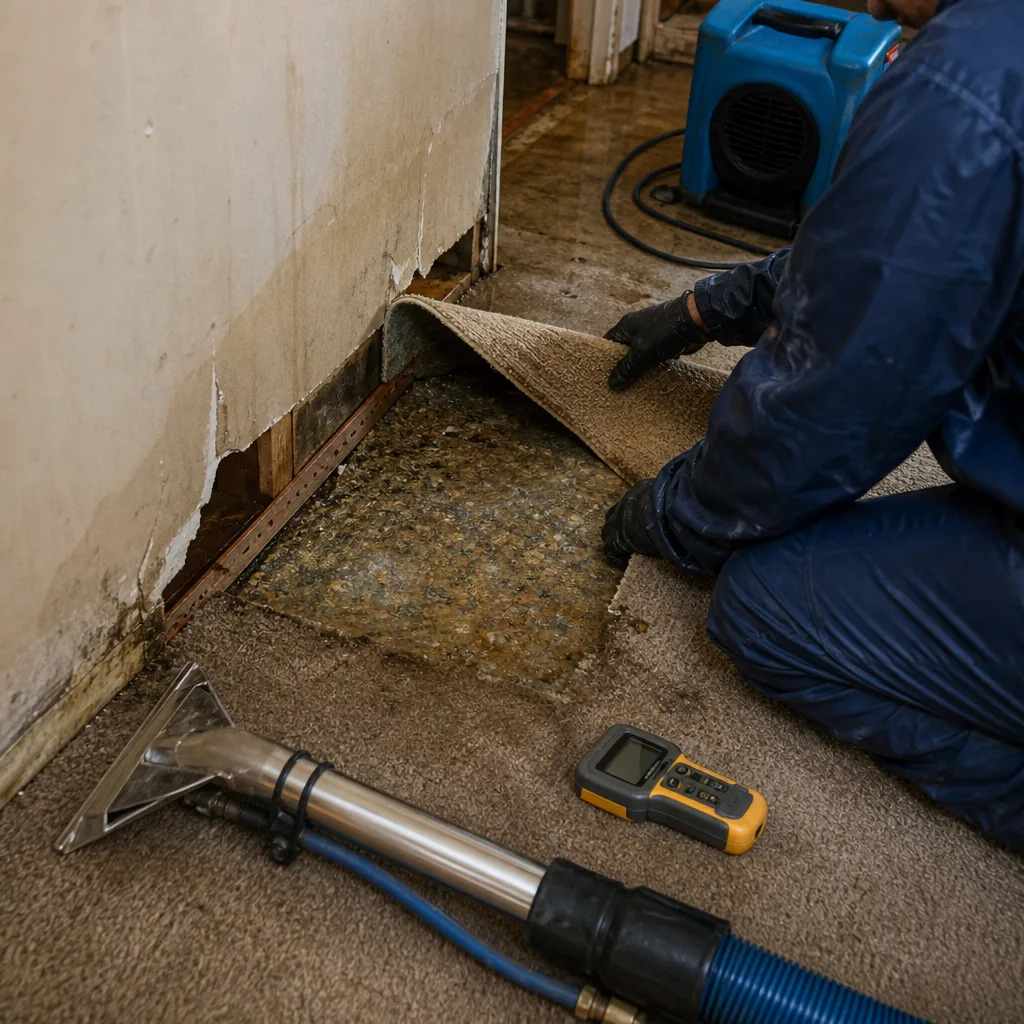
Insurance claims for water damage in Murray Hill fail for one reason more than any other: incomplete documentation. Adjusters deny or reduce claims when they cannot verify the extent of the loss, the necessity of the work, or the timeline of drying. We solve this from the first hour. Our technicians photograph every room, every surface, every moisture reading. We produce daily drying logs with equipment serial numbers, psychrometric data, and material moisture content percentages. Our scopes are line-item estimates in Xactimate format, the industry standard your carrier recognizes.
We speak directly with your adjuster, answer their documentation requests within hours, and dispute low valuations with the photo and moisture evidence that supports proper restoration. For co-op and condo claims, we provide the board-specific documentation that building managers need to release insurance proceeds.
What We Provide Your Insurer
- Thorough documentation of the loss
- Photos of all damage, room by room
- Moisture readings and drying logs
- A detailed, line-item scope of work
- Direct coordination with your carrier
Built for Murray Hill’s Loss Calendar
January and February bring deep freezes that split supply lines in unheated utility closets and freeze condensate drains on upper floors. The thaw in March reveals the damage: cracked copper, separated fittings, and water that has been running inside walls for days. Spring rains find their way through aging parapet walls and failed roof membranes on pre-war buildings, staining top-floor ceilings and saturating insulation.
July and August cloudbursts are the most predictable disaster in Murray Hill. The neighborhood’s converted brownstones between Second and Third Avenues, many with original clay-tile drain lines and cellar access at sidewalk level, flood when the combined sewer system backs up through floor drains. September through November nor’easters drive wind-driven rain through window frames and masonry joints that have not been repointed in decades. And December’s holiday travel season means leaks go unreported for days while owners are away, turning a simple supply-line failure into a Category 2 loss with mold growth on multiple floors.
We staff for this calendar. Our Water Damage Restoration crews rotate 24/7 coverage through every season, with equipment staged for the predictable patterns and response plans for the surprises.
Water Damage Restoration Across Murray Hill’s Neighborhoods
East 34th to East 40th Streets, the core Murray Hill corridor, is dominated by pre-war elevator buildings with original steam heat and plaster construction. Water damage here is almost always multi-unit, almost always requires board approval, and almost always uncovers asbestos somewhere in the stack. We have standing relationships with building managers on East 37th and East 38th Streets who call us directly because we understand their documentation requirements.
The brownstone blocks between Second and Third Avenues, particularly East 35th through East 39th, present a different profile: converted 1890s rowhouses with cellar apartments, original clay sewer lines, and no elevator access. Equipment moves through narrow staircases. Basement floods from sewer backup are common after summer storms. We carry portable extraction units and compact dehumidifiers sized for these spaces.
Lexington Avenue and the corridors near Grand Central see a mix of commercial ground-floor spaces and residential upper floors. Water damage here often involves mixed-use buildings with separate insurance policies for commercial and residential portions, requiring careful documentation to assign costs correctly. The Chrysler Building vicinity has additional landmark-preservation considerations for exterior envelope repairs.
Third Avenue’s post-war buildings, while newer, have their own vulnerabilities: galvanized supply lines at end-of-life, original bathroom waterproofing failing, and terrace drains clogging. We have replaced enough 1960s-era shower pans in these buildings to recognize the failure pattern on sight.
Specialized Water Damage Restoration Services We Offer in Murray Hill
Emergency Water Extraction
We extract standing water from any source - supply-line breaks, steam-riser failures, roof leaks, sewer backup - with equipment sized for Murray Hill’s tight elevator access and narrow brownstone staircases. Extraction in a pre-war building often runs $1,200-$2,400 for a one-bedroom unit, with multi-floor cascade events scaling to $3,500-$6,800 depending on affected unit count. Call (551) 213-5277 for immediate dispatch.
Structural Drying & Dehumidification
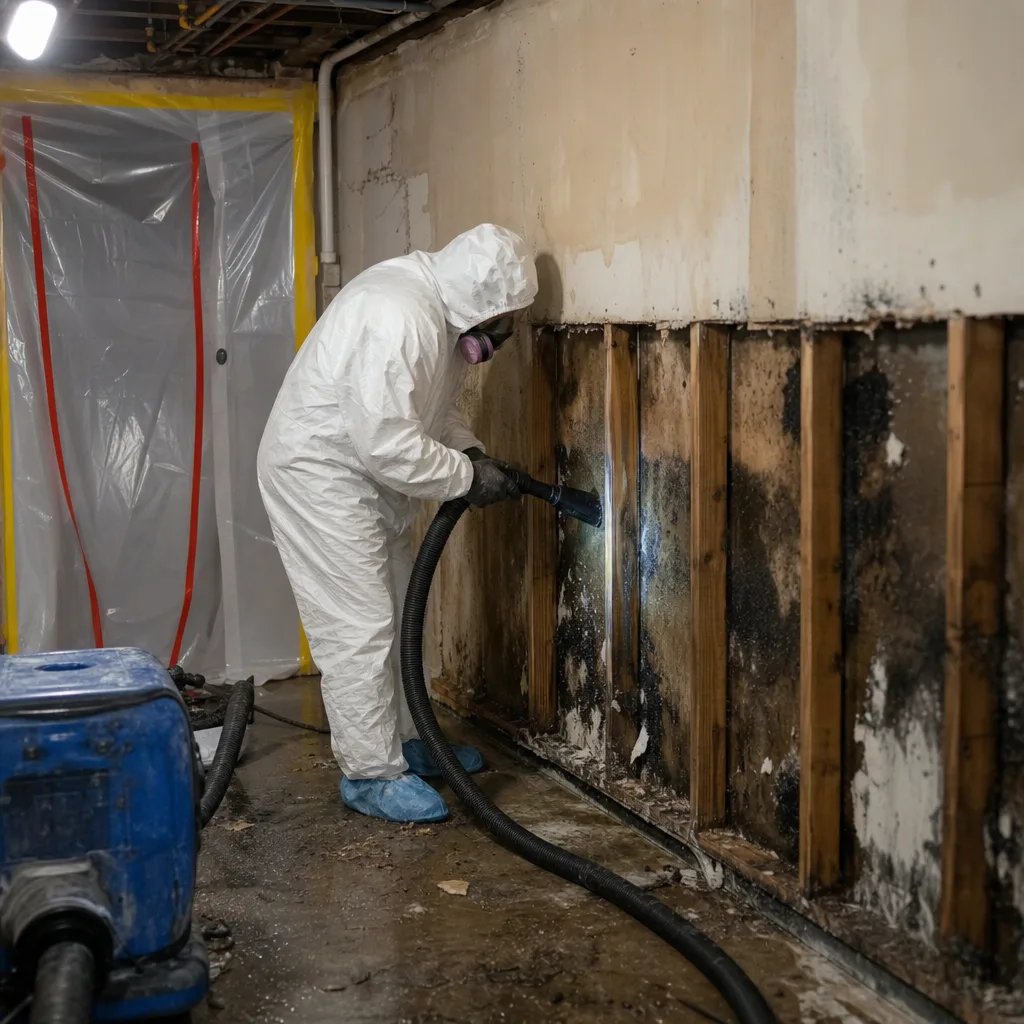
After extraction, we establish a drying chamber with containment, dehumidification, and air movement calculated from psychrometric data. Drying a standard Murray Hill pre-war apartment with plaster walls typically requires 3-5 days with LGR dehumidifiers and Injectidry mat systems on hardwood floors. Daily moisture logs document progress for your insurer and board.
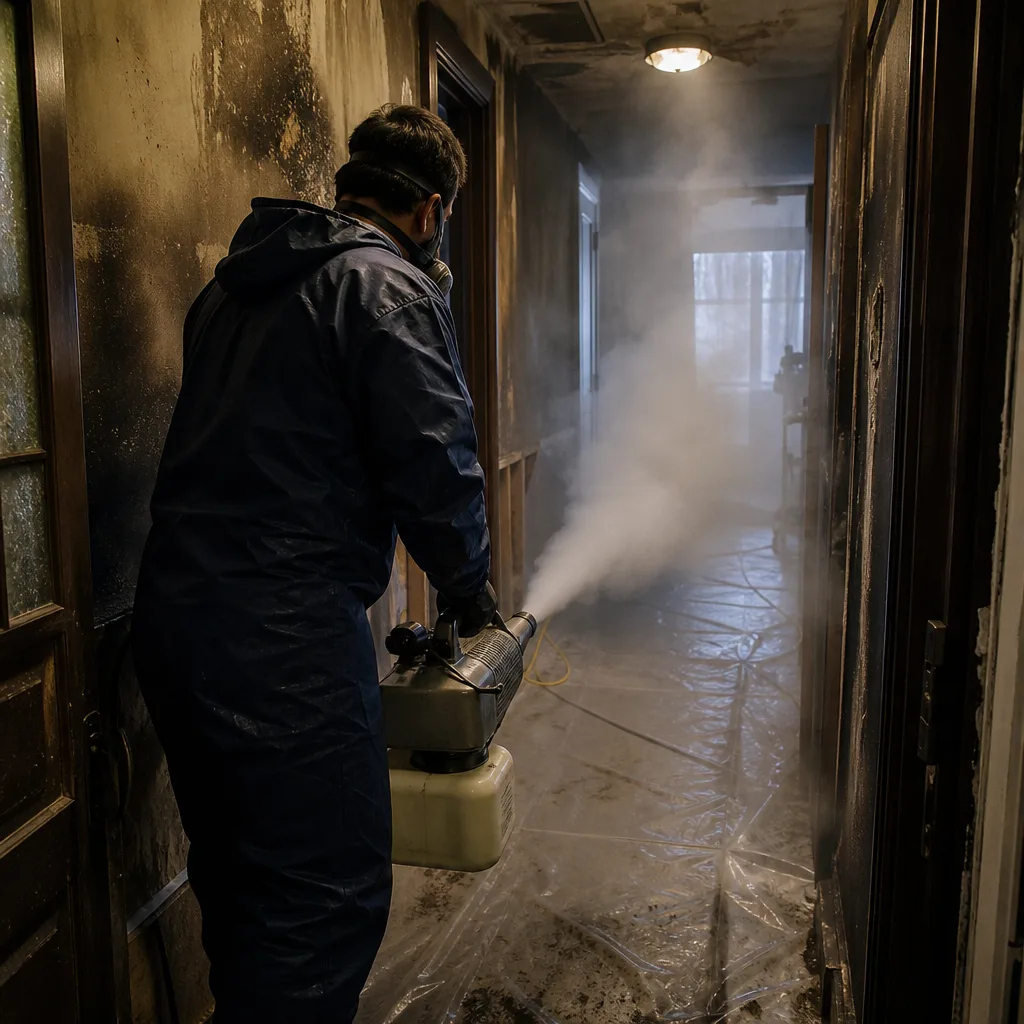
Flood Cleanup
Murray Hill’s summer cloudburst flooding, particularly in brownstone cellars between Second and Third Avenues, requires Category 3 protocol: full PPE, antimicrobial treatment, and disposal of porous materials that contacted sewage-contaminated water. We coordinate with the NYC DEP and your building’s insurance carrier for proper documentation.
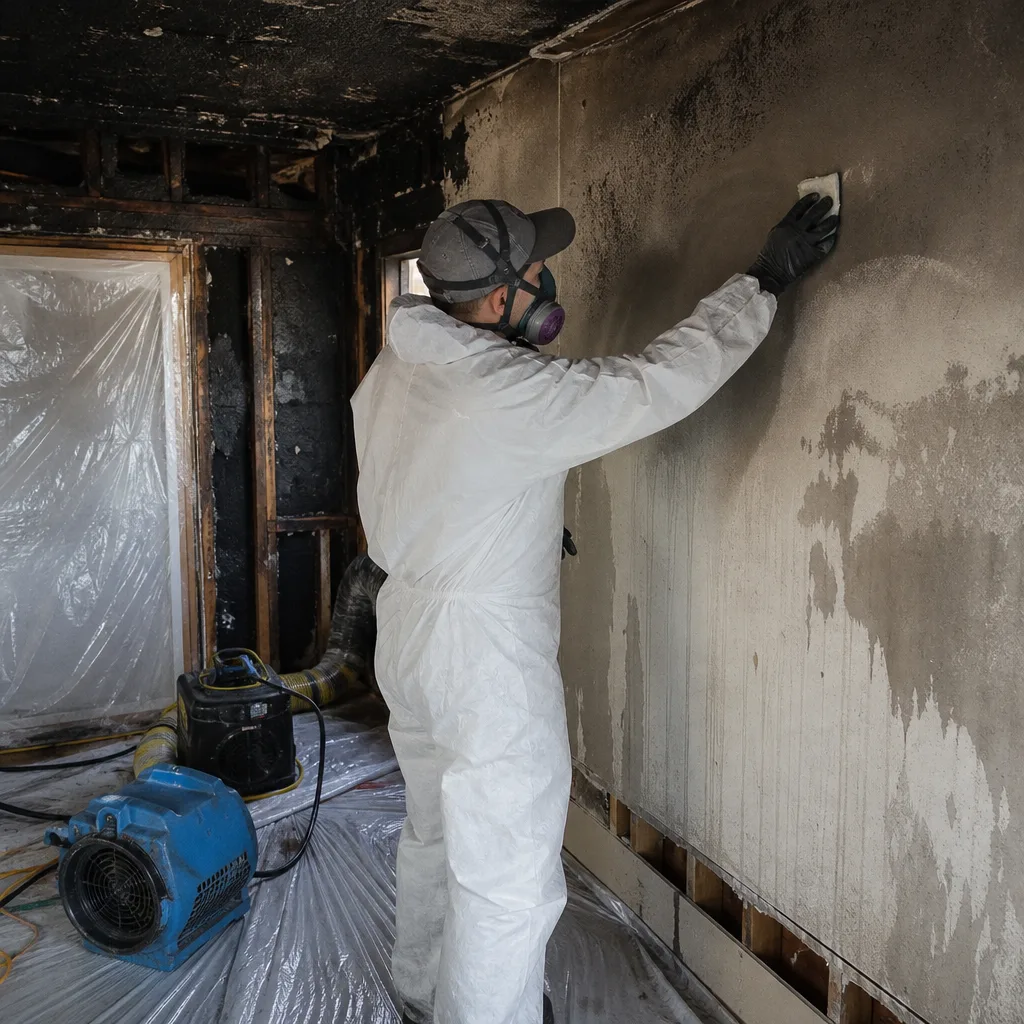
Burst Pipe Restoration
Burst pipes in Murray Hill’s pre-war buildings are rarely isolated events. A failed steam riser pressurizes the entire stack; a split supply line in a top-floor unit sends water through every floor below. Our crews moisture-map the full vertical column, set up equipment on every affected floor, and coordinate with your super and board to access all units. This is where our 45-minute response matters most - every hour of delay adds a floor of damage.
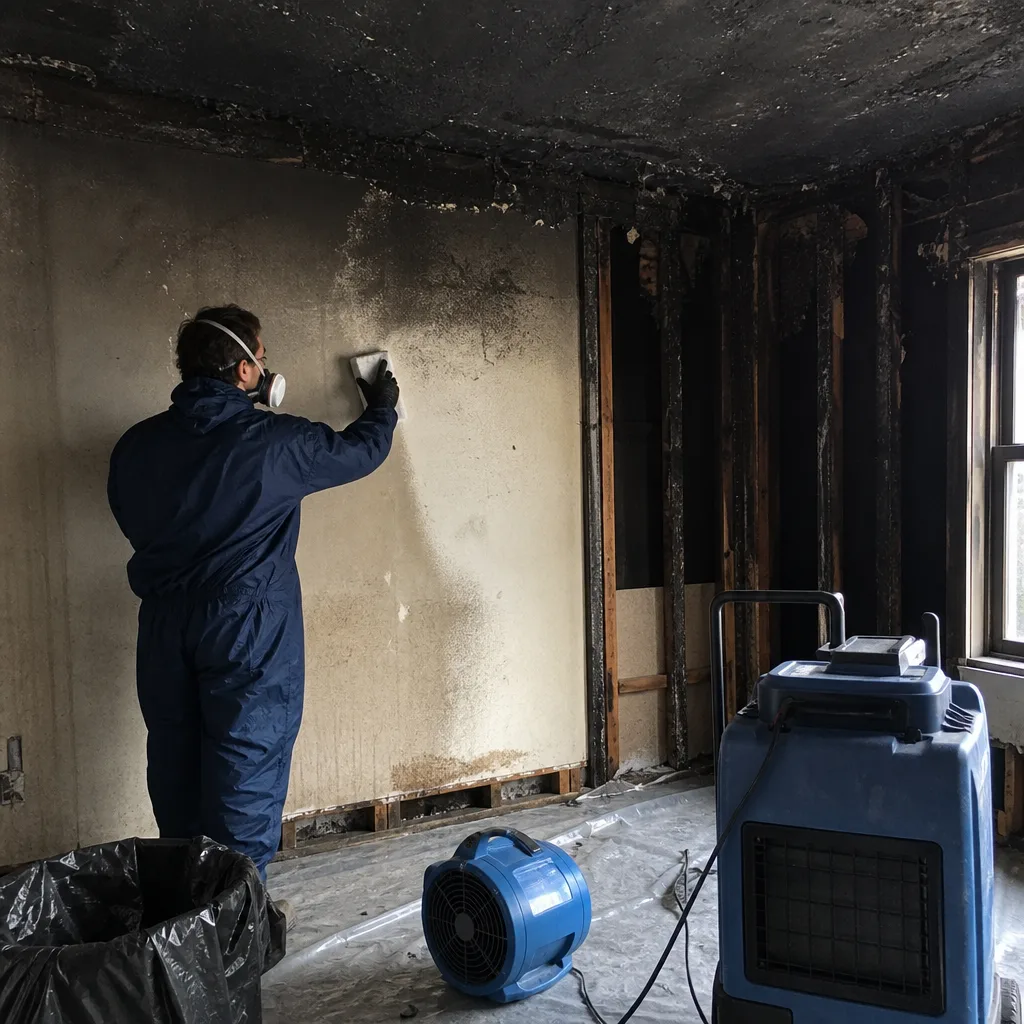
Basement Water Removal
Brownstone cellars and converted basement apartments along Murray Hill’s numbered cross streets flood predictably in summer storms when combined sewers back up. We extract, sanitize, and dry these below-grade spaces with equipment rated for Category 3 contamination, documenting every step for flood-insurance claims.
Ceiling & Roof Leak Water Damage
Pre-war plaster ceilings hold water like a sponge, then fail catastrophically. We locate the leak source, map the full horizontal spread through joist bays, and dry the assembly without unnecessary demolition where possible. When plaster is saturated beyond recovery, we remove it with containment to prevent asbestos release from historic finishes.
What happens when you call
- 1
A real person answersNo phone trees - you reach a local pro.
- 2
You get an upfront price rangeHonest numbers before anyone is dispatched.
- 3
A background-checked tech heads outLicensed & insured, dispatched right away.
- 4
You approve before work beginsNothing starts until you say go.
Water Damage Restoration Costs in Murray Hill, NY
Water damage restoration in Murray Hill runs higher than outer-borough averages for two structural reasons: multi-unit coordination adds labor hours, and asbestos abatement holds add equipment rental days. Here is what we see in this market:
| Service | Typical Range in Murray Hill |
|---|---|
| Emergency water extraction (single unit) | $1,200 - $2,400 |
| Structural drying & dehumidification (per day) | $800 - $1,400 |
| Multi-floor cascade mitigation (3+ units) | $5,500 - $12,000 |
| Category 3 flood cleanup (cellar/basement) | $3,200 - $7,800 |
| Asbestos abatement coordination (if triggered) | $2,800 - $6,500 (separate contractor) |
| Full reconstruction (drywall, flooring, trim) | $4,500 - $15,000+ |
What moves the price: affected square footage, water category (Category 3 requires more disposal and sanitation), number of floors involved, asbestos or lead discovery, and whether the job requires after-hours or weekend mobilization. Insurance typically covers sudden and accidental water damage; gradual leaks and maintenance-related failures are often excluded. We review your policy with you and document the loss to support covered-peril arguments. Every job starts with a free visual inspection and a written price before work begins - Haven Standard, Clause 1. Call (551) 213-5277 for your scope.
We Also Serve Cities Near Murray Hill
Our crews respond throughout the immediate area, including Water Damage Restoration in Murray Hill and surrounding neighborhoods: Upper East Side, Manhattan broadly, Upper West Side, and Astoria across the river. Dispatch and scheduling are coordinated from our New York City office; crews serve Murray Hill locally with the same 45-minute commitment.
Serving Murray Hill, NY - Our Local Coverage Area
We’re based in the Murray Hill area and know this community well. Use the map below to see our service coverage - if you’re nearby, we can almost certainly help.
Murray Hill Water Damage Restoration Questions, Answered
A steam riser burst on our floor of a pre-war Murray Hill building - why do you need to check the apartments below us?
Because in Murray Hill’s pre-war buildings, water from a failed steam riser routinely travels through cast-iron riser chases and plaster ceiling cavities into units two or three floors down before any stain appears at the surface. We moisture-map every floor in the stack to find hidden saturation that would otherwise breed mold and trigger secondary claims. Call (551) 213-5277 and we’ll run the full vertical inspection.
Do we need co-op board approval or a DOB permit before water damage restoration starts in our Murray Hill building?
Yes, almost always. Co-op and condo boards in Murray Hill require approval for any work affecting common elements, and NYC Department of Buildings permits are required for plumbing alterations, structural repairs, or asbestos abatement. Starting without approval can result in stop-work orders and fines. We prepare the permit applications and board packages as part of our scope, but the lead time is typically 2-5 business days - which is why we begin emergency extraction and stabilization immediately while permits are pending.
What happens if asbestos is found when you open up a wall during a Murray Hill water damage job?
All restoration work stops until a licensed NYC DEP asbestos abatement contractor clears the site under Local Law 76. We maintain our drying equipment on unaffected areas to preserve the drying timeline, coordinate directly with the abatement contractor, and resume restoration only after DEP clearance. This is routine in Murray Hill’s 1910-1950 buildings, and we build the possibility into every scope and timeline we write.
How fast can you get to a flooded brownstone cellar between Second and Third Avenues after a summer cloudburst?
Our commitment is 45 minutes to Murray Hill from your call, and we maintain that for brownstone cellars in the Second-to-Third corridor. We carry portable extraction units that fit through narrow cellar entrances, and we know which cross streets have the most reliable access for our response vehicles. The sooner we extract Category 3 floodwater, the less porous material requires disposal. Call (551) 213-5277 for immediate dispatch.
After extraction, how long does structural drying take in a Murray Hill pre-war apartment?
Three to five days for a standard one-bedroom with plaster walls and hardwood floors, assuming no asbestos abatement hold. Plaster dries more slowly than drywall because it is denser and holds more moisture; we use Injectidry mat systems on hardwood and LGR dehumidifiers rated for low-grain conditions. Daily moisture logs prove when we have reached drying goals - typically 12-16% moisture content for wood framing and 4% or less for drywall.
Will my insurance cover water damage restoration in my Murray Hill co-op?
Sudden and accidental water damage - burst pipes, failed appliances, storm intrusion - is typically covered under HO-6 condominium or co-op policies, though coverage limits and deductibles vary. Gradual leaks and maintenance failures are usually excluded. We document the loss to support covered-peril arguments, coordinate directly with your adjuster, and provide the line-item scope in Xactimate format that carriers require. Call (551) 213-5277 and we’ll review your situation at no charge.
Can we stay in our Murray Hill apartment during structural drying?
Sometimes, for Category 1 losses in isolated areas with containment and air scrubbing. For Category 2 and 3 losses, or when multiple rooms are affected, we recommend temporary relocation because dehumidifiers and air movers are loud, and antimicrobial treatments require ventilation. We document the displacement for potential additional living expense claims.
What should I do in the first 30 minutes after discovering water damage in my Murray Hill building?
Shut off the water source if you can locate and safely operate the valve. Do not enter standing water if electrical outlets or equipment are submerged. Call (551) 213-5277 for our 24/7 live answer. While you wait, move valuables and documents from the affected area, but do not start demolition or discard damaged materials - your insurer and our documentation process require them intact for inspection. Photograph everything if it is safe to do so.
We got the call from a building manager on East 37th Street between Second and Third Avenues after a cast-iron steam riser let go on the 9th floor of a 1920s pre-war building, sending Category 2 water down through the 7th-floor ceiling plaster of three stacked units. Our techs ran moisture mapping across all three apartments, set up containment and air movers on each floor, used Injectidry mats on the saturated plaster-and-lath walls, and pulled a moisture reading log for the board before we mobilized an abatement contractor. The tearout uncovered asbestos pipe wrap on the riser chase, which halted drying until DEP protocol was cleared - we still logged daily structural drying readings with Dri-Eaz and Phoenix equipment so the co-op’s insurer had the drying logs the board demanded.
Written by Alicia Brennan, Owner at Back to Dry Restoration, serving Murray Hill since 2011.
Water Damage Restoration in Nearby Areas