
Last updated September 23, 2026
Free visual inspection and a written scope of work before any mitigation begins - photos, moisture readings, and drying logs go in your claim file
The scope we write is the scope we bill. Anything new gets shown to you, in writing, before we touch it.

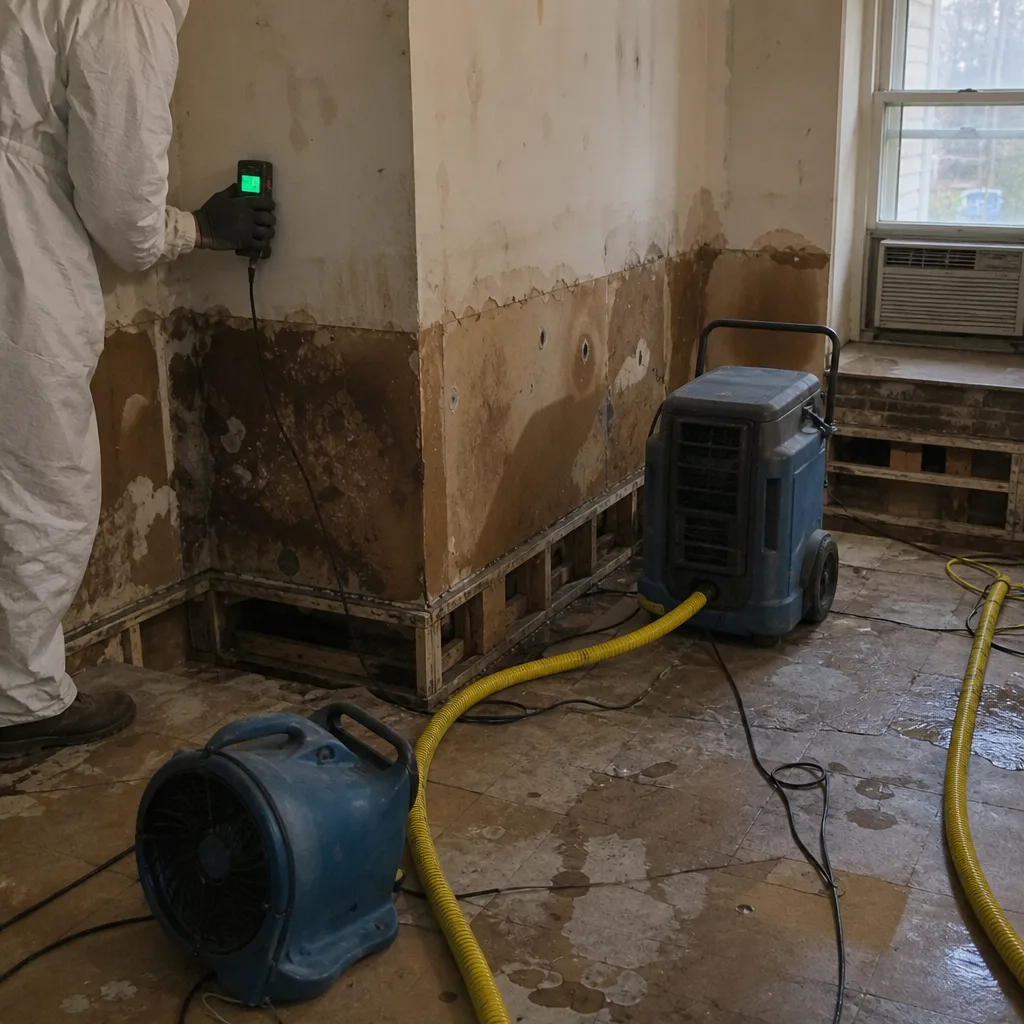 Before
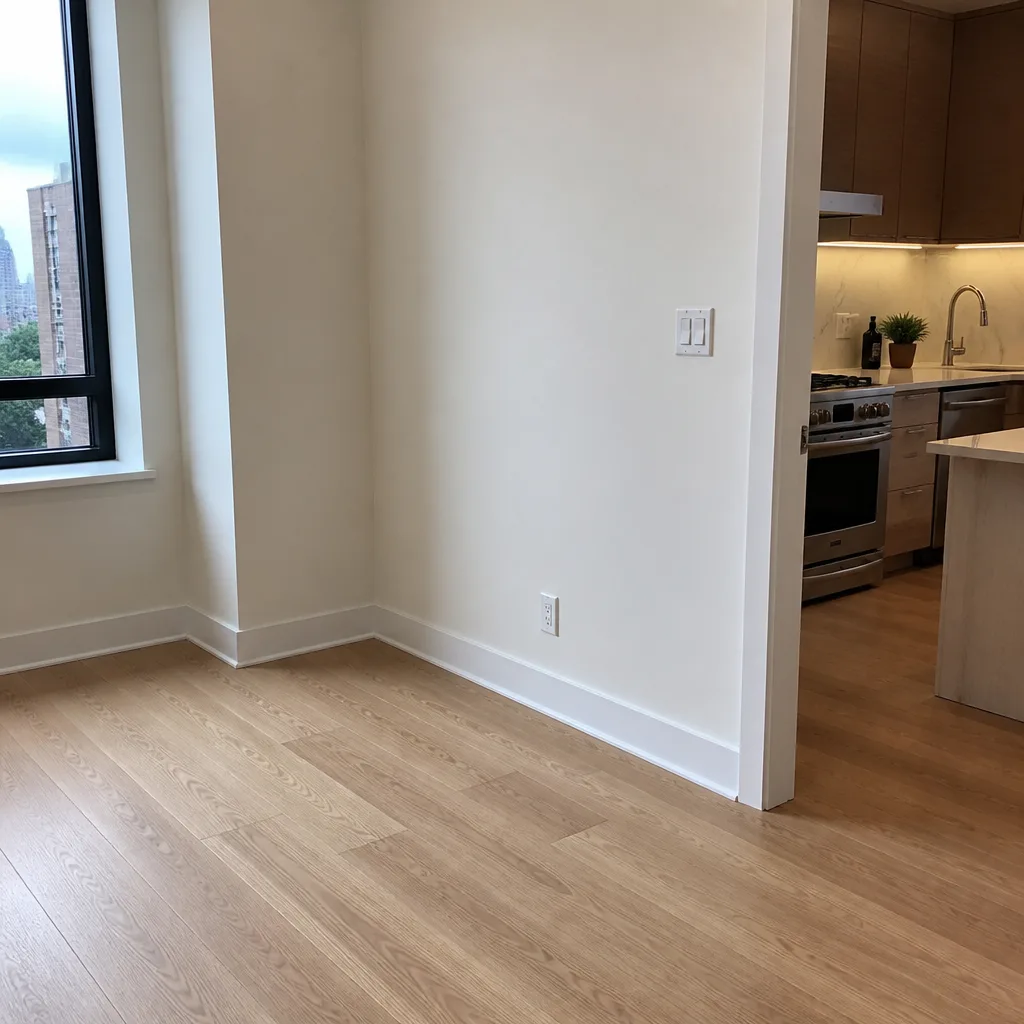 After
After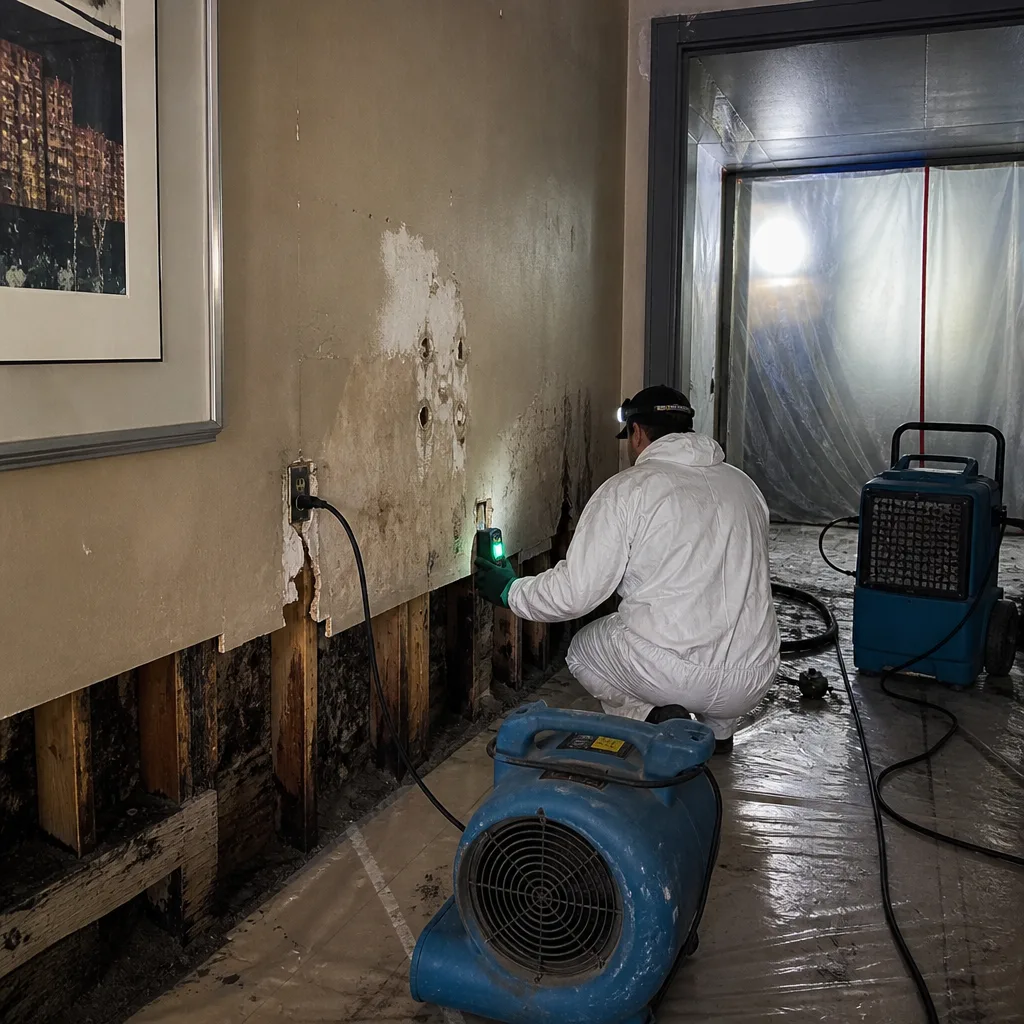 Before
 After
After Before
 After
AfterThe Complete Guide to Damage Restoration in Upper East Side
A prewar co-op on East 84th Street can have $40,000 in legitimate water damage and still receive a partial denial - not because the damage wasn’t real, but because the contractor never produced a single moisture reading below 15% to prove the structure was dry before closing the job. We’ve seen it repeatedly in Upper East Side buildings where limestone facades, shared party walls, and plaster-and-lath construction create damage patterns that don’t match standard suburban claims. This guide - alongside our Damage Restoration Warning Signs: A Upper East Side Homeowner’s Reference Guide - maps every phase of a restoration project to its specific documentation record, so you know exactly what evidence to demand at each step and why missing any single link in that chain can cost you thousands in uncovered repairs.
Quick Answer
Damage restoration in Upper East Side encompasses water damage mitigation, mold remediation, fire and smoke cleanup, storm recovery, and full reconstruction - each governed by IICRC standards and requiring distinct documentation phases. A properly documented job produces an initial moisture map, daily psychrometric drying logs, clearance readings proving materials reached equilibrium moisture content, and timestamped photo records for every visit. Without this paper trail, even legitimate damage gets denied or delayed by adjusters who cannot verify the work happened as billed.
Table of Contents
- The Documentation Chain: What Adjusters Actually Review
- Upper East Side Building Types and Hidden Damage Paths
- Co-op and Condo Board Rules That Delay Restoration
- Mitigation vs. Reconstruction: Two Scopes, Two Invoices
- What “Dry” Actually Means: The Measurable Standard
- Equipment and Technician Standards That Matter
- Working With Adjusters: Documentation as Currency
- Common Mistakes to Avoid
- When to Call a Professional
- Frequently Asked Questions
BeforeAfterThe Documentation Chain: What Adjusters Actually Review
Most restoration failures happen in the file folder, not the living room. An adjuster reviewing your claim follows a specific sequence, and your contractor’s documentation must match it exactly or the claim fragments into back-and-forth disputes that delay payment by weeks.
The five-link documentation chain:
- Initial moisture map. Taken within 24 hours of loss onset, this identifies every wet material by type, location, and starting moisture content percentage. In Upper East Side prewar buildings, this means distinguishing between plaster and lath assemblies (which hold moisture differently than drywall) and noting whether substrate is wood or metal lath, since drying protocols differ.
- Daily drying logs with psychrometric data. These record temperature, relative humidity, and specific humidity at the dehumidifier intake and at the affected material surface. The vapor pressure differential between these two points tells us whether moisture is actually moving out of the structure or just circulating. We log this daily with equipment from Dri-Eaz and Phoenix units, and we provide copies to you and your adjuster simultaneously.
- Material-specific clearance readings. “Dry” for oak flooring (typically 7-9% equilibrium moisture content) differs from “dry” for southern yellow pine subfloor (12-14%) or gypsum plaster (below 1% moisture content by weight). The IICRC S500 standard specifies these thresholds by material type. We test each material separately and record the reading, the standard applied, and the date.
- Timestamped photo record on every visit. Haven Standard requires this as standard deliverable, not an upsell. Photos must show equipment placement, moisture meter readings in frame, and any material changes (discoloration, delamination, microbial growth). In Upper East Side co-ops, these photos also document protection of common hallways and elevator cabs, which boards require for liability purposes.
- Written scope with line-item pricing before work begins. Haven Standard, Clause 1. No exceptions. The scope separates mitigation (emergency drying, demolition, sanitization) from reconstruction (replacement, refinishing, repainting) so the adjuster can apply correct depreciation and coverage rules to each phase.
We’ve restored over 12,000 homes since 2011, and the claims that pay fastest are those where the homeowner understood this chain before the first fan arrived. When you know what to ask for, contractors who cut corners become obvious quickly.
Upper East Side Building Types and Hidden Damage Paths
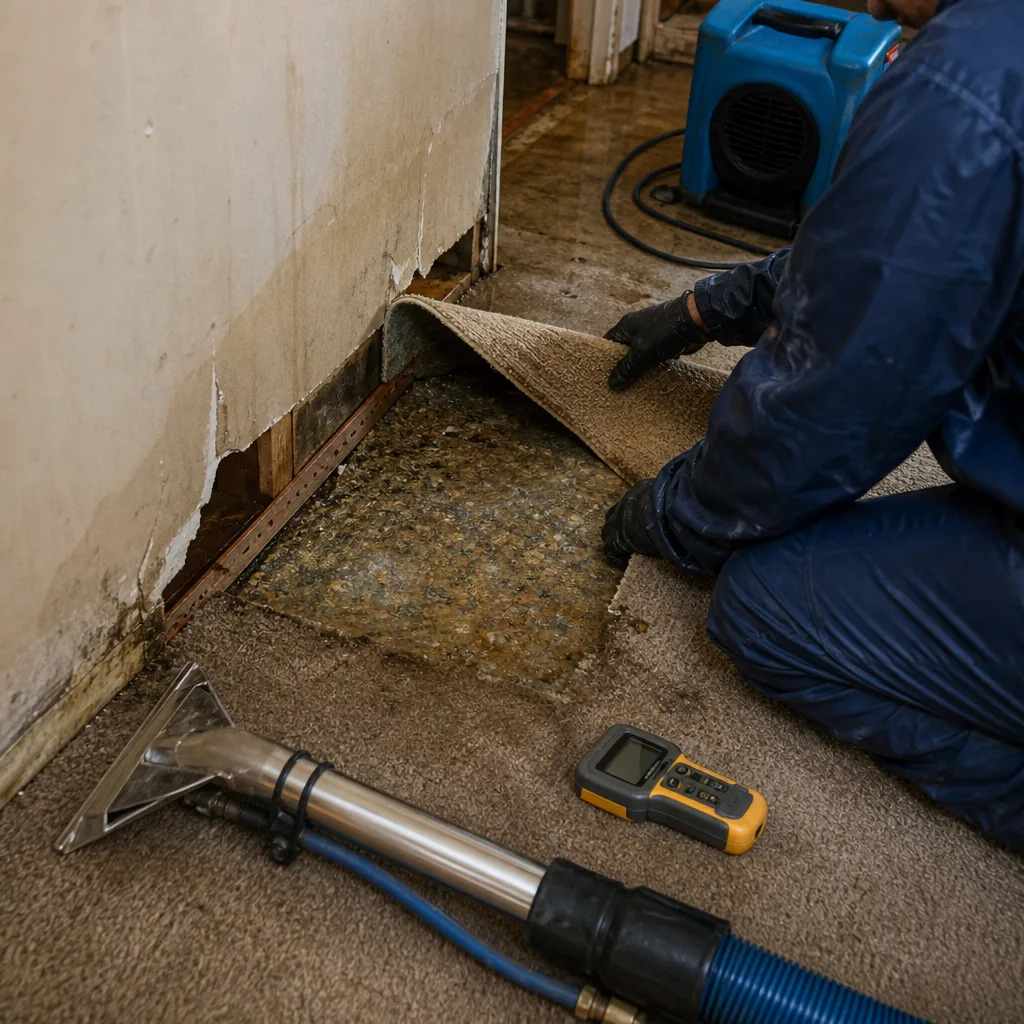
Upper East Side presents restoration challenges rarely found in newer construction. The building stock here spans roughly 140 years of construction methods, and damage moves through these structures in ways that surprise homeowners and untrained contractors alike.
Prewar masonry construction (roughly 1880-1940):
Buildings on streets like East 72nd, East 84th, and East 96th between Fifth and York often feature limestone or brownstone facades with multi-wythe brick walls behind them. When water enters - typically through roof leaks, facade failures, or plumbing breaks in stacked bathrooms - it travels horizontally through mortar beds and vertically via chimney chases and pipe risers. A leak on the 8th floor can manifest as staining on the 6th floor two weeks later, by which time the originating leak has been “fixed” and the true source forgotten.
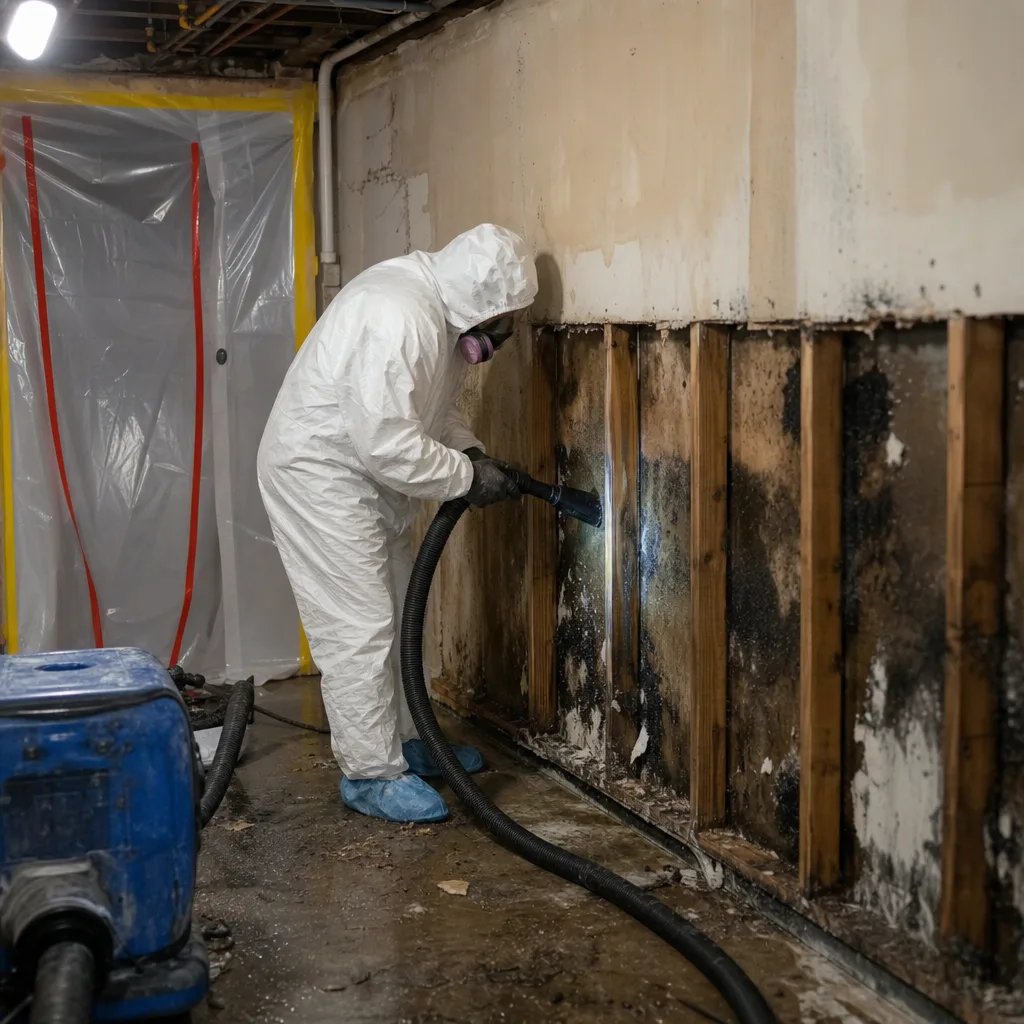
Plaster and wood lath in these buildings holds surprising moisture volume. Unlike modern drywall, which might reach 30-40% moisture content before visible failure, plaster can exceed 60% moisture content while still appearing sound. We’ve mapped damage in Carnegie Hill prewars where the plaster looked intact but the wood lath behind it was at 28% moisture content, actively supporting mold growth invisible from the room side. The only detection method is invasive moisture mapping with pin-type meters at stud intervals.
Postwar concrete and steel (1950s-1980s):
Buildings like those along East End Avenue or portions of York Avenue use poured concrete slabs with steel studs. Water here travels through slab joints and conduits, often appearing far from the source. Concrete itself is hydrophilic; it wicks water horizontally across entire floor plates. In one Yorkville building, a dishwasher leak on East 82nd Street traveled 40 feet through a concrete slab before emerging as bubbling paint in a bedroom closet.
Shared-wall liability:
Many Upper East Side buildings share party walls with adjacent structures. When water damage originates in your unit, moisture can migrate through these walls into neighboring apartments. Your co-op or condo governing documents likely require notification to affected neighbors and the board within specified timeframes. Failure to document this notification - and to include the neighbor’s unit in the initial moisture map - can shift liability to you personally if mold develops next door.
We always inspect adjacent units in shared-wall buildings, photograph the party wall from both sides, and include these findings in the initial report. This single practice has prevented more liability disputes than any other step we take.
Co-op and Condo Board Rules That Delay Restoration
Upper East Side co-op and condo boards operate under governing documents that can override your urgency with procedural requirements. Understanding these rules - and the Damage Restoration Permits, Codes & Inspections in NY: What You Need to Know - before loss occurs saves critical hours when water is still moving.
Notification requirements:
Most Upper East Side co-ops require immediate written notification to the superintendent and board president for any water intrusion affecting common elements. “Common elements” typically include: plumbing stacks, risers, and branches; electrical conduits in walls; HVAC ductwork serving multiple units; and any portion of the building envelope (roof, facade, windows). Some buildings on Fifth Avenue and Park Avenue require notification within 2 hours for any water loss, even if contained entirely within your unit, because of downstream liability concerns.
Condo boards, governed by New York’s Condominium Act, have different authority structures but similar notification triggers. The master policy typically covers common elements; your HO-6 policy covers your unit’s interior. The boundary between these coverages - often the “bare walls” or “all-in” demarcation - determines which insurer pays for what, and board documentation requirements exist precisely because these boundary disputes are common.
Approved contractor lists:
Many buildings maintain lists of pre-approved restoration contractors. These lists exist for liability and insurance certificate reasons, not quality assurance. A contractor’s presence on the list means their certificates of insurance meet the building’s requirements; it does not mean they follow IICRC standards or provide documented drying logs. We’ve been called to redo work by “approved” contractors who never produced moisture readings.
Work-hour restrictions and access protocols:
Service elevator access in buildings like those along Central Park West or East 72nd Street may be restricted to specific hours. Some buildings prohibit work after 6 PM or before 8 AM. Emergency water extraction may receive exceptions, but reconstruction phases typically do not. These restrictions affect scheduling and can extend drying timelines if equipment cannot be monitored and adjusted during restricted hours.
We coordinate directly with building management to secure access schedules before arriving, and we document any access restrictions that affect our ability to meet standard drying timelines. This documentation protects you if extended drying times trigger mold concerns.
Mitigation vs. Reconstruction: Two Scopes, Two Invoices
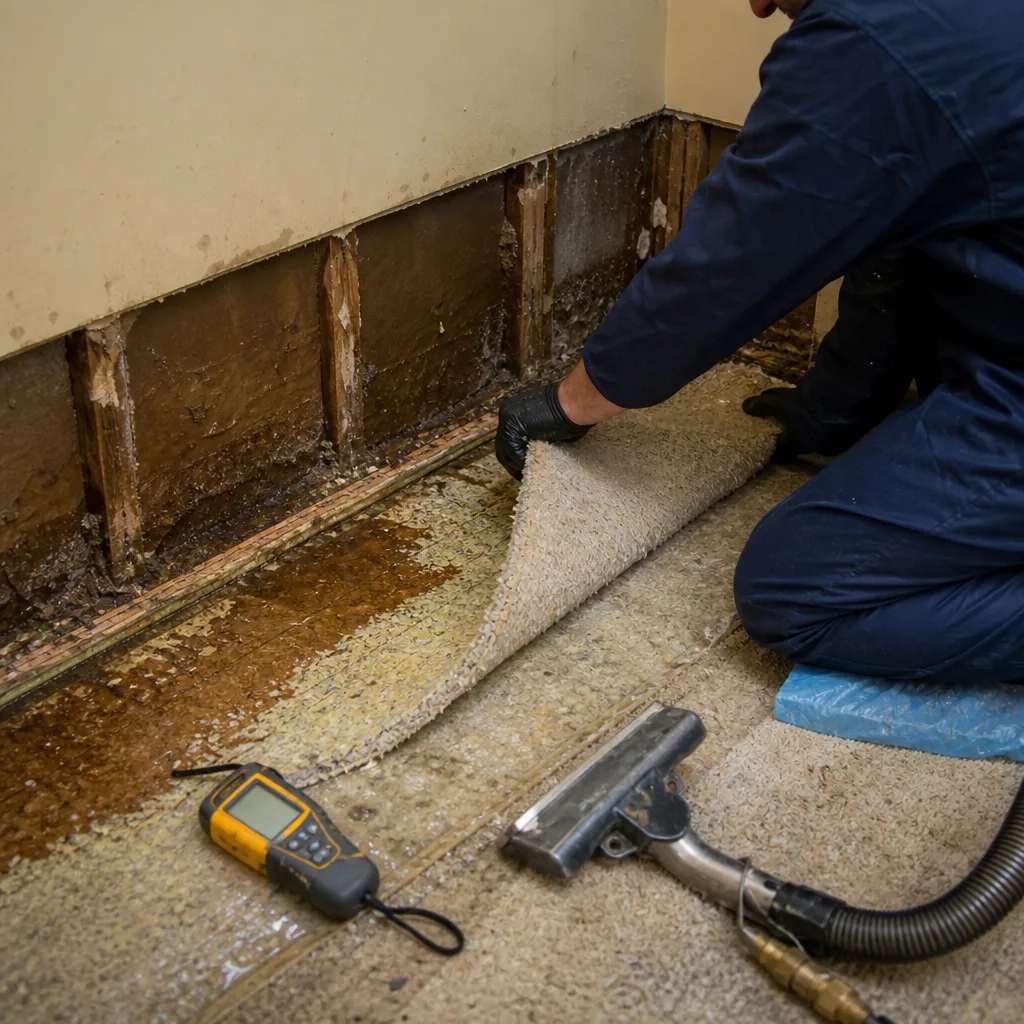
The single most common cause of adjuster scrutiny is conflating mitigation and reconstruction on one invoice. These are distinct phases with distinct pricing rules, and mixing them signals either contractor inexperience or intentional obfuscation.
Mitigation scope:
Emergency mitigation includes everything done to stop damage from spreading and to stabilize the environment for drying. Specifically: water extraction; controlled demolition of unsalvageable materials; placement and monitoring of drying equipment; application of antimicrobial treatments; and containment barriers if microbial growth is present. Mitigation is typically covered at replacement cost value (RCV) with minimal depreciation, because it prevents further damage.
Mitigation pricing follows standardized industry databases (Xactimate, Verisk) that adjust for Manhattan’s labor rates and material costs. Upper East Side mitigation typically runs higher than national averages due to: parking and access constraints; building-specific insurance requirements; and the premium on after-hours labor in a 24-hour building environment.
Reconstruction scope:
Reconstruction begins after materials reach documented dry standard and mitigation equipment is removed. It includes: replacement of removed materials; finishing work (paint, flooring, trim); and restoration of fixtures and appliances. Reconstruction is subject to depreciation based on material age and condition, and coverage limits may apply depending on your policy form.
Why separation matters:
Adjusters apply different coverage rules, depreciation schedules, and documentation requirements to each phase. When mitigation and reconstruction appear on one invoice, the adjuster must manually separate them, a process that introduces errors and delays. Worse, some contractors inflate mitigation charges by including reconstruction tasks (like full drywall replacement rather than targeted drying), knowing that mitigation faces less scrutiny.
Haven Standard, Clause 1 requires written separation of these scopes before any work begins. You receive two distinct documents: a mitigation scope with line-item emergency pricing, and a reconstruction scope with material specifications and finish schedules. Each has its own approval signature line. This separation protects you from scope creep and gives your adjuster clean documentation to process.
What “Dry” Actually Means: The Measurable Standard
“It’s dry” is not a professional statement. “Gypsum wallboard at 0.4% moisture content by weight, verified with calibrated pin-type meter, meeting IICRC S500 Category 2 water loss dry standard” is.
The IICRC S500 standard defines dry as a material’s equilibrium moisture content (EMC) - the point at which a material neither gains nor loses moisture to the surrounding environment. EMC varies by material and by regional climate. In Upper East Side’s humid continental climate, with summer indoor relative humidity often at 55-65%, the target EMC for structural materials differs from drier western regions.
Common material dry standards in our market:
- Softwood framing (pine, fir): 10-12% moisture content. Above 16%, fungal growth risk becomes significant.
- Hardwood flooring (oak, maple typical in prewars): 6-9% moisture content. Seasonal variation of 2-3% is normal; sudden spikes indicate active moisture source.
- Gypsum wallboard: Below 0.65% moisture content by weight, or below 70% relative humidity at the surface when measured with thermo-hygrometer.
- Concrete slab: 3-4% moisture content by calcium chloride test, or below 75% relative humidity at 40% slab depth per ASTM F2170.
- Plaster and lath: Below 1% moisture content by weight for gypsum plaster; wood lath must match softwood framing standards.
We verify dry standard with multiple methods: pin-type resistance meters for wood and gypsum; thermo-hygrometers for surface relative humidity; and in concrete applications, in-situ relative humidity probes. Each reading is recorded with meter calibration date, material type, and location identifier.
A contractor who declares a job “dry” without producing these specific readings is making a claim they cannot support. In our experience, this is where most Upper East Side restoration disputes originate - not from the water loss itself, but from premature closure of drying jobs that left elevated moisture in wall cavities or subfloors.
Equipment and Technician Standards That Matter
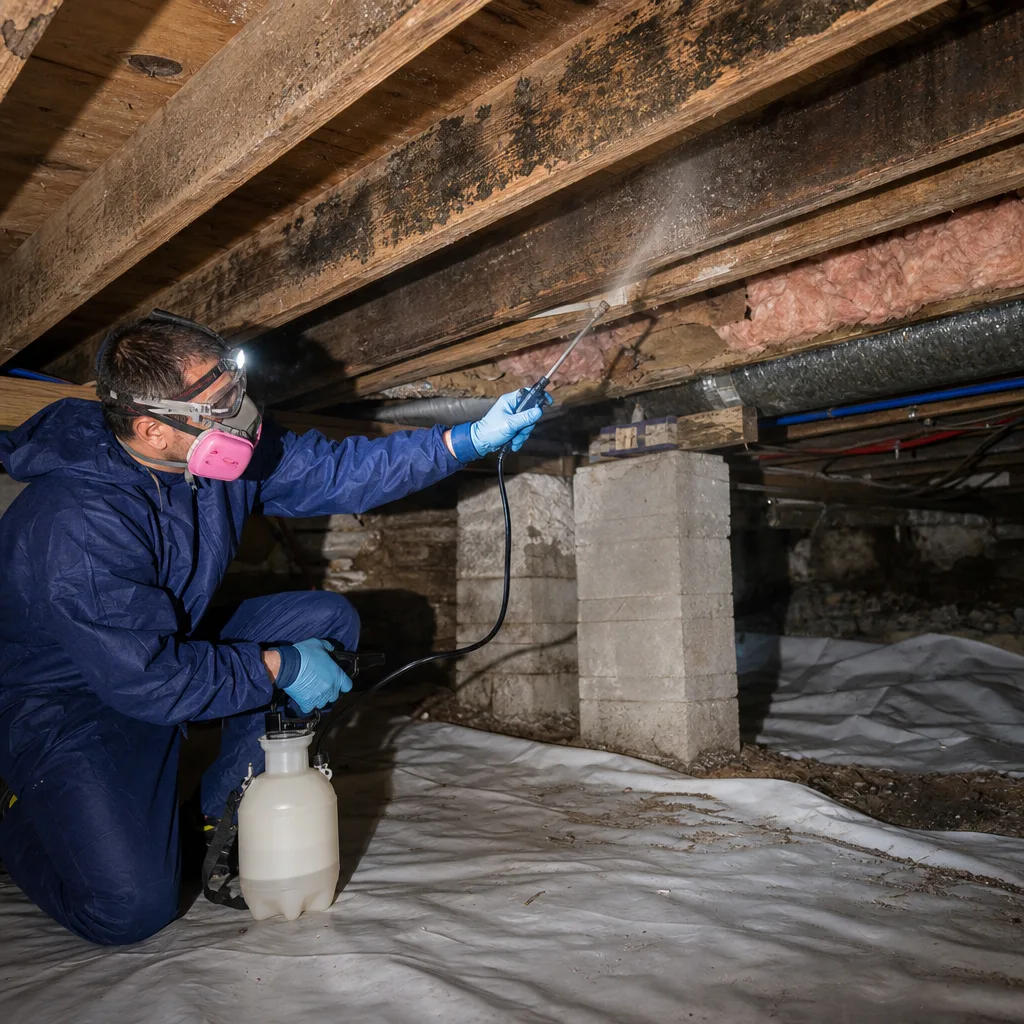
Equipment badges and technician uniforms create first impressions, but the standards behind them determine whether your claim succeeds. Here’s what to verify.
Equipment documentation:
Professional drying requires equipment matched to the specific loss category and affected volume. We deploy low-grain refrigerant dehumidifiers (Dri-Eaz and Phoenix units) for standard water losses; desiccant dehumidifiers for large commercial spaces or deep winter drying when outdoor dew points are low; and specialized systems like Injectidry for hardwood floor drying and wall cavity injection. Each piece of equipment is logged by serial number, placement location, and daily runtime hours.
The equipment specification matters for your adjuster. Xactimate pricing assumes specific equipment capacities and quantities based on affected square footage and class of water loss. A contractor using undersized equipment may need to run it longer to achieve dry standard, but standard pricing doesn’t account for extended timelines caused by inadequate initial deployment. We size equipment to IICRC-recommended air changes per hour for the specific volume, document the calculation, and adjust if conditions change.
Technician standards:
Every technician in your home is background-checked, uniformed, and licensed. Their license number is available on request. We do not use day labor or unverified subcontractors for mitigation work. In Upper East Side buildings with doorman security and resident board oversight, this verification is not optional - unvetted workers create liability exposure for you and the building.
Technicians are trained to IICRC standards for their certification level, and all work is documented to IICRC, RIA, and IFA protocols. This matters because adjuster training references these same standards; when our documentation cites them, the adjuster recognizes the framework and processes the claim faster.
Working With Adjusters: Documentation as Currency
The adjuster assigned to your claim has seen hundreds of restoration invoices. The ones that pay fastest share common characteristics that you can demand from your contractor.
Photo documentation with context:
Every photo must answer: what am I looking at, where is it, when was this taken, and what does it prove? A photo of a dehumidifier in a room proves nothing. A photo showing a Phoenix 200HT dehumidifier, serial visible, positioned at east wall of bedroom 2, with thermo-hygrometer reading 72°F/45%RH in frame, timestamped 14:30 on drying day 3, proves the drying environment was maintained per protocol.
We provide these contextual photos as standard, organized by visit date and cross-referenced to drying log entries. Your adjuster receives the same set you do, eliminating information asymmetry.
Direct adjuster coordination:
We coordinate directly with adjusters on documentation questions, policy coverage interpretations, and scope disputes. This does not mean we work for the insurance company; we work for you, and our documentation is designed to withstand adjuster scrutiny because scrutiny is inevitable. A contractor who avoids adjuster contact or resists documentation requests is not protecting you - they’re hiding something.
Our Free Second Opinion on any competitor’s written estimate exists because we’ve reviewed too many scopes that omitted necessary drying steps, underestimated affected square footage, or failed to separate mitigation from reconstruction. Bring any written estimate; we’ll review it against IICRC standards at no charge.
Water Damage Restoration in Upper East Side requires this documentation discipline more than most markets, because Manhattan claim values are higher and adjuster scrutiny correspondingly tighter.
Common Mistakes to Avoid
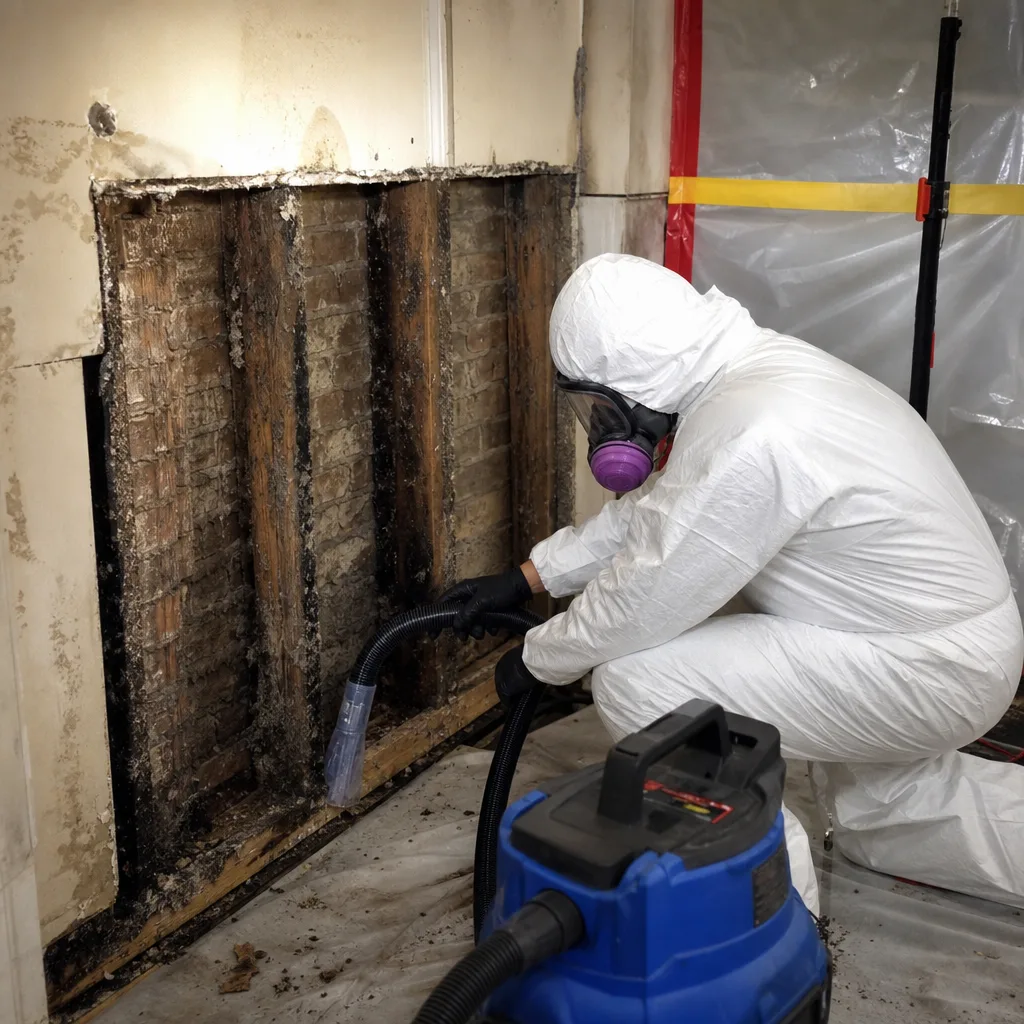
- Accepting “it’s dry” without readings. A contractor who won’t produce moisture meter documentation is a contractor who didn’t take moisture meter readings. This is the most expensive mistake a homeowner makes, because undetected moisture leads to mold, structural decay, and denied secondary damage claims.
- Delaying notification to your co-op or condo board. Upper East Side buildings have specific notification windows, and missing them can void your right to use common elements for equipment access or shift liability for downstream damage to neighboring units.
- Signing a single combined scope for mitigation and reconstruction. This conflation triggers adjuster scrutiny and prevents you from verifying that each phase was completed correctly before authorizing the next. Haven Standard requires separation for this reason.
- Using a contractor who cannot name your specific building materials. Prewar plaster and lath requires different drying protocols than drywall. A contractor who calls everything “the wall” lacks the expertise to document your job correctly.
- Ignoring adjacent units in shared-wall buildings. Moisture migration through party walls is common in Upper East Side rowhouses and apartment buildings. Failing to document the neighbor’s condition at loss onset creates liability exposure if mold appears later.
- Accepting verbal promises instead of written warranties. The 365-Day Done Right Promise is a signed guarantee under The Haven Standard, not a marketing phrase. If your contractor won’t put their warranty in writing with specific terms, they don’t intend to honor it.
When to Call a Professional
Call immediately for any water loss affecting more than a single small area, any Category 2 or 3 water (gray or black water from sources other than clean supply lines), any fire or smoke damage regardless of apparent severity, and any visible mold growth exceeding 10 square feet. These scenarios require documented mitigation protocols that homeowners cannot safely or effectively perform.
Specific Upper East Side scenarios that demand professional response: water entering through facade or roof systems (indicates building envelope failure requiring coordinated repair); any loss in a prewar building with plaster and lath construction (invasive moisture mapping required); and any loss affecting multiple units or common elements (board notification and liability documentation required).
DryMark Restoration Upper East Side offers free estimates in Upper East Side - explore more guides & resources or call (551) 213-5277. Live person answers every call, 24 hours a day, 7 days a week, with no voicemail on emergency lines. Every job is quoted in writing before work begins, documented with a photo record on every visit, and covered by the 365-Day Done Right Promise under The Haven Standard.
Frequently Asked Questions
For detailed pricing context, see our Damage Restoration Cost Breakdown: The Upper East Side Homeowner’s Reference for 2026. Water damage mitigation in Upper East Side typically ranges from $3,500 for contained single-room losses to $18,000+ for multi-room Category 3 losses in prewar buildings with plaster and lath construction. Reconstruction costs vary widely based on finish quality: $8-14 per square foot for standard drywall and paint replacement, $25-40+ per square foot for custom plaster restoration or hardwood floor replacement. Every job receives a written price before work begins, per Haven Standard, Clause 1. Call (551) 213-5277 for an exact quote - estimates are free.
Most Upper East Side homeowners policies cover sudden and accidental water damage, fire and smoke damage, and storm damage, subject to your specific policy limits and deductibles. Coverage typically excludes gradual damage (long-term leaks), flooding from outside rising water (requires separate flood policy), and damage from known maintenance neglect. The key to coverage is documentation: insurers pay claims they can verify, and our photo records, drying logs, and written scopes provide that verification. We coordinate directly with adjusters and provide photo documentation that supports your claim.
For emergency water and fire damage, we dispatch immediately upon call receipt - live person answers 24 hours a day, 7 days a week with no voicemail. Actual arrival depends on Upper East Side traffic patterns, building access procedures, and equipment loading. We coordinate with your doorman or superintendent en route to minimize entry delays. For reconstruction work, we schedule in writing after mitigation completes and dry standard is documented; reconstruction is never same-day service because it requires material ordering and scope approval.
For water losses affecting structural materials or any Category 2/3 water, professional mitigation is necessary to document dry standard and protect your insurance coverage. For mold, the EPA recommends professional remediation for growth exceeding 10 square feet; in Upper East Side’s humid climate, visible mold typically indicates more extensive hidden growth in wall cavities. Self-cleaning without documentation leaves you liable for future claims if mold recurs, and most insurers deny secondary damage claims where initial mitigation was not professionally documented.
You retain full control of your claim; we provide the documentation that makes your adjuster’s job possible. We do not negotiate settlements or coverage determinations, as those are between you and your insurer. We do answer documentation questions, provide additional photos or readings on request, and explain our scope in adjuster terminology because accurate communication prevents delays. Our Free Second Opinion service reviews any competitor’s estimate at no charge if your adjuster requests comparison.
Mitigation-only contractors perform emergency drying and demolition, then leave you to find separate contractors for reconstruction. This creates coordination gaps, documentation handoffs that lose information, and disputes over whether dry standard was actually achieved before reconstruction began. Full-service restoration handles both phases with continuous documentation from loss onset to final walkthrough. In Upper East Side’s regulated building environment, single-source accountability also simplifies board approvals and insurance coordination.
The Bottom Line
Damage restoration in Upper East Side succeeds or fails on documentation, not dramatics. The buildings here - prewar masonry, shared walls, co-op governance - create complexity that demands precise records at every phase. Demand a written price before work begins, daily drying logs with psychrometric data, material-specific clearance readings, and a timestamped photo record on every visit. These documents are not bureaucratic extras; they are the evidence that transforms your legitimate damage into a paid claim. Contractors who resist this transparency are saving themselves work at your expense. Contractors who deliver it, like DryMark Restoration Upper East Side home, are doing the job that Upper East Side’s building stock and insurance environment actually requires.
Written by Alicia Brennan, Owner at DryMark Restoration Upper East Side, serving Upper East Side since 2011.